Best Digital Marketing Channels for Growing Businesses
Choosing the right Digital Marketing Channels can determine whether a growing company builds predictable demand or spends its budget across disconnected activities. Businesses today have access to search engines, social networks, paid advertising, email, local search, content, video, remarketing, online communities, websites and many other opportunities. The challenge is not finding options. The real challenge is deciding which Digital Marketing Channels deserve priority at each stage of business growth.
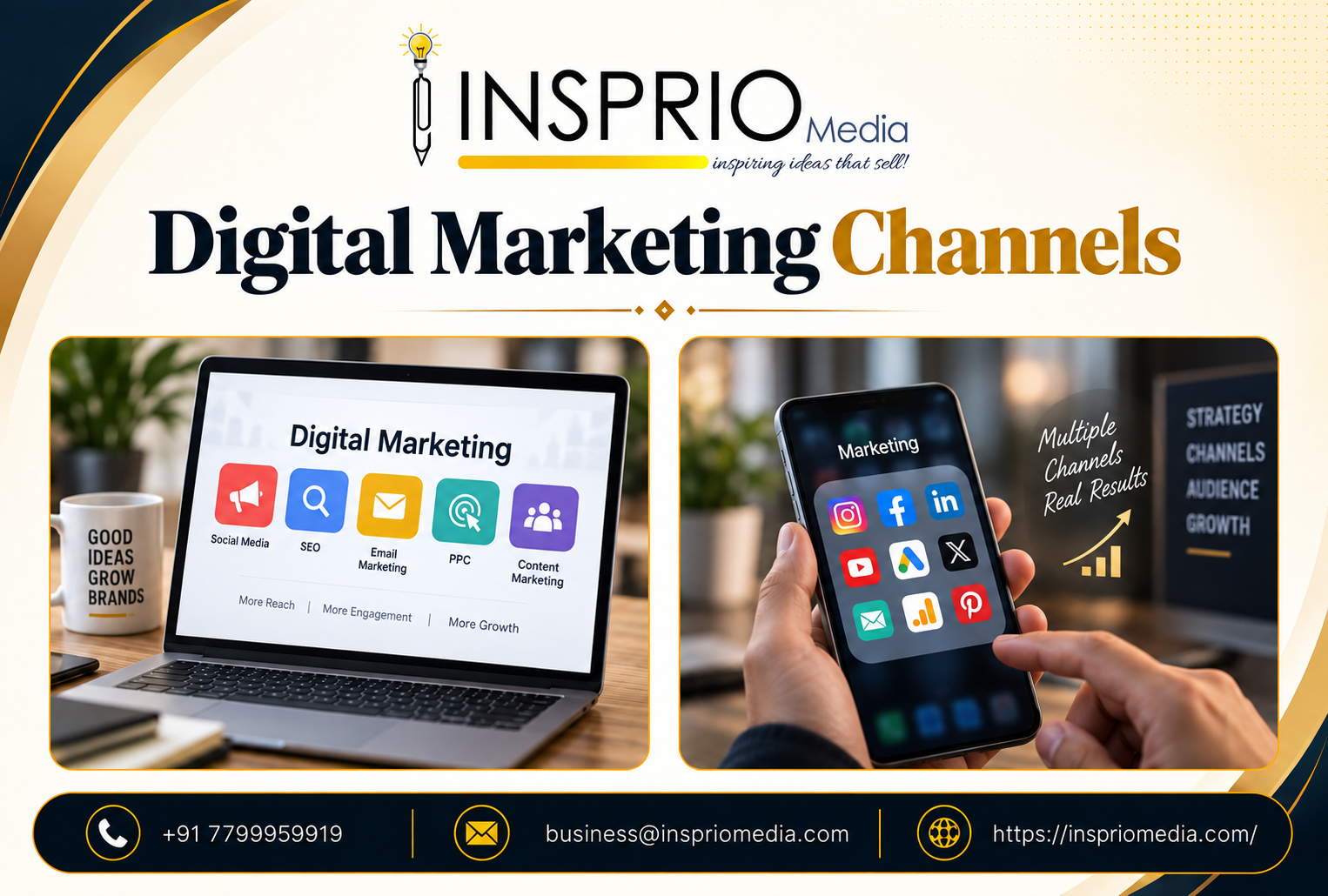
A strong strategy does not attempt to dominate every platform immediately. Instead, it identifies where customers search, compare, ask questions, consume information and make purchase decisions. When Digital Marketing Channels are selected according to customer behaviour, commercial goals and available resources, marketing becomes far easier to measure and improve.
This guide explains how growing businesses can combine the most effective Digital Marketing Channels into a practical marketing system. It also shows how SEO, paid acquisition, social media, content, local search, email, branding and website optimisation can support one another rather than operate as isolated campaigns.
1. Why Channel Selection Has Become a Business Growth Decision
In previous years, many businesses treated marketing platforms as independent promotional tools. A company might run social posts because competitors were doing it, invest in paid advertisements because sales were slow, or publish blogs without a clear search strategy. Modern Digital Marketing Channels work best when every platform has a defined role in the customer journey.
For example, search marketing can capture existing demand, while social media can create awareness before a customer has decided to buy. Email can nurture people who already know the brand, while remarketing can bring previous visitors back to the website. Understanding these differences helps businesses select Digital Marketing Channels based on purpose rather than popularity.
The right choice also depends on sales cycle length. A local restaurant may generate conversions within minutes through Google Maps, while a software provider may require several interactions across content, LinkedIn, email and sales consultations before a contract is signed. Therefore, comparing Digital Marketing Channels only by immediate sales can create misleading conclusions.
Growing businesses should evaluate each platform by acquisition cost, conversion quality, scalability, customer intent and the amount of time required to produce results. When Digital Marketing Channels are measured using the same commercial framework, budget decisions become more objective.
2. Build the Strategy Before Choosing Platforms
Before investing in Digital Marketing Channels, a business needs clear positioning. The company should know who it serves, the problems it solves, what makes its offer different and which actions represent a successful conversion. Without this foundation, marketing teams often chase traffic instead of business outcomes.
Start by defining one primary objective. It might be qualified leads, ecommerce sales, store visits, appointment bookings, software trials, phone enquiries or brand visibility. Different Digital Marketing Channels should then be assigned supporting roles around this objective.
Customer research is equally important. Interview existing clients, review sales conversations, study search queries and examine frequently asked questions. This information reveals which Digital Marketing Channels customers naturally use when they are researching your type of product or service.
Businesses should also evaluate internal capabilities. A platform that depends on daily video production may not be sustainable for a small team, while SEO could be difficult without someone capable of maintaining the website. Sustainable Digital Marketing Channels are those the company can operate consistently enough to learn, optimise and scale.
Businesses wanting professional support can begin with the main Insprio Media website. The goal is not to use the maximum number of Digital Marketing Channels, but to create a connected system that matches business resources and growth priorities.
3. Search Engine Optimisation for Sustainable Demand
SEO remains one of the most valuable Digital Marketing Channels because it allows businesses to appear when potential customers are actively searching for solutions. Organic visibility can produce traffic long after a page is published, making search optimisation particularly useful for companies seeking sustainable growth.
Effective SEO starts with understanding search intent. Someone searching “best accounting software for small business” needs different content from someone searching “accounting software pricing.” Strong Digital Marketing Channels strategies therefore connect keyword research with the customer's stage of decision-making.
Technical performance also matters. A slow website, confusing navigation, poor mobile usability or incorrect indexing can reduce the value of even excellent content. Businesses can explore Insprio Media's guide to website SEO services for a deeper look at sustainable search visibility. Among long-term Digital Marketing Channels, SEO becomes especially powerful when technical optimisation, useful content and authority building work together.
Businesses should prioritise pages that closely match commercial intent. Service pages, product categories, comparison pages, location pages and educational resources can all attract different forms of demand. The strongest Digital Marketing Channels strategy does not rely on blog traffic alone; it builds a complete search ecosystem.
Google provides detailed guidance through Google Search Central. Companies should use these principles to build trustworthy, useful and technically accessible websites rather than chase shortcuts. When treated as a long-term asset, SEO can become one of the most dependable Digital Marketing Channels for qualified customer acquisition.
4. Content Marketing That Educates and Converts
Content supports nearly every major group of Digital Marketing Channels. Search engines need useful pages to rank, social platforms need material worth sharing, email campaigns need information worth sending and sales teams need resources that answer customer concerns.
Effective content should solve specific problems rather than simply repeat commonly available information. Interviews, original examples, industry data, implementation checklists, pricing explanations and case studies can make Digital Marketing Channels more credible because audiences receive practical value before being asked to buy.
Content should also be mapped to the customer journey. Awareness content introduces a problem. Consideration content compares approaches. Decision-stage content removes uncertainty about pricing, outcomes, process and credibility. This structure allows Digital Marketing Channels to guide people naturally from discovery toward action.
Businesses should reuse high-quality ideas intelligently. A detailed article can become short videos, graphics, email content, sales presentations, social posts and remarketing messages. Repurposing makes Digital Marketing Channels more efficient because one strong piece of research can support multiple platforms.
5. Social Media Marketing for Visibility, Trust and Community
Social platforms are among the most visible Digital Marketing Channels, but they should not be judged only by follower numbers. Their strongest value often comes from brand familiarity, social proof, audience education and repeated exposure.
Platform selection should reflect customer behaviour. LinkedIn may be effective for B2B services and professional audiences, Instagram may work well for visual categories, while Facebook can support local businesses, communities and remarketing. The best Digital Marketing Channels strategy uses social networks where customers are genuinely active instead of maintaining inactive profiles everywhere.
Insprio Media explains the strategic role of social platforms in its guide on social media management for business growth. Consistent brand presentation, responsive community management and purposeful publishing make Digital Marketing Channels more effective over time.
Businesses should create a balanced content mix. Educational posts demonstrate expertise, behind-the-scenes content creates authenticity, customer stories build trust and promotional content encourages conversion. Social Digital Marketing Channels become much stronger when audiences receive value between sales messages.
Paid social advertising can extend the reach of successful organic content. Platforms such as Meta for Business allow companies to target audiences based on demographics, interests and behaviour. When organic and paid activity support each other, Digital Marketing Channels can move audiences from awareness toward measurable enquiries or sales.
6. Paid Search Advertising for High-Intent Customers
Paid search is one of the fastest Digital Marketing Channels for reaching people who are already expressing commercial intent. When someone searches for a service, product or solution, a well-structured advertisement can place the business directly in front of that demand.
The advantage is speed, but speed can become expensive without disciplined management. Keywords, match types, negative keywords, geographic settings, conversion tracking and landing-page quality all influence profitability. Strong Digital Marketing Channels strategies treat advertising as an optimisation system rather than a simple traffic purchase.
Companies should separate campaigns according to intent. Brand searches, competitor searches, service keywords, location-based searches and informational terms usually perform differently. Structuring them separately makes Digital Marketing Channels easier to evaluate and prevents high-performing segments from being hidden inside broad campaigns.
Advertising platforms provide extensive reporting, but not every metric deserves equal attention. Click-through rate can indicate ad relevance, but lead quality, conversion value and customer acquisition cost usually matter more. Businesses comparing Digital Marketing Channels should prioritise metrics connected to revenue.
Google provides campaign information through Google Ads. Paid search is particularly effective when paired with strong landing pages, clear offers and accurate tracking. Under those conditions, it can become one of the most controllable Digital Marketing Channels for businesses ready to scale.
7. Performance Marketing and Retargeting
Performance marketing focuses Digital Marketing Channels on measurable outcomes such as leads, purchases, booked appointments or qualified enquiries. This approach encourages businesses to connect spending with commercial results instead of relying on surface-level engagement metrics.
A useful starting point is Insprio Media's article on performance marketing and maximising ROI. It highlights how data-driven campaign management can help Digital Marketing Channels contribute more directly to business growth.
Retargeting is especially valuable because most website visitors do not convert during their first session. Display ads, social advertising and email sequences can remind previous visitors about products or services they already explored. This makes Digital Marketing Channels more efficient by recovering value from traffic the business has already paid or worked to attract.
However, frequency must be controlled. Repeatedly showing the same advertisement can create fatigue. Better campaigns rotate creative, change messages based on behaviour and stop advertising once a person completes the desired action. Sophisticated Digital Marketing Channels therefore use segmentation rather than treating every visitor identically.
The objective is not simply to lower cost per click. Businesses should measure cost per qualified lead, revenue per campaign, sales conversion rate and customer lifetime value. These metrics reveal whether performance-based Digital Marketing Channels are actually producing profitable customers.
8. Email Marketing for Lead Nurturing and Customer Retention
Email remains one of the most controllable Digital Marketing Channels because a company can communicate directly with subscribers without depending entirely on changing social algorithms. A well-maintained email list becomes a valuable owned marketing asset.
Growing businesses can use email for onboarding, educational sequences, abandoned-cart reminders, service follow-ups, product announcements, newsletters and customer reactivation. These campaigns allow Digital Marketing Channels to continue working after a person leaves the website.
Segmentation improves results significantly. A first-time lead should not necessarily receive the same message as a long-term customer. Businesses can segment based on interests, purchase history, lead stage, location or engagement. The more relevant the message, the more useful Digital Marketing Channels become.
Automation can also support sales teams. For example, a visitor downloading a guide can receive a short educational sequence before being invited to schedule a consultation. This gives Digital Marketing Channels time to build trust rather than forcing an immediate sales conversation.
Businesses interested in email fundamentals can review the Mailchimp email marketing guide. Email should not become constant promotion. The strongest Digital Marketing Channels combine useful information, relevant offers and respectful communication frequency.
9. Local SEO and Google Business Profile
For restaurants, clinics, construction companies, retailers, agencies and other location-based businesses, local search can be among the highest-intent Digital Marketing Channels. Customers using terms such as “near me” or searching directly in Google Maps often have strong purchase intent.
A complete Google Business Profile should include accurate business information, service categories, photographs, opening hours, contact details and regular updates. Reviews also play an important trust-building role. These elements help local Digital Marketing Channels convert search visibility into real-world enquiries.
Businesses can explore Insprio Media's GMB SEO guide for a more detailed approach to Google Maps visibility. Consistency between the website, profile and directory information gives Digital Marketing Channels a stronger local foundation.
Location pages should provide meaningful local information rather than simply replacing city names inside duplicated text. Details about service areas, local projects, neighbourhoods, customer questions and practical considerations can improve both usefulness and relevance. Local Digital Marketing Channels become stronger when the information reflects genuine experience.
Google's Business Profile Help provides official guidance for managing listings. Growing companies should monitor calls, direction requests, website visits and profile interactions so they can compare local Digital Marketing Channels against other acquisition sources.
10. Website Experience and Conversion Rate Optimisation
A website is where many Digital Marketing Channels eventually meet. Search visitors, paid traffic, social audiences and email subscribers commonly arrive on the site before taking a commercial action. If the website is unclear or difficult to use, acquisition efforts lose value.
Pages should explain the offer quickly, provide evidence, address common objections and make the next action obvious. Businesses using several Digital Marketing Channels should create landing pages that match each campaign's message rather than directing every visitor to the homepage.
Technical quality also influences conversion. Mobile responsiveness, fast loading, secure connections, accessible navigation and functioning forms create confidence. Insprio Media discusses these foundations in its article about fast, secure and SEO-friendly web development. Better website experiences increase the return generated by Digital Marketing Channels.
Conversion rate optimisation does not always require a complete redesign. Testing stronger headlines, shorter forms, clearer calls to action, better testimonials, simplified checkout steps and improved mobile layouts can produce meaningful results. Small improvements across Digital Marketing Channels compound because every traffic source benefits.
Analytics should identify where visitors abandon the process. If many users reach a service page but few contact the business, the issue may be messaging rather than traffic volume. Successful Digital Marketing Channels require both acquisition and conversion optimisation.
11. Branding, Graphic Design and Visual Communication
Branding is sometimes separated from Digital Marketing Channels, yet visual identity strongly influences campaign performance. Customers make rapid judgments about credibility based on website design, advertisements, social graphics, presentations and other visual touchpoints.
A consistent identity improves recognition. Repeated colours, typography, photography style and messaging help audiences connect different Digital Marketing Channels with the same company. This becomes particularly important when potential customers encounter the brand several times before converting.
Businesses developing their identity can review Insprio Media's resources on branding services and graphic design services. Strong creative standards make Digital Marketing Channels appear more professional and cohesive.
Companies selling architectural, industrial, property, product or technical solutions can also use advanced visualisation. Insprio Media's guide to 3D design services shows how complex ideas can be converted into more understandable visual experiences. Strong creative presentation can significantly improve Digital Marketing Channels that depend on visual storytelling.
The purpose of design is not decoration alone. Design should clarify information, direct attention and reinforce positioning. Businesses should therefore evaluate creative work according to how effectively it supports Digital Marketing Channels and customer decision-making.
12. Combining Offline and Online Marketing
Although this guide focuses on Digital Marketing Channels, offline marketing can strengthen digital performance. Events, brochures, outdoor advertising, local sponsorships, printed materials and direct outreach can create brand recognition that later influences online searches and website visits.
For example, a customer may see a billboard, search the company name later, visit the website, read reviews and finally submit a form. If the business measures only the last interaction, it may incorrectly assume that Digital Marketing Channels generated the entire journey.
Insprio Media explores traditional promotion in its article on offline marketing services and local brand visibility. Combining physical promotion with Digital Marketing Channels can be particularly effective for regional businesses.
QR codes, memorable URLs, unique campaign landing pages and trackable phone numbers can help connect offline activity with web analytics. These techniques make it easier to understand how Digital Marketing Channels interact with real-world advertising.
A unified message is essential. If the offline campaign promotes one offer while online platforms communicate something completely different, recognition is lost. Strong Digital Marketing Channels should therefore be part of one brand system rather than a separate marketing department.
13. Influencer Marketing, Partnerships and Community Building
Influencer partnerships and community participation can extend the reach of Digital Marketing Channels by borrowing trust from established audiences. This approach can work particularly well for lifestyle brands, local services, ecommerce companies and specialised industries.
Large follower counts do not automatically produce results. Audience relevance, engagement quality and credibility are usually more important. A smaller creator with a highly relevant community may outperform a celebrity partnership. Businesses evaluating Digital Marketing Channels should therefore focus on audience fit rather than visibility alone.
Partnership marketing can also include webinars, guest content, referral programmes, industry associations and collaborations between complementary companies. These opportunities can introduce the brand to customers who may not have been reached through existing Digital Marketing Channels.
Community participation should avoid aggressive promotion. Businesses can answer questions, contribute expertise and share useful resources before attempting to sell. This approach strengthens trust and makes Digital Marketing Channels feel more human.
Attribution can be difficult, so use dedicated landing pages, campaign codes, referral links or CRM fields wherever practical. Measurement allows businesses to identify which relationship-based Digital Marketing Channels deserve continued investment.
14. Marketing Automation, CRM and Lead Management
As businesses grow, managing enquiries manually becomes difficult. Marketing automation and CRM systems help connect Digital Marketing Channels with sales processes so leads do not disappear after completing a form or sending a message.
A CRM can record lead source, interaction history, deal stage, sales notes and follow-up activity. This information helps companies understand whether different Digital Marketing Channels produce serious opportunities or simply large volumes of low-quality enquiries.
Automation can route leads according to location, service interest, budget or urgency. It can also trigger email sequences, reminders and sales notifications. This allows Digital Marketing Channels to support a more organised customer experience.
However, automation should not remove human judgment. High-value enquiries may require personal consultation, while complex sales processes benefit from experienced account management. The purpose of automation is to make Digital Marketing Channels more responsive, not impersonal.
Businesses should document the full process from initial click to closed sale. Once that flow is visible, teams can identify where leads are delayed, lost or poorly qualified. Better operational alignment allows Digital Marketing Channels to generate more revenue without necessarily generating more traffic.
15. Analytics, Attribution and Measuring Real ROI
Measurement is what separates scalable Digital Marketing Channels from marketing based on assumptions. Every significant action should be tracked wherever technically and legally possible, including purchases, calls, form submissions, appointments, downloads and qualified sales opportunities.
Businesses should distinguish leading indicators from financial outcomes. Impressions, reach and clicks can explain campaign behaviour, but they do not automatically represent profit. Mature Digital Marketing Channels are evaluated using metrics such as acquisition cost, lead-to-sale rate, average order value and customer lifetime value.
Attribution also requires caution. A customer might first discover the brand through social media, later read an SEO article, click a remarketing ad and finally convert through a branded search. Crediting only the final click can undervalue important Digital Marketing Channels.
Businesses should review performance by cohort and time period rather than reacting to isolated days. Seasonality, sales cycles and campaign learning periods can distort short-term data. Strategic Digital Marketing Channels decisions require enough information to distinguish genuine patterns from temporary fluctuations.
Reporting should ultimately answer a simple question: where should the next unit of budget be invested? When measurement is connected to revenue rather than vanity metrics, companies can scale Digital Marketing Channels with greater confidence.
Channel Comparison Table
| Channel | Primary Strength | Typical Speed | Best For | Main KPI |
|---|---|---|---|---|
| SEO | Sustainable organic demand | Medium to long term | Businesses building long-term visibility | Organic conversions |
| Google Ads | Capturing immediate search demand | Fast | High-intent products and services | Cost per acquisition |
| Social Media | Awareness and engagement | Medium | Visual, consumer and community-led brands | Qualified engagement and leads |
| Nurturing and retention | Fast once list exists | Repeat purchases and longer sales cycles | Revenue per subscriber | |
| Local SEO | Local purchase intent | Medium | Clinics, stores, agencies and local services | Calls, directions and local leads |
| Content | Authority and education | Medium to long term | Complex purchasing decisions | Assisted conversions |
| Retargeting | Recovering previous visitors | Fast | Businesses with existing traffic | Return on ad spend |
16. Budget Allocation for Different Stages of Growth
The ideal budget for Digital Marketing Channels changes as a business matures. A new company often needs immediate lead generation while simultaneously building long-term assets. An established brand may already have strong organic demand and can invest more aggressively in expansion.
Early-stage businesses should usually concentrate spending rather than divide limited budgets across every platform. One acquisition channel, one nurturing channel and one long-term growth channel can create a strong starting point. This approach makes Digital Marketing Channels easier to optimise because each receives enough data and attention.
Companies entering a growth stage can diversify once profitable campaigns have been identified. At this point, additional Digital Marketing Channels can reduce dependence on one source and reach new customer segments.
Mature organisations should consider diminishing returns. Doubling spend on a profitable platform does not always double results because the highest-intent audience may already be saturated. Expanding into additional Digital Marketing Channels can create incremental growth once existing campaigns approach their efficiency limits.
Budget reviews should occur regularly. Marketing conditions, competition, customer behaviour and platform costs change. Businesses that continually rebalance Digital Marketing Channels according to marginal return are generally better positioned than businesses following fixed annual allocations.
Example Allocation for a Growing Service Business
- 25% SEO and content development
- 25% Google Ads and high-intent paid search
- 15% social media content and management
- 15% paid social and remarketing
- 10% email, CRM and automation
- 10% landing-page improvement, analytics and experimentation
17. Choosing Channels by Business Type
Different industries require different combinations of Digital Marketing Channels. A B2B consulting company, local clinic, ecommerce brand and property developer may all use the internet to attract customers, but their ideal platform mix can be completely different.
Local Service Businesses
Clinics, repair companies, salons, contractors, training institutes and similar organisations should prioritise Google Business Profile optimisation, local SEO, search advertisements and reputation management. These Digital Marketing Channels align closely with customers who are actively looking for nearby providers.
B2B Businesses
B2B organisations often benefit from SEO, LinkedIn, educational content, webinars and email nurturing because purchase decisions usually involve more research and multiple stakeholders. LinkedIn provides additional information through LinkedIn Marketing Solutions. In this environment, Digital Marketing Channels should prioritise credibility and lead quality over mass reach.
Ecommerce Brands
Ecommerce companies can combine product SEO, paid shopping campaigns, paid social, influencer partnerships, email automation and abandoned-cart remarketing. These Digital Marketing Channels work best when product feeds, creative assets, website experience and inventory data remain accurate.
High-Value Professional Services
Legal, consulting, engineering, technology and financial services often need stronger trust signals. Detailed articles, case studies, professional design, search visibility and personalised follow-up can make Digital Marketing Channels more effective for complex purchasing decisions.
18. A Practical 90-Day Marketing Implementation Plan
Businesses do not need to activate every available platform immediately. A 90-day framework can establish essential Digital Marketing Channels, create measurement discipline and identify early opportunities before larger budgets are committed.
Days 1–30: Build the Foundation
Begin with analytics, conversion tracking, customer research, competitor analysis, keyword research and website review. Clarify the offer and define primary conversion actions. These foundations prevent Digital Marketing Channels from generating traffic that cannot be measured or converted.
Review important service and product pages. Strengthen calls to action, trust signals, mobile usability and site speed. Create or optimise Google Business Profile listings where relevant. Establishing this infrastructure gives Digital Marketing Channels a dependable destination.
Days 31–60: Launch and Learn
Begin publishing search-focused content, launch carefully structured paid campaigns and develop a consistent social schedule. Introduce remarketing once meaningful traffic exists. The objective is to collect reliable performance data across selected Digital Marketing Channels.
Days 61–90: Optimise and Scale
Compare lead quality, conversion rates, costs and revenue contribution. Improve underperforming landing pages, expand profitable keywords, refine social creative and introduce email automation. After 90 days, businesses should have enough evidence to decide which Digital Marketing Channels deserve additional investment.
Common Mistakes to Avoid
- Spreading a small budget across too many platforms.
- Launching paid campaigns before conversion tracking is working.
- Judging SEO after only a few weeks.
- Posting on social media without a defined audience or objective.
- Sending all campaign traffic to the homepage.
- Ignoring lead quality when comparing campaign performance.
- Failing to connect marketing data with closed sales.
- Changing campaigns so frequently that reliable learning never develops.
19. Frequently Asked Questions
1. What are the best channels for a small business?
The best Digital Marketing Channels depend on customer behaviour and business type. Local service companies often benefit from Google Maps, SEO and search advertisements. Ecommerce brands may prioritise paid social, shopping ads, email and remarketing. B2B businesses frequently gain value from SEO, LinkedIn, content and email nurturing.
2. How many marketing channels should a growing business use?
Most smaller businesses are better served by concentrating on three or four platforms they can operate well. Once those activities produce predictable results, additional platforms can be introduced. Managing too many channels simultaneously can reduce quality and make attribution difficult.
3. Which platform produces the fastest results?
Paid search and paid social can produce traffic quickly, but fast traffic does not automatically mean profitable acquisition. The website, offer, targeting and follow-up process determine whether that traffic becomes revenue.
4. Is SEO better than paid advertising?
They solve different problems. SEO can create sustainable visibility, while paid advertising can capture demand immediately. Many growing companies achieve stronger results by using both and allowing paid campaign data to inform organic content priorities.
5. How much should a business spend on digital marketing?
There is no universal number. Budgets should be based on customer value, acquisition economics, competition and growth goals. A company that earns significant lifetime value from one new customer can usually justify a higher acquisition budget than a low-margin business.
6. How long does digital marketing take to generate results?
Paid campaigns may generate enquiries within days, while SEO and content commonly require several months to build momentum. Email can perform quickly when a quality subscriber base already exists. Businesses should evaluate each activity according to an appropriate timeframe.
7. Should businesses focus on social media or Google?
Google is often stronger when customers already know what they need and are actively searching. Social platforms are useful for generating awareness, visual storytelling and audience engagement. Combining both can support different stages of the buying journey.
8. Why is a website still important when a business has social media?
Social platforms are controlled by third-party companies, while a website gives the business much greater control over messaging, content, lead capture and customer experience. It also provides the foundation for search optimisation and campaign landing pages.
9. How should businesses measure marketing effectiveness?
Businesses should connect Digital Marketing Channels to measurable outcomes such as qualified leads, purchases, customer acquisition cost, conversion rate and revenue. Engagement data remains useful, but it should support rather than replace commercial metrics.
10. Can one marketing agency manage multiple channels together?
Yes. In fact, integrated management can improve consistency because SEO, advertising, design, website development, content and social media can share one strategy. Insprio Media provides additional insight through its guide to digital marketing services for online business growth.
Final Thoughts: Build a Connected Growth System
Successful marketing is not about appearing everywhere. Businesses grow more efficiently when Digital Marketing Channels are selected according to customer intent, measurable economics and the company's ability to execute consistently.
A strong strategy may begin with SEO and paid search, then add social media, remarketing, email and content as the customer base expands. Another company may begin with local search and reputation management before investing in broader brand awareness. The right combination is the one that reflects real customer behaviour.
Businesses should also remember that channels influence one another. Brand awareness can increase search demand, strong design can improve advertising performance, useful content can support SEO and sales conversations, and email can increase the value of existing traffic. For this reason, the strongest Digital Marketing Channels operate as parts of one coordinated system.
Continuous improvement matters more than chasing every new platform. Measure what produces qualified opportunities, improve weak conversion points, reinvest in proven campaigns and experiment carefully with new opportunities. When this discipline is applied consistently, Digital Marketing Channels can become predictable drivers of customer acquisition, brand growth and long-term revenue.
Contact Insprio Media:
Phone: +91 7799959919
Email: business@inspriomedia.com
Website: https://inspriomedia.com/