Link Building Strategies for Business Websites: A Complete Guide to Sustainable SEO Growth
For businesses competing for visibility in organic search, strong Link Building Strategies can become an important part of a wider search engine optimization program. Publishing good content is essential, but businesses also need to build credibility, topical authority, brand awareness, and meaningful relationships across the web. A relevant backlink can introduce new visitors to a business, help audiences discover useful resources, and strengthen the overall visibility of valuable website pages.
Effective Link Building Strategies are not about collecting thousands of random links. The focus should be on earning relevant links from websites that genuinely make sense for your business, industry, audience, location, or subject matter. One strong editorial mention from a respected industry publication can be more valuable from a marketing perspective than large volumes of links from unrelated directories or automated websites.
This guide explains practical Link Building Strategies that business owners, marketers, startups, service providers, ecommerce brands, B2B companies, and established organizations can integrate into their long-term digital marketing efforts.
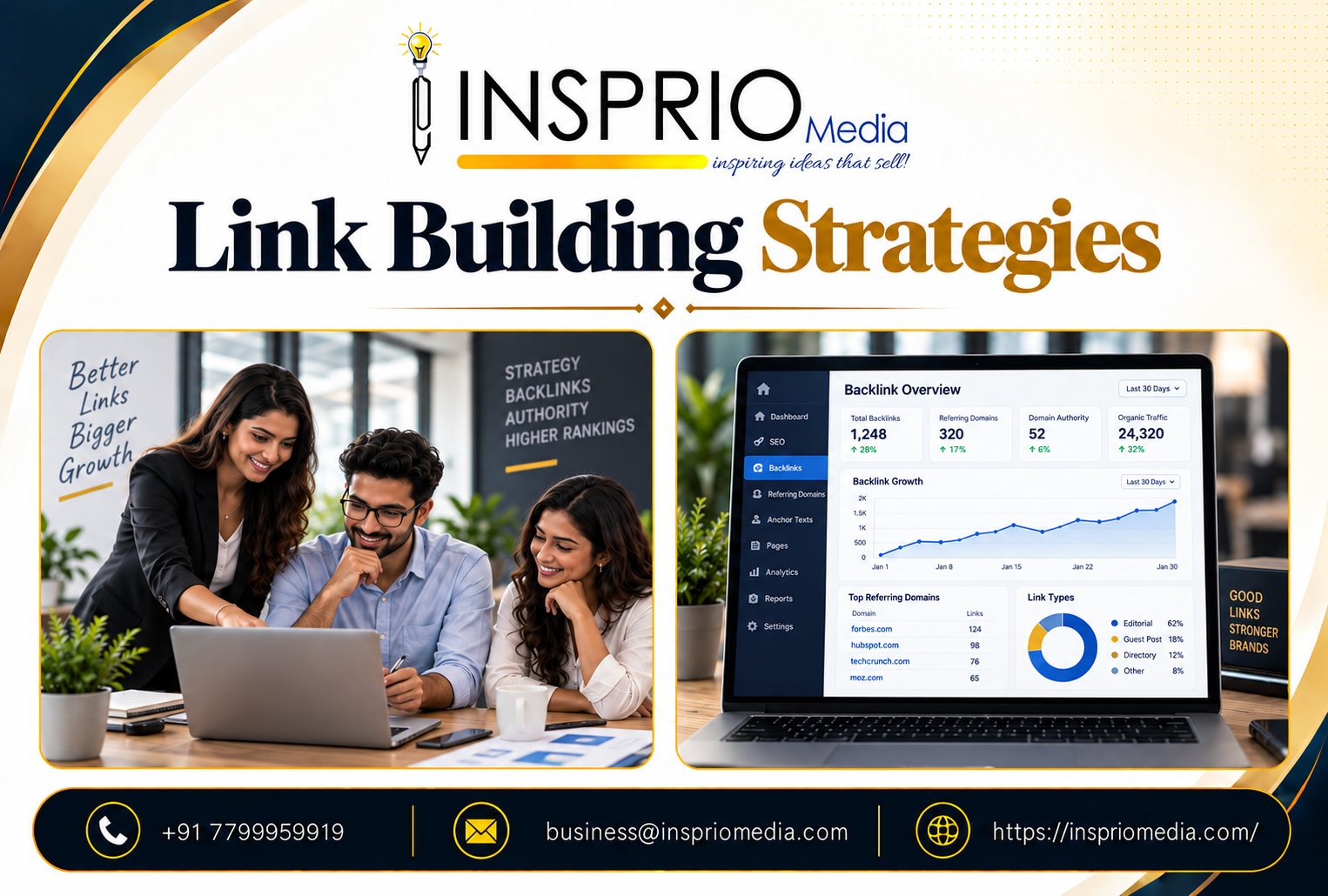
What Is Link Building?
Link building is the process of encouraging or earning hyperlinks from external websites to pages on your own website. These hyperlinks are commonly called backlinks. Well-planned Link Building Strategies concentrate on links that are editorially appropriate and useful to real readers rather than links created only to influence search rankings.
Imagine that your company publishes an in-depth industry report. A trade publication discovers the report, considers the information useful, and references it within one of its articles. That reference can send visitors directly to your website while also helping search engines discover and understand the relationship between relevant pages and topics.
Modern Link Building Strategies therefore combine SEO, digital PR, content creation, relationship building, research, outreach, branding, and audience development.
The strongest approach is generally to ask a simple question before pursuing a backlink: would this link still be valuable if search engines did not exist? If the answer is yes because it can generate qualified visitors, increase awareness, improve credibility, or help people discover useful information, it is usually a more meaningful opportunity.
Why Link Building Strategies Matter for Business Websites
Businesses often invest heavily in website design, content, technical SEO, advertisements, and social media. However, Link Building Strategies can help connect those activities to a broader digital ecosystem.
Links allow websites to reference one another. They can lead potential customers from industry publications, partner websites, associations, blogs, resource pages, news articles, interviews, research reports, and other relevant online destinations to your business.
1. They Can Increase Website Discovery
When relevant websites link to useful pages on your domain, people who are already interested in a related subject can discover your business. Good Link Building Strategies therefore focus not only on SEO metrics but also on referral traffic and genuine audience relevance.
2. They Strengthen Brand Visibility
A company repeatedly mentioned by reputable websites within its industry can gain additional exposure. Consistent Link Building Strategies can place the brand in front of journalists, customers, business owners, researchers, bloggers, suppliers, and industry professionals.
3. They Support Content Marketing
Exceptional content can remain undiscovered if nobody knows it exists. Link Building Strategies can provide a distribution mechanism for research studies, guides, tools, reports, templates, case studies, and educational resources.
4. They Can Generate Referral Traffic
A highly relevant link can continue sending visitors long after it is published. The commercial value of Link Building Strategies should therefore be evaluated using traffic, engagement, enquiries, conversions, and brand exposure—not simply backlink counts.
5. They Help Build Business Relationships
Many sustainable Link Building Strategies involve connecting with journalists, publishers, complementary businesses, industry organizations, experts, creators, universities, community organizations, and partners. These relationships can eventually produce collaborations that extend far beyond SEO.
Quality vs Quantity in Link Building
One of the most important principles behind modern Link Building Strategies is understanding that backlinks should not be evaluated purely by volume. Ten highly relevant links may offer significantly better business value than hundreds of unrelated links.
| Factor | Higher-Quality Opportunity | Lower-Quality Opportunity |
|---|---|---|
| Relevance | Closely connected to your industry or audience | Unrelated to your subject or customers |
| Placement | Contextual editorial reference | Random site-wide or automated placement |
| Traffic Potential | Real visitors may click the link | Almost no genuine readership |
| Editorial Control | Publisher chooses links because they add value | Links can be inserted automatically or purchased indiscriminately |
| Content Quality | Original, informative, maintained content | Thin, duplicated, or mass-generated pages |
| Brand Value | Association improves awareness or credibility | Association may provide little or negative value |
The most sustainable Link Building Strategies prioritize relevance, editorial quality, audience alignment, and long-term brand value.
1. Create Link-Worthy Content Assets
Excellent Link Building Strategies usually begin with content worth referencing. Outreach becomes much more difficult when the page being promoted provides nothing distinctive.
A normal product or service page can earn links, but publishers often have more reason to reference useful educational assets. Businesses can therefore develop resources specifically designed to answer difficult questions or provide original information.
Examples of Link-Worthy Assets
- Original industry research
- Statistics and data studies
- Annual industry reports
- Detailed how-to guides
- Interactive tools and calculators
- Free templates
- Checklists
- Infographics
- Original surveys
- Case studies
- Expert interviews
- Glossaries
- Resource libraries
- Comparison studies
- Benchmark reports
Content-focused Link Building Strategies work particularly well when a business has access to information that competitors cannot easily reproduce.
2. Develop Original Research and Data
Research-driven Link Building Strategies can be powerful because writers need credible information to support their own stories. A company with useful proprietary data may be able to turn that information into a report journalists, bloggers, analysts, and industry publications naturally want to reference.
For example, a digital marketing agency could analyze anonymized campaign data and publish findings about changes in conversion behavior. A recruitment company could publish salary benchmarks. An ecommerce technology provider could analyze seasonal purchasing trends.
Good research-based Link Building Strategies do not require enormous datasets. A carefully designed survey of customers, industry professionals, or business owners can provide useful insights when the methodology and limitations are explained transparently.
Make the data easy to reference. Add charts, concise summaries, definitions, methodology notes, downloadable visuals, and clear statistics. Journalists should not need to spend twenty minutes trying to identify the main finding.
3. Use Digital PR to Earn Editorial Coverage
Digital PR and Link Building Strategies increasingly overlap. Instead of contacting hundreds of websites with generic requests, companies can develop interesting stories and offer useful information to relevant journalists.
Possible digital PR campaigns include:
- Industry trend research
- Consumer surveys
- Expert commentary on current developments
- Regional business studies
- Market comparisons
- Data visualizations
- Company milestones with genuine public interest
- Original forecasts supported by evidence
The purpose of PR-focused Link Building Strategies should be to create something genuinely worth covering. A journalist is more likely to reference a business when it supplies helpful data, a credible expert, a strong story, or an original perspective.
Digital PR can also complement broader digital marketing services by increasing brand exposure beyond the company's own channels.
4. Build Links Through Expert Contributions
Businesses often employ people with deep professional knowledge. Expert-led Link Building Strategies turn that expertise into useful contributions for media outlets, blogs, podcasts, industry publications, interviews, and collaborative articles.
An accountant might explain a regulatory change. A cybersecurity professional could comment on an emerging threat. A property expert might provide regional market observations. A marketing specialist could discuss changes in customer acquisition.
To make expert-based Link Building Strategies successful, avoid generic commentary. Publishers want concise, useful, quotable insights that add something to the discussion.
Build a simple expert profile containing:
- Name and position
- Specific areas of expertise
- Professional experience
- Previous media appearances
- Topics the person can discuss
- Professional photograph
- Business website
- Fast contact method
5. Guest Contributions on Relevant Websites
Guest contributions can form part of responsible Link Building Strategies when the primary goal is to provide useful content to an appropriate audience. The focus should be editorial value, not mass-producing low-quality articles purely to insert keyword-rich backlinks.
Identify publications that genuinely serve your target market. Study their existing content before contacting editors. Look for subjects their audience needs but that have not yet been covered thoroughly.
A Better Guest Content Approach
- Research the website and its audience.
- Read recent articles.
- Identify genuine content gaps.
- Develop two or three original topic ideas.
- Explain why you are qualified to write about the subject.
- Create original, useful content.
- Use references naturally where relevant.
These Link Building Strategies are much more sustainable than sending identical articles to dozens of unrelated websites.
6. Resource Page Link Building
Resource pages are collections of useful websites, guides, tools, organizations, or educational materials. Resource-based Link Building Strategies involve finding relevant pages and suggesting a genuinely useful resource from your website.
A cybersecurity firm might find university resource pages covering online safety. A financial education business could find pages listing budgeting resources. A manufacturer may find industry associations maintaining supplier or technical resource directories.
The key to these Link Building Strategies is relevance. Do not request inclusion merely because a page contains links. Your content should genuinely improve the resource collection.
7. Broken Link Building
Websites evolve constantly. Pages are deleted, URLs change, companies close, and old resources disappear. Broken-link-focused Link Building Strategies identify relevant dead links and offer a useful replacement where appropriate.
The process typically involves finding resource pages within your industry, identifying links that no longer work, reviewing what the missing resource originally provided, and determining whether your website has a suitable replacement.
If you do not already have an appropriate resource, create something genuinely helpful rather than publishing a shallow copy. Strong Link Building Strategies improve the web page for the publisher and its audience rather than treating a broken link as merely an SEO opportunity.
8. Unlinked Brand Mention Outreach
Sometimes websites mention a business, product, founder, report, or study without linking to the original source. Unlinked mention outreach is one of the simplest Link Building Strategies because the publisher is already familiar with the brand.
Monitor the web for your:
- Company name
- Product names
- Founder or executive names
- Unique research reports
- Branded tools
- Campaign names
When an appropriate unlinked reference appears, contact the publisher politely and explain that a link may help readers find the original resource. Successful Link Building Strategies make the editor's job easier rather than demanding a backlink.
9. Reclaim Lost Backlinks
Businesses sometimes lose backlinks because pages are deleted, URLs change, websites are redesigned, content is updated, or links accidentally disappear. Backlink reclamation can therefore be included within ongoing Link Building Strategies.
Review links that previously existed and determine what happened. If an old URL on your website was removed, a suitable redirect may solve the problem. If the linking publisher changed the reference, check whether your content still deserves inclusion.
Reclamation-based Link Building Strategies can be efficient because the relationship between the two websites may already exist.
10. Build Strategic Business Partnerships
Real-world partnerships can create natural online references. Partnership-focused Link Building Strategies may involve suppliers, professional associations, technology partners, clients, distributors, charities, events, educational institutions, and complementary service providers.
For instance, two complementary businesses might publish a joint research report. A software provider may maintain an integration directory. An event organizer could list sponsors and speakers. An industry association might maintain a member directory.
These Link Building Strategies work best when the relationship exists independently of the backlink. The link becomes a logical online reflection of a genuine business connection.
11. Create High-Quality Case Studies
Case studies are powerful marketing resources and can also support Link Building Strategies. A detailed case study demonstrates experience, explains a real problem, describes the process, and documents measurable outcomes.
Where permission exists, the featured company may share the case study with its own audience. Vendors, technology partners, and industry publications may also reference particularly interesting examples.
For companies investing in performance marketing, case studies can connect acquisition data, ROI, conversion improvements, and campaign lessons with useful industry insights.
Effective case-study Link Building Strategies avoid vague success stories. Include context, challenges, methodology, measurable changes, and lessons readers can apply themselves.
12. Create Visual Assets That Publishers Can Reference
Visual content can strengthen Link Building Strategies because writers frequently need charts, diagrams, illustrations, maps, comparison graphics, and infographics to explain complicated subjects.
An original visual can be particularly useful when it converts complex data into an easily understandable format. Provide proper context and source information so publishers know how the graphic was created.
Businesses already investing in professional graphic design can extend those creative capabilities into linkable research graphics, diagrams, statistics, and educational assets.
Companies working with product visualization or architecture can also use 3D design services to create distinctive visual resources when sophisticated imagery genuinely improves the subject.
13. Build Industry Tools and Calculators
Useful free tools are among the most durable Link Building Strategies available to certain industries. Instead of publishing another article, develop something visitors can repeatedly use.
Possible tools include:
- ROI calculators
- Pricing calculators
- Loan calculators
- Marketing budget estimators
- Conversion calculators
- Measurement converters
- Interactive checklists
- Website audit tools
- Industry benchmarks
Tool-based Link Building Strategies require more development effort than ordinary blog posts, but a genuinely useful tool can continue attracting references for years.
Before developing interactive resources, make sure the website infrastructure is fast, secure, accessible, and technically reliable. Businesses considering upgrades can learn more about SEO-friendly web development.
14. Use Local Link Building Strategies
Local businesses do not always need national publications. Local Link Building Strategies can focus on geographically relevant organizations that customers actually recognize.
Potential opportunities include:
- Local chambers of commerce
- Business associations
- Community organizations
- Local news publications
- Local sponsorships
- Regional directories with editorial standards
- Educational institutions
- Local events
- Neighborhood organizations
- Relevant local blogs
Local Link Building Strategies can work particularly well alongside local search optimization. Businesses trying to increase geographical visibility can also explore GMB SEO services and Google Maps optimization.
15. Participate in Industry Events
Industry events create legitimate opportunities for Link Building Strategies. Conferences, webinars, workshops, trade shows, panels, networking groups, and educational programs frequently maintain websites containing speaker profiles, sponsor information, event resources, and recordings.
Instead of sponsoring an event simply to obtain a link, select events that reach potential customers, partners, or industry professionals. Strong Link Building Strategies should support wider commercial and branding objectives.
An expert presentation may later become a slide deck, research article, video, downloadable guide, or industry commentary piece, creating additional assets that can earn references.
16. Podcast and Interview Outreach
Podcasts and interviews can complement other Link Building Strategies. Podcast websites frequently publish episode pages with guest biographies and references to resources discussed during conversations.
The objective should not be appearing on as many podcasts as possible. Prioritize programs whose audiences closely match your customers or professional community.
Prepare useful talking points rather than delivering a promotional sales pitch. Expertise-led Link Building Strategies work when audiences receive genuine value from the contribution.
17. Strengthen Your Internal Linking Structure
Although backlinks receive most of the attention, successful Link Building Strategies should work alongside thoughtful internal linking. Internal links help visitors move between related pages and make important resources easier to discover.
For example, a company reading this guide may also need broader website SEO services. Connecting related resources provides a logical path for users who want additional information.
Internal Link Building Strategies should use descriptive anchors where appropriate and connect pages based on genuine topical relationships rather than inserting links randomly.
18. Promote Content Through Social Media
Social visibility and Link Building Strategies are different disciplines, but they can support one another. Publishers cannot reference a resource they never discover.
A new research study shared through LinkedIn, X, Facebook, industry communities, newsletters, and professional groups can reach writers or business owners who later decide to reference it.
Businesses building a coordinated distribution process may also benefit from understanding why social media management is important for business growth.
Effective Link Building Strategies therefore consider content promotion part of the process rather than publishing an article and simply waiting for backlinks to appear.
19. Connect Link Building With Brand Development
Recognizable brands can often earn references more naturally because people know who they are. Brand-oriented Link Building Strategies therefore complement investments in positioning, messaging, visual identity, customer experience, and reputation.
A strong brand gives journalists and publishers confidence about whom they are referencing. Businesses strengthening their market identity can explore branding services for powerful business identities.
Over time, successful Link Building Strategies can also support brand-building by increasing the number of reputable places where customers encounter the company.
20. Combine Online and Offline Marketing
Some of the most overlooked Link Building Strategies begin offline. Sponsorships, community events, workshops, exhibitions, seminars, partnerships, charity initiatives, and traditional PR can all create online coverage.
For example, a business sponsoring a meaningful community initiative may receive references from organizers, local publications, partner organizations, and event websites.
A coordinated approach combining digital channels with offline marketing services can help businesses generate real-world visibility that naturally extends online.
21. Competitor Backlink Gap Research
Competitive research can provide ideas for Link Building Strategies, but the goal should not be blindly copying every backlink competitors possess.
Instead, analyze why certain websites reference competing businesses. Perhaps the competitor produced original research, maintains a useful calculator, participates in an association, provides expert quotes, or created an exceptional resource.
Competitor-based Link Building Strategies should identify patterns and opportunities rather than simply build replicas.
Ask:
- Which competitor resources earn the most meaningful references?
- What content formats are frequently cited?
- Which industry publications regularly reference companies like ours?
- What information is missing from existing resources?
- Can we create something substantially more useful?
22. Build a Statistics Resource
Statistics pages can become highly effective Link Building Strategies when they are accurate, useful, updated, and supported by credible sources.
Journalists and bloggers frequently search for statistics while preparing articles. A well-organized resource saves them time.
Instead of simply copying statistics from other websites, better Link Building Strategies add original analysis, categorize information clearly, identify primary sources, explain dates and methodology, and update outdated data.
23. Create Comprehensive Industry Guides
Comprehensive guides are classic Link Building Strategies because they can become reference materials for customers, students, professionals, and writers.
A useful guide should solve a complete problem instead of stretching a basic answer into thousands of unnecessary words.
High-performing guide-based Link Building Strategies typically include practical examples, original insights, diagrams, expert commentary, definitions, checklists, frequently asked questions, and clear navigation.
24. Create Topic Clusters Instead of Isolated Articles
Publishing dozens of unrelated blog posts rarely produces a coherent SEO strategy. Strong Link Building Strategies are more effective when supported by topic clusters.
A topic cluster usually includes a comprehensive pillar resource supported by more specific articles. Those pages naturally reference one another and demonstrate comprehensive coverage of a subject.
For example, a digital marketing cluster might cover SEO, paid advertising, analytics, social media, content, website development, local marketing, and conversion optimization. Businesses interested in a broader acquisition framework can read about digital marketing strategies for business growth.
When Link Building Strategies attract references to one powerful resource, thoughtful internal links can help users discover associated material throughout the cluster.
25. Improve Existing Content Before Outreach
One of the simplest ways to improve Link Building Strategies is to upgrade the pages being promoted.
Before contacting publishers, evaluate whether your resource is genuinely better than competing pages.
- Is the information current?
- Are important questions answered?
- Does the page contain original examples?
- Are claims properly supported?
- Is the page visually easy to read?
- Does it load quickly?
- Is the mobile experience good?
- Are there useful graphics?
- Can readers easily identify the author?
- Is there a clear reason another website should reference it?
Content improvement should happen before aggressive Link Building Strategies. Promotion cannot permanently compensate for a weak destination.
26. Create a Personalized Outreach Process
Outreach is one of the most misunderstood parts of Link Building Strategies. Generic emails sent to thousands of people usually provide little value to publishers.
Good outreach demonstrates that you understand the recipient's website and explains why the resource is genuinely relevant.
Effective Outreach Structure
- Identify the appropriate person.
- Understand the publication and audience.
- Explain the reason for contacting them quickly.
- Show exactly why the resource is useful.
- Avoid exaggerated claims.
- Keep the message concise.
- Make reviewing the resource easy.
- Follow up reasonably rather than repeatedly.
Relationship-oriented Link Building Strategies respect the editor's time and accept that not every pitch will receive a response.
27. Avoid Over-Optimized Anchor Text
Natural Link Building Strategies produce diverse anchor text because independent websites describe resources in different ways.
Some links may use a company name. Others might use an article title, URL, product name, descriptive phrase, or words such as “this report.” Trying to control every external anchor using the same commercial keyword can create an unnatural pattern.
Therefore, sustainable Link Building Strategies prioritize earning legitimate editorial references rather than engineering identical anchors across many websites.
28. Understand Sponsored and Paid Links
Not every online link is an organic editorial recommendation. Businesses may pay for advertising, sponsorships, advertorials, partnerships, affiliate placements, or other promotional exposure.
These activities can have legitimate marketing value, but they should not be confused with editorial Link Building Strategies. Search engines publish specific guidance covering links created as part of paid arrangements.
Google's spam policies state that links involving payment or sponsorship should be appropriately qualified, such as with rel="sponsored" or rel="nofollow" where applicable. Businesses should therefore structure campaigns around genuine marketing objectives rather than purchasing links simply to manipulate rankings.
29. Link Building Strategies to Avoid
Shortcuts can be tempting, particularly when a new website needs visibility quickly. However, risky Link Building Strategies can waste money and create long-term cleanup work.
Avoid Mass Link Purchases
Packages promising hundreds or thousands of backlinks for extremely low prices rarely resemble sustainable Link Building Strategies. Investigate where links originate, why they exist, and whether they provide any genuine audience value.
Avoid Automated Comment Spam
Automatically posting comments across unrelated websites is not a meaningful approach to Link Building Strategies. Comments should exist to participate genuinely in discussions, not to manufacture backlinks.
Avoid Low-Quality Link Networks
Sites created primarily for selling or exchanging links can create questionable patterns. Sustainable Link Building Strategies should focus on real publishers and audiences.
Avoid Irrelevant Directories
Legitimate business directories can help users discover companies, especially within local markets or specialist industries. However, submitting a site to hundreds of unrelated directories should not form the foundation of Link Building Strategies.
Avoid Excessive Reciprocal Linking
Businesses naturally link to partners and useful resources, but systematic large-scale exchanges created only to influence rankings are not strong Link Building Strategies.
Avoid Site-Wide Keyword-Rich Links
Links repeated across hundreds of pages can create very different patterns from natural editorial citations. Quality Link Building Strategies normally focus on contextually relevant placements.
30. How to Evaluate a Backlink Opportunity
Professional Link Building Strategies need a repeatable qualification process.
| Question | Why It Matters |
|---|---|
| Is the website relevant? | Topical relevance helps determine whether actual readers may value the reference. |
| Does the site publish original content? | Original editorial material is generally more meaningful than automatically generated pages. |
| Does it appear to have a genuine audience? | Real audiences can produce referral traffic and brand exposure. |
| Is the content maintained? | Active editorial websites are generally more useful than abandoned properties. |
| Would we value this mention without SEO? | This helps distinguish genuine marketing opportunities from artificial link placements. |
| Does the website appear trustworthy? | Businesses should consider the reputational impact of associations. |
The final decision within your Link Building Strategies should consider the complete picture rather than relying on one third-party metric.
31. Measure the Performance of Link Building Strategies
Measurement ensures that Link Building Strategies contribute to actual marketing objectives.
Useful metrics can include:
- New referring domains
- Relevant editorial links earned
- Referral visits
- Conversions from referral traffic
- Organic landing-page performance
- Brand mentions
- Coverage in target publications
- Qualified enquiries
- Growth of important content assets
- Relationships established with publishers
Google Search Console also provides a Links report that can help website owners review external linking sites, linked pages, internal links, and common linking text. Treat such reports as one source of information within broader Link Building Strategies, rather than assuming any one report contains every link on the web.
32. Link Building Strategies for New Websites
A new domain usually has limited recognition, so early Link Building Strategies should focus on establishing genuine presence rather than immediately chasing large quantities of backlinks.
Start with:
- Completing relevant company and professional profiles.
- Joining legitimate industry organizations.
- Building relationships with partners.
- Publishing excellent foundational content.
- Creating one or two genuinely linkable resources.
- Participating in industry discussions.
- Seeking relevant local citations where applicable.
- Promoting useful resources directly to appropriate audiences.
Early Link Building Strategies should create a natural foundation that can grow as the business earns recognition.
33. Link Building Strategies for Established Brands
Established companies often have different opportunities. Their Link Building Strategies can use existing brand recognition, customer data, industry experts, partnerships, proprietary research, and media relationships.
Large businesses should audit unlinked mentions, reclaim lost references, turn internal data into reports, create digital PR campaigns, interview subject-matter experts, and build high-value evergreen resources.
For established brands, Link Building Strategies should also protect quality. Scaling outreach should not mean lowering editorial standards.
34. Link Building Strategies for B2B Companies
B2B Link Building Strategies frequently perform best when centered on expertise and data.
Potential B2B assets include:
- Industry benchmarks
- White papers
- Original surveys
- ROI calculators
- Implementation guides
- Technical reports
- Case studies
- Webinars
- Expert commentary
- Research-backed opinion pieces
B2B buyers often perform extensive research before contacting vendors. Therefore, Link Building Strategies that increase the visibility of detailed educational resources can support awareness earlier in the buying journey.
35. Link Building Strategies for Ecommerce Websites
Ecommerce Link Building Strategies should extend beyond individual product pages.
Retailers can create buying guides, trend reports, sizing tools, calculators, original photography, consumer surveys, comparison resources, seasonal research, interactive tools, and expert educational content.
A retailer selling specialist outdoor equipment, for example, might publish original safety research or destination resources that outdoor publications genuinely want to reference.
Creative ecommerce Link Building Strategies provide value beyond the transaction.
36. Link Building Strategies for Local Service Businesses
Local contractors, clinics, consultants, agencies, lawyers, property businesses, restaurants, and other service providers can use locally focused Link Building Strategies.
Consider community partnerships, professional associations, local sponsorships, regional press, neighborhood resources, educational initiatives, and local events.
The best local Link Building Strategies strengthen the business's connection to its actual community rather than merely creating listings everywhere possible.
37. Integrate Link Building With Your Wider SEO Strategy
Backlinks alone cannot compensate for a poor website. Successful Link Building Strategies should operate alongside technical SEO, useful content, keyword research, good website architecture, mobile usability, page performance, clear conversion paths, and strong internal linking.
A business attracting excellent backlinks to pages that load slowly or fail to answer search intent may still struggle to turn visibility into commercial outcomes.
That is why Link Building Strategies should be considered part of a comprehensive organic growth system rather than an isolated activity.
38. Combine Link Building With Content Refreshes
Old articles often contain valuable foundations but become outdated. Content-refresh Link Building Strategies involve improving existing resources before promoting them again.
Update old statistics, expand missing sections, replace outdated screenshots, improve examples, add original data, strengthen citations, and improve navigation.
Refreshing established pages can make Link Building Strategies more efficient because the URL may already have history, visibility, and existing references.
39. Create an Outreach Calendar
Consistency is important for Link Building Strategies. Instead of conducting one aggressive campaign and then stopping for six months, create an ongoing process.
| Week | Primary Activity |
|---|---|
| Week 1 | Research prospects and identify content opportunities. |
| Week 2 | Create or improve link-worthy resources. |
| Week 3 | Conduct personalized outreach and digital PR. |
| Week 4 | Follow up, review results, reclaim lost links, and document lessons. |
A structured calendar makes Link Building Strategies easier to manage and measure across teams.
40. Build Relationships Before You Need Them
One of the most overlooked Link Building Strategies is relationship building without immediately asking for anything.
Follow industry writers. Share genuinely useful articles. Participate constructively in discussions. Attend conferences. Collaborate on projects. Introduce professionals who could help one another.
When businesses build authentic professional networks, future Link Building Strategies become less dependent on cold outreach.
41. Focus on Topical Relevance
A relevant backlink places your company in a meaningful context. For this reason, topical relevance should guide Link Building Strategies.
A software business does not need backlinks from every possible website. It needs recognition from publications, experts, partners, communities, and organizations connected with its customers and sector.
This focus makes Link Building Strategies more useful from both an SEO and brand-development perspective.
42. Use Brand Anchors Naturally
Brands cannot fully control how independent publishers link to them, and they generally should not try. Healthy Link Building Strategies accept natural anchor variation.
Brand names, publication titles, URLs, descriptive phrases, and contextual anchors can all appear naturally. The overall objective of Link Building Strategies should be earning legitimate recommendations instead of manufacturing repetitive keyword patterns.
43. Make Your Website Easy to Cite
Small usability improvements can strengthen Link Building Strategies. Make important information easy to find and reference.
Research pages should clearly show publication dates, authors, methodology, charts, sources, and key findings. Statistics should have context. Images should have descriptive filenames and alt text. Important resources should have permanent URLs where possible.
These details make editorial Link Building Strategies easier because publishers can quickly understand and reference your work.
44. Maintain Your Linkable Assets
Creating a research report once is not enough. Long-term Link Building Strategies include maintaining successful resources.
If a statistics page earns references, update it every year. If a calculator becomes popular, maintain the underlying data. If an industry guide performs well, keep it current.
Maintained resources can turn Link Building Strategies into compounding assets rather than one-time campaigns.
45. Link Building and Business Reputation
Backlink decisions can influence how people perceive a company. Therefore, reputation should remain part of Link Building Strategies.
Being referenced by trusted industry organizations can create positive brand exposure, while appearing across obviously low-quality or irrelevant websites may provide little business value.
Strong Link Building Strategies ask not only “Can we get this link?” but also “Do we want customers to see our brand associated with this website?”
46. Create Better Content Than Existing Search Results
Before developing content-led Link Building Strategies, examine what already exists. If ten comprehensive guides already answer a question perfectly, publishing an eleventh similar guide may not attract attention.
Look for meaningful differentiation:
- More recent data
- Original research
- Expert interviews
- Better visual explanations
- Interactive features
- Real case studies
- More practical examples
- Better organization
- Regional insights
- Industry-specific recommendations
Differentiation gives Link Building Strategies a stronger reason to succeed.
47. Track Referral Conversions, Not Only Backlinks
Backlink totals can become a vanity metric. Commercial Link Building Strategies should also examine what visitors do after arriving.
Track relevant events such as:
- Contact form submissions
- Phone enquiries
- Demo requests
- Newsletter subscriptions
- Downloads
- Account registrations
- Purchases
- Consultation bookings
A single link generating qualified customers may be more valuable to the business than dozens of placements that never send a visitor. This is why mature Link Building Strategies connect SEO measurement with analytics and revenue.
48. Build Linkable Assets Around Customer Questions
Customer support and sales teams can provide excellent ideas for Link Building Strategies. They hear questions that prospective customers repeatedly ask.
Collect those questions and identify which ones could become authoritative resources. Some may be suited to guides, calculators, templates, comparison pages, checklists, or research reports.
Customer-driven Link Building Strategies often perform well because they begin with proven information needs.
49. Create Industry Glossaries and Definitions
Complex industries contain terminology that beginners struggle to understand. Glossary-based Link Building Strategies can create useful reference points when definitions are genuinely thorough.
Instead of publishing one sentence per term, add examples, related concepts, diagrams, common misunderstandings, and links to deeper guides.
A well-maintained glossary can support both user education and broader Link Building Strategies.
50. Create a Sustainable Link Building Workflow
The most effective Link Building Strategies become repeatable business processes rather than occasional experiments.
Recommended Workflow
- Set clear business and SEO objectives.
- Audit the existing backlink profile.
- Identify pages worth promoting.
- Create or improve linkable assets.
- Research highly relevant publications and organizations.
- Prioritize prospects by relevance and audience value.
- Conduct personalized outreach.
- Promote assets through existing channels.
- Monitor mentions and earned links.
- Review referral traffic and conversions.
- Document successful approaches.
- Repeat and improve the process.
Documented Link Building Strategies make it easier for marketing teams to maintain quality when campaigns expand.
A Practical 90-Day Link Building Plan
Days 1–30: Research and Preparation
Begin by auditing the website, existing content, backlink profile, competitors, target audiences, and potential publishing partners. The first stage of your Link Building Strategies should identify which pages deserve promotion and which need improvement first.
Select a manageable number of valuable target pages. Build a database of relevant publishers, journalists, organizations, partners, and resource pages.
During this period, also review technical SEO and internal linking so your Link Building Strategies support pages that are technically healthy and easy to navigate.
Days 31–60: Asset Creation and Outreach
Create at least one differentiated asset. It could be original research, a comprehensive guide, useful statistics, a calculator, template, case study, or visual resource.
Start personalized outreach after the content is ready. Effective Link Building Strategies should promote assets selectively rather than emailing every website found in a database.
At the same time, monitor brand mentions, identify broken references, reclaim appropriate lost backlinks, and connect with relevant industry professionals.
Days 61–90: Measurement and Expansion
Review which messages generated replies, which resources earned coverage, which websites sent traffic, and which visitors completed meaningful actions.
Use those lessons to improve subsequent Link Building Strategies. Expand approaches that created genuine value and discontinue activities that produced poor-quality opportunities.
By the end of ninety days, the business should have a documented system that can continue evolving instead of relying on one-off Link Building Strategies.
Authoritative Resources for Link Building and SEO
Frequently Asked Questions About Link Building Strategies
1. What are Link Building Strategies?
Link Building Strategies are planned methods businesses use to earn or attract links from relevant external websites. Common approaches include digital PR, original research, expert contributions, resource outreach, industry partnerships, useful tools, content promotion, unlinked mention reclamation, and high-quality educational content.
2. Why are Link Building Strategies important for SEO?
Link Building Strategies can help valuable content gain visibility across the web while generating referral traffic, industry recognition, and relevant references. Backlinks should be considered alongside technical SEO, content quality, user experience, internal linking, and overall website authority rather than treated as a standalone ranking shortcut.
3. How long do Link Building Strategies take to produce results?
The timeline for Link Building Strategies varies significantly. A digital PR campaign may earn coverage quickly, while content-led outreach and relationship building may take several months. SEO results also depend on competition, website history, content quality, technical condition, and many other factors.
4. How many backlinks does a business website need?
There is no universal backlink number. Effective Link Building Strategies focus on relevance and quality rather than achieving an arbitrary count. The competitive environment also matters: a specialist local service business and a national finance website operate in very different search landscapes.
5. What makes a backlink high quality?
A useful backlink generally comes from a relevant, legitimate website and appears in a context where readers can reasonably benefit from following it. Good Link Building Strategies also consider audience alignment, editorial standards, content quality, referral potential, and brand reputation.
6. Should businesses buy backlinks?
Businesses should be cautious about buying links intended to manipulate organic search rankings. Sustainable Link Building Strategies focus on earning editorial references, creating useful resources, digital PR, partnerships, and legitimate marketing. Paid or sponsored links should follow applicable search-engine guidance regarding link attributes.
7. Is guest posting still useful for link building?
Guest contributions can support Link Building Strategies when they provide genuine expertise to a relevant audience. Mass-producing low-value posts primarily to insert backlinks is fundamentally different from contributing an original article to a respected industry publication.
8. Can local businesses use Link Building Strategies?
Yes. Local Link Building Strategies can include community partnerships, industry associations, local events, regional media, educational initiatives, relevant local directories, sponsorships, and collaborations with complementary businesses.
9. How can I monitor backlinks to my website?
Google Search Console provides a Links report that shows examples of external linking sites, top-linked pages, link text, and internal linking information. Businesses implementing Link Building Strategies may also use reputable third-party SEO platforms to monitor new and lost backlinks and analyze referring domains.
10. What is the biggest mistake businesses make with Link Building Strategies?
One common mistake is treating backlinks as a numbers game. Successful Link Building Strategies focus on building useful assets and genuine industry relationships rather than collecting large quantities of irrelevant links. A backlink should ideally have value because people may actually see, trust, or use it.
11. Can content marketing help earn backlinks?
Yes. Original research, case studies, statistics, guides, tools, infographics, templates, and expert resources can all support Link Building Strategies. Content performs best when it offers information, data, or utility that other publishers have a genuine reason to reference.
12. Should Link Building Strategies target the homepage or internal pages?
Good Link Building Strategies can attract links to both the homepage and useful internal pages. In many cases, detailed guides, studies, tools, and resources naturally earn more editorial references because publishers can cite the exact information relevant to their readers.
How Link Building Fits Into Long-Term Business Growth
Links should not be viewed as isolated SEO objects. Effective Link Building Strategies create opportunities for businesses to become visible wherever their audiences research, learn, compare, and make decisions.
A respected industry article mentioning your company can produce referral visitors. A research report can establish expertise. An event partnership can introduce the brand to a new community. An expert quote can improve awareness. A useful calculator may attract customers long after it is launched.
That broader perspective is what makes sustainable Link Building Strategies fundamentally different from schemes designed simply to manufacture ranking signals.
Why Content Quality Must Come First
No outreach technique can consistently compensate for content nobody wants to reference. Before scaling Link Building Strategies, businesses should ask whether their pages deserve the attention they are requesting.
If a page merely repeats information already available on hundreds of websites, publishers have little reason to cite it. Add something distinctive: original data, specialist knowledge, better examples, practical tools, clearer explanations, unique graphics, or an opinion supported by evidence.
The strongest Link Building Strategies make outreach easier because the content itself provides a compelling reason to respond.
Why Consistency Is More Important Than Short-Term Volume
Search visibility and brand recognition usually develop over time. Instead of attempting to acquire a large quantity of links in a few weeks, sustainable Link Building Strategies create regular opportunities for editorial recognition.
A business might publish original research this quarter, collaborate with experts next quarter, produce a useful tool later in the year, and continuously monitor brand mentions and media opportunities.
That consistent process allows Link Building Strategies to develop alongside the company's broader content, PR, SEO, and branding efforts.
Link Building Strategies and Search Intent
Businesses should also consider which pages deserve additional exposure. Commercial service pages matter, but informational resources frequently offer better opportunities for Link Building Strategies.
A journalist may be reluctant to reference a promotional landing page but happy to link to an original research study from the same company. Internal linking can then help users navigate from the research asset to relevant services.
This relationship between informational content and commercial pages allows Link Building Strategies to support the broader customer journey without turning every resource into a sales pitch.
Building a Link-Worthy Brand
Eventually, the goal should be bigger than individual campaigns. Mature Link Building Strategies help create a business that people naturally want to mention.
Companies earn recognition by publishing excellent resources, contributing expertise, delivering good work, participating in their industries, creating useful tools, producing research, and developing relationships.
When those activities become part of company culture, Link Building Strategies stop feeling like an isolated SEO tactic and become an extension of the organization's reputation.
Final Checklist for Link Building Strategies
- Define your audience before prospecting for websites.
- Prioritize relevance over backlink quantity.
- Create resources that deserve citations.
- Develop original research wherever possible.
- Use digital PR to distribute interesting stories.
- Make subject-matter experts available to publishers.
- Use guest contributions selectively.
- Monitor unlinked brand mentions.
- Reclaim valuable lost backlinks.
- Create strategic industry partnerships.
- Use local opportunities for geographically focused businesses.
- Maintain successful linkable assets.
- Avoid manipulative mass-link tactics.
- Do not obsess over one third-party authority metric.
- Monitor referral traffic and conversions.
- Connect external links with good internal linking.
- Improve website quality before aggressive outreach.
- Keep outreach personalized and relevant.
- Follow applicable search-engine guidelines.
- Review and improve your process continuously.
This checklist helps keep Link Building Strategies focused on sustainable marketing value instead of temporary shortcuts.
Conclusion
The future of Link Building Strategies belongs to businesses that earn attention rather than manufacture it. Search engines, publishers, customers, and industry professionals all have one important thing in common: they prefer useful information and trustworthy resources.
Build original assets. Publish research. Create practical tools. Develop industry relationships. Participate in meaningful conversations. Help journalists with useful expertise. Strengthen partnerships. Monitor brand mentions. Maintain valuable resources. Most importantly, make every backlink opportunity part of a broader strategy for increasing business visibility and credibility.
When approached this way, Link Building Strategies can support SEO while simultaneously generating referral traffic, strengthening reputation, expanding professional networks, and exposing a business to new audiences.
No single technique guarantees results. Markets differ, competition changes, and search systems continue evolving. Sustainable Link Building Strategies therefore require ongoing research, experimentation, measurement, quality control, and adaptation.
The businesses most likely to build durable visibility are those that stop asking how to create the largest number of backlinks and instead ask how they can become a source that other websites genuinely want to reference. That principle should remain at the center of all responsible Link Building Strategies.
Grow Your Business With Insprio Media
If your business needs a coordinated approach to SEO, content, web development, performance marketing, branding, social media, and Link Building Strategies, Insprio Media can help you develop a digital marketing plan designed around your business goals.
Explore Insprio Media to learn more about digital growth services and solutions for business websites.
Contact Insprio Media
Phone: +91 7799959919
Email: business@inspriomedia.com
Website: https://inspriomedia.com/