How Often Should Businesses Post on Social Media?
A practical guide to Social Media Posting Frequency, content planning, platform selection, consistency, engagement and sustainable business growth.
Social media has become one of the most important communication channels for modern businesses. Whether a company is a local service provider, ecommerce brand, professional consultancy, B2B company, restaurant, healthcare business or creative agency, maintaining an active social presence can help it stay visible to existing and potential customers.
However, one question appears again and again: how often should a business actually post? Should a company publish something every day? Is three times a week enough? Should Instagram receive more content than LinkedIn? Does posting more frequently automatically produce better results?
The answer is more nuanced than simply choosing a number. Social Media Posting Frequency should be based on the audience, platform, business objective, available resources, content quality and historical performance. A business that can create useful content consistently may be able to publish more frequently than a business with a small marketing team and a highly specialized audience.
This guide explains how to develop a practical Social Media Posting Frequency strategy without turning social media into a daily burden. It also explains how businesses can use analytics, content calendars, different formats and platform-specific strategies to decide how often to publish.
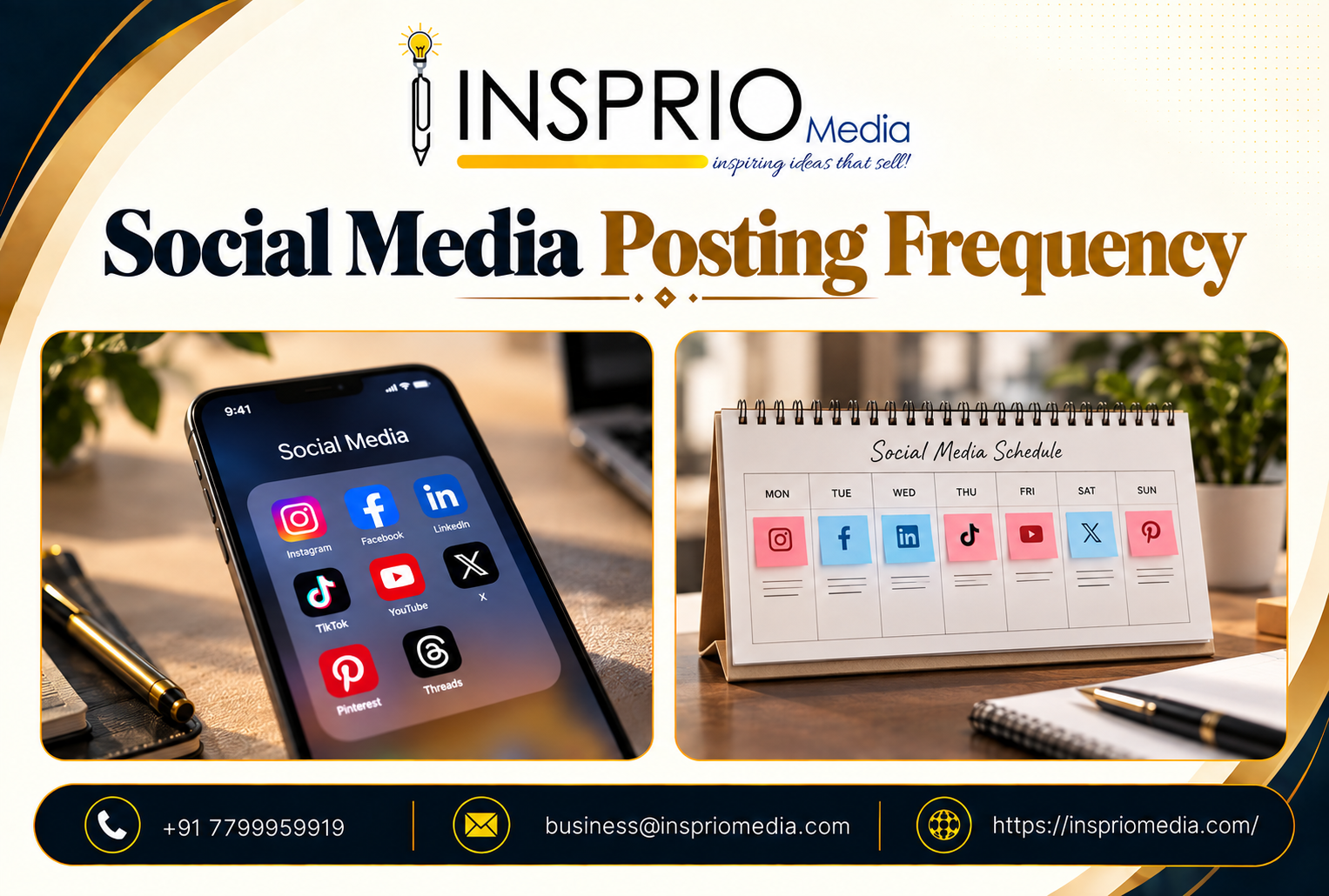
What Is Social Media Posting Frequency?
Social Media Posting Frequency refers to how often a business publishes content on its social media channels during a particular period. This could be measured daily, weekly or monthly. For example, a company might publish five Instagram posts per week, three LinkedIn posts per week, several Stories throughout the week and two short-form videos.
Social Media Posting Frequency is different from simply being active online. A company can be online every day while publishing only when it has something useful to say. Another company may publish several pieces of content each day. Both approaches can work when they are aligned with audience expectations and business objectives.
The important point is that Social Media Posting Frequency should be intentional rather than random. Posting because the calendar says "post today" can lead to repetitive content, weak creative ideas and audience fatigue. A good content strategy instead asks what the audience needs, what the business wants to achieve and which format can communicate the message effectively.
Why Does Social Media Posting Frequency Matter?
Social Media Posting Frequency matters because audiences generally need repeated exposure before they become familiar with a business. A person may see one post today, another several days later and eventually visit the company's profile when they need the product or service.
Consistency also helps a company establish a recognizable rhythm. When people regularly encounter useful information from a brand, they have more opportunities to understand its expertise, personality and value proposition.
At the same time, increasing Social Media Posting Frequency without improving content quality can create the opposite effect. Followers may feel that their feeds are becoming repetitive or overly promotional.
This is why Social Media Posting Frequency should never be treated as a race to publish the highest number of posts. The goal is to create a sustainable communication system that keeps the brand visible without exhausting the team or overwhelming the audience.
Is There a Perfect Number of Social Media Posts?
There is no single perfect number of posts for every company. A restaurant with daily offers and visually appealing food content may naturally have more opportunities to publish than an industrial engineering company whose audience needs detailed technical information.
Likewise, a news publisher may need a much higher Social Media Posting Frequency because its content is connected to current events, while a professional consultant may gain more value from fewer, deeper posts.
Businesses should therefore use industry benchmarks as starting points rather than rigid rules. The best Social Media Posting Frequency is the frequency that can be maintained consistently while producing meaningful results.
Recommended Social Media Posting Frequency by Platform
Each platform has its own content formats, audience behavior and communication style. Therefore, businesses should avoid using exactly the same Social Media Posting Frequency across every network.
| Platform | Practical Starting Frequency | Useful Formats | Primary Focus |
|---|---|---|---|
| 3–5 feed posts per week | Reels, carousels, images, Stories | Visual discovery and engagement | |
| 3–5 posts per week | Images, videos, links, community posts | Community and reach | |
| 2–5 posts per week | Text posts, documents, videos, case studies | Professional authority and B2B visibility | |
| X | Several updates per week or more | Short commentary, news, conversations | Real-time discussion |
| YouTube | 1–2 quality videos per week or a sustainable schedule | Long videos, Shorts, community posts | Education and video discovery |
| TikTok | 3–7 short videos per week as a starting point | Short-form video | Discovery and entertainment |
These figures are starting points, not universal rules. Your actual Social Media Posting Frequency should be adjusted after reviewing reach, engagement, saves, shares, clicks, leads and conversions.
How Often Should Businesses Post on Instagram?
Instagram is highly visual, which gives businesses many opportunities to communicate through images, Reels, carousels and Stories. A practical Social Media Posting Frequency for many businesses can begin with three to five feed posts per week.
A business could publish a product-focused carousel on Monday, an educational Reel on Tuesday, a customer story on Thursday and a behind-the-scenes post on Saturday. Stories can be used more frequently because they can support everyday communication without requiring every update to become a permanent feed post.
The best Instagram Social Media Posting Frequency depends heavily on content quality. If a company can create five excellent pieces of content each week without sacrificing originality, that may work well. If producing five high-quality posts becomes stressful, three strong posts can be more sustainable.
Use Instagram Stories Differently
Stories can be used for quick updates, polls, questions, product demonstrations, customer reviews, event reminders and informal content. This means a company does not need to force every small message into its primary feed.
A balanced Instagram Social Media Posting Frequency can therefore involve a smaller number of high-quality feed posts combined with more frequent Stories.
How Often Should Businesses Post on Facebook?
Facebook remains useful for businesses that depend on local communities, customer relationships, events, groups and website traffic. A practical Social Media Posting Frequency can be around three to five posts per week, although the right cadence depends on the business.
Local businesses can use Facebook to share offers, educational posts, customer experiences, event announcements, photographs and useful community information. Service businesses can also use Facebook to answer common questions and direct users toward landing pages.
The important thing is not to duplicate identical content without adaptation. If a company posts the same message everywhere, the audience may have little reason to follow multiple channels.
How Often Should Businesses Post on LinkedIn?
LinkedIn is particularly valuable for B2B businesses, professional services, consultants, technology companies, recruitment businesses and organizations that want to demonstrate expertise.
A practical LinkedIn Social Media Posting Frequency can begin with two to five posts per week. The content should focus on useful business information rather than turning every post into a sales advertisement.
Good LinkedIn content can include industry observations, practical advice, case studies, project lessons, company milestones, employee stories, research commentary and answers to common customer questions.
LinkedIn's own marketing resources emphasize the importance of establishing a publishing cadence and using an editorial calendar to maintain consistency. Businesses can use this principle to create a Social Media Posting Frequency that their teams can realistically maintain.
How Often Should Businesses Post on YouTube?
YouTube is different from many other social platforms because video production can require significantly more planning and editing. For this reason, Social Media Posting Frequency should not be based solely on the number of videos that can technically be uploaded.
One strong educational video every week can be more practical than seven rushed videos. YouTube itself recommends a consistent and sustainable release schedule and encourages creators to consider frequency, consistency, content volume and production efficiency when building a schedule.
Businesses can also combine long-form videos with Shorts and Community Posts. This allows a brand to maintain a useful Social Media Posting Frequency without creating a full-length video every day.
YouTube's official guidance also emphasizes that there is no requirement to upload daily or even weekly for every channel. Sustainable quality and audience connection matter. Businesses can use YouTube Analytics to understand which formats and topics their audiences actually watch.
How Often Should Businesses Post on TikTok?
TikTok is strongly focused on short-form video and discovery. Businesses that use TikTok should consider a Social Media Posting Frequency that gives them enough opportunities to test ideas without sacrificing creativity.
A company could begin with three to seven short videos per week. The number can increase if the team has a strong production system and the content continues to perform well.
Rather than creating seven unrelated promotional videos, businesses can build recurring formats. For example, a digital marketing company could create "Marketing Tip Monday," "Website Mistake Wednesday" and "Strategy Friday." A restaurant could create recurring food preparation videos, customer reactions and chef tips.
Quality vs. Quantity in Social Media
One of the biggest mistakes businesses make is assuming that more posts automatically mean better social media performance. Quantity creates more opportunities for visibility, but poor content can weaken the overall experience.
Modern Social Media Posting Frequency should therefore be connected to content quality. Every post should have a reason for existing.
Ask:
- Does this post educate the audience?
- Does it answer a customer question?
- Does it demonstrate expertise?
- Does it entertain or inspire?
- Does it show a product or service in context?
- Does it encourage meaningful interaction?
- Does it support a current business objective?
If the answer is no to all of these questions, increasing Social Media Posting Frequency may not solve the underlying problem.
Why Posting Too Much Can Become a Problem
High Social Media Posting Frequency can create problems when posts are repetitive, overly promotional or poorly planned. Audiences do not necessarily want to see a sales message every few hours.
Excessive posting can also create operational pressure. Designers, writers, video editors, social media managers and business owners may spend too much time producing content and too little time analyzing whether the content is generating meaningful outcomes.
Another problem is dilution. When several posts communicate almost the same message, each individual piece may receive less attention from the audience.
The solution is not necessarily to stop posting. Instead, businesses should evaluate whether each post adds something new.
Why Posting Too Little Can Also Hurt
The opposite problem occurs when businesses post so rarely that their social profiles appear inactive. Inconsistent Social Media Posting Frequency can make it difficult for customers to understand whether a company is currently active.
Imagine a potential customer discovers a business on Google and then checks its Instagram profile. If the last post is several months old, the customer may have questions about whether the company is still operating, even if the business itself is doing well.
Regular content gives businesses more opportunities to demonstrate activity, expertise and customer service.
Social Media Posting Frequency and Brand Trust
Brand trust is built over time. Social media can support that process by allowing businesses to repeatedly demonstrate what they know, what they offer and how they interact with customers.
A reliable Social Media Posting Frequency can make communication feel more organized. Customers know that the company is actively sharing updates rather than appearing only when it wants to sell something.
Consistency does not mean publishing identical content. It means creating a dependable communication pattern while keeping the content varied.
How Social Media Posting Frequency Supports SEO
Social media and search engine optimization are different marketing activities, but they can support one another. Social posts can distribute website content, introduce audiences to new pages and encourage people to discover a brand.
Businesses working on broader digital growth should not treat Social Media Posting Frequency as an isolated activity.
For example, a company can publish a social post summarizing a new blog article, direct users to the full article, collect engagement and then reuse the same subject in a video.
Businesses interested in broader organic visibility can also explore Website SEO Services as part of a wider digital marketing strategy.
Social Media Posting Frequency and Performance Marketing
Organic social media and paid advertising can work together. Organic posts can provide creative ideas, audience insights and proof points that later become useful in campaigns.
A business that understands its Social Media Posting Frequency can identify which topics naturally generate attention. Those topics can then be developed into stronger advertising concepts.
For businesses looking to connect social activity with measurable advertising outcomes, Performance Marketing can form another part of the broader strategy.
Social Media Management and Posting Frequency
Managing social media effectively involves much more than publishing posts. It includes planning, copywriting, design, video production, scheduling, community management, reporting and optimization.
A professional Social Media Posting Frequency strategy should therefore be connected to a complete social media management workflow.
Businesses can learn more about the role of ongoing social management through Social Media Management.
A structured process can make it easier to maintain consistent content without creating unnecessary daily pressure.
How Many Times Should a Small Business Post?
Small businesses often have limited resources, so their Social Media Posting Frequency should reflect the size of their team.
A practical starting point might be three quality posts per week on the company's main platform. If the business has enough content and resources, it can gradually increase activity.
A small business should not attempt to dominate six platforms at once. It may be more effective to focus on two or three channels where its customers are already active.
For example, a local salon may prioritize Instagram and Facebook. A B2B software company may prioritize LinkedIn and YouTube. A restaurant may prioritize Instagram, Facebook and short-form video.
How Many Times Should a Large Business Post?
Larger organizations usually have more resources, but that does not automatically mean they should publish constantly. Their Social Media Posting Frequency should still be guided by audience behavior and content quality.
Large businesses may benefit from different content streams for different audiences. A corporate account might focus on industry insights while regional accounts focus on local events and customer communication.
Larger teams can also experiment with multiple formats and use analytics to compare performance.
B2B Social Media Posting Frequency
B2B companies often need a different approach because their buying cycles can be longer. Customers may need several interactions with a company before contacting sales.
A B2B Social Media Posting Frequency strategy can combine educational posts, industry insights, case studies, product explanations, customer success stories and employee expertise.
Rather than publishing a sales message every day, a B2B company can build authority through useful content.
B2C Social Media Posting Frequency
B2C brands often have more opportunities for visual storytelling, promotions, user-generated content and product demonstrations.
Their Social Media Posting Frequency can be higher when there is a steady flow of relevant content. However, promotional posts should still be balanced with educational, entertaining and community-focused material.
Local Business Social Media Posting Frequency
Local businesses can use social media to connect digital visibility with physical locations. Restaurants, clinics, salons, gyms, construction companies, retailers and professional services can all benefit from local content.
Their Social Media Posting Frequency can include customer stories, local events, FAQs, before-and-after projects, staff introductions, offers and educational posts.
Social media should also work alongside local search. Businesses that want to strengthen their presence on Google Maps can explore GMB SEO Services.
How Content Types Affect Posting Frequency
Not all posts require the same amount of time. A simple text update might take fifteen minutes, while a professional video could require several hours.
This means Social Media Posting Frequency should consider production effort.
A useful content mix might include:
- Educational posts
- Short-form videos
- Customer testimonials
- Product demonstrations
- Industry insights
- Behind-the-scenes content
- Frequently asked questions
- Company updates
- Case studies
- Polls and questions
A diversified content mix makes Social Media Posting Frequency easier to maintain because the business does not need to create the same kind of post repeatedly.
The 70-20-10 Approach to Content Variety
Some businesses use content allocation frameworks to avoid making every post promotional. A simplified model can divide content into educational or valuable content, community-oriented content and promotional content.
The exact percentages do not need to be followed mechanically. The important lesson is to maintain variety.
Social Media Posting Frequency becomes much more sustainable when a business knows the role of different content categories.
Create a Weekly Social Media Schedule
A weekly calendar can turn Social Media Posting Frequency from a vague goal into a practical workflow.
For example:
| Day | Content Idea | Purpose |
|---|---|---|
| Monday | Educational carousel | Teach a useful concept |
| Tuesday | Short-form video | Reach and discovery |
| Wednesday | Customer story | Build trust |
| Thursday | Industry insight | Demonstrate expertise |
| Friday | Offer or service explanation | Support conversions |
| Saturday | Behind-the-scenes content | Humanize the brand |
| Sunday | Optional community post | Conversation and engagement |
This example does not mean every company needs seven posts. It demonstrates how Social Media Posting Frequency can be organized around different content purposes.
Build a Monthly Content Calendar
Monthly planning makes Social Media Posting Frequency easier because major events, campaigns, product launches and seasonal topics can be identified in advance.
Start by listing the month's major business objectives. Then identify important dates and customer questions. Finally, assign content formats to each topic.
A monthly calendar should still remain flexible. Breaking news, industry developments and unexpected opportunities may require businesses to change their Social Media Posting Frequency temporarily.
Use Content Pillars
Content pillars are recurring subject areas that make content planning easier. A digital marketing agency, for example, might use five pillars: SEO, social media, branding, website development and paid advertising.
Each pillar can generate several posts, videos and articles. This makes Social Media Posting Frequency more manageable because the team is not starting from an empty page every morning.
For example, a company can connect social media content with its Digital Marketing Services content pillar and explain practical strategies through short posts, videos and case studies.
Repurpose Content to Maintain Frequency
Repurposing is one of the most effective ways to maintain Social Media Posting Frequency without creating every asset from scratch.
One long-form blog can become:
- Three educational social posts
- One carousel
- Two short videos
- One infographic
- One email newsletter section
- Several short discussion prompts
This approach allows businesses to increase Social Media Posting Frequency while maintaining a consistent message across different channels.
Use Graphic Design to Improve Content Quality
Visual consistency can make a social media profile easier to recognize. Fonts, layouts, colors, photography and graphic styles should work together to create a recognizable brand.
Businesses can support their Social Media Posting Frequency with reusable templates for educational posts, quotes, announcements, product features and customer stories.
Companies interested in building stronger visual communication can explore Graphic Design Services.
Can 3D Content Increase Social Media Variety?
Businesses operating in architecture, construction, real estate, product design, manufacturing and other visual industries can use 3D content to explain ideas that are difficult to communicate through ordinary photographs.
Using different visual formats can make Social Media Posting Frequency easier to maintain without making the feed feel repetitive.
Businesses can learn more about visual communication through 3D Design Services.
Branding and Social Media Frequency
A strong brand makes frequent content easier to recognize. Social media users should ideally be able to identify a business's content without needing to read the username every time.
Social Media Posting Frequency becomes more effective when every post reinforces the broader brand identity.
Businesses can learn more about building consistent brand communication through Branding Services.
Offline Marketing and Social Media
Social media should not necessarily exist separately from offline marketing. A local event, printed campaign, exhibition, billboard or customer interaction can generate social content.
This creates additional material and can make Social Media Posting Frequency more sustainable.
Businesses interested in connecting local visibility with broader communication can explore Offline Marketing Services.
Website Development and Social Media
Social media can attract attention, but businesses often need a website to provide detailed information and conversion opportunities.
Every social media campaign should therefore have a clear destination when a click is appropriate. That could be a service page, product page, contact page, landing page or useful article.
A strong website also helps make Social Media Posting Frequency more valuable because social content can repeatedly direct interested users toward useful owned content.
Businesses can explore Web Development Services when improving their website infrastructure.
How to Know if Your Posting Frequency Is Working
The correct Social Media Posting Frequency should be evaluated using data rather than assumptions.
Important metrics can include:
- Reach
- Impressions
- Engagement rate
- Comments
- Shares
- Saves
- Video completion
- Profile visits
- Website clicks
- Leads
- Sales
- Customer inquiries
A higher Social Media Posting Frequency is not automatically successful if reach increases but leads decrease. Likewise, a smaller number of posts may be valuable if those posts consistently generate qualified traffic.
Engagement Rate Matters More Than Vanity Metrics
Followers are useful, but follower count alone does not explain whether a social strategy is working.
Businesses should examine how people interact with individual pieces of content. If a particular topic consistently generates saves and shares, it may deserve more attention in the content calendar.
This feedback can help refine Social Media Posting Frequency over time.
Watch Saves and Shares
Likes can provide a quick indication of reaction, but saves and shares can sometimes provide deeper signals about content usefulness.
For example, a social media agency may publish an educational checklist. If people save the checklist and share it with colleagues, that can indicate the topic has practical value.
The business can then create related content and adjust its Social Media Posting Frequency around that successful theme.
Watch Website Traffic
Businesses should connect social analytics with website analytics whenever possible. If social content produces clicks but those visitors leave immediately, the issue may be the landing page rather than Social Media Posting Frequency.
Tracking links and campaign parameters can help businesses understand which platforms and campaigns generate meaningful traffic.
Watch Leads and Sales
The ultimate business objective is often not engagement alone. A company may want phone calls, form submissions, bookings, purchases or qualified inquiries.
Social Media Posting Frequency should therefore be evaluated in relation to business outcomes.
If increasing the number of posts does not improve meaningful business metrics, the company should examine content quality, targeting, offers, calls to action and audience alignment.
How to Test Social Media Posting Frequency
Businesses can run controlled experiments instead of changing everything at once.
For example, a company currently posting three times per week could test four posts per week for six to eight weeks. It can then compare the results with a previous period while accounting for campaigns and seasonal factors.
Another test could compare three high-quality videos against five shorter videos. The objective is not to prove that more is better, but to identify the Social Media Posting Frequency that produces the best balance between effort and outcomes.
Do Not Change Everything at Once
If a company changes posting frequency, creative style, audience, platform and campaign objective simultaneously, it becomes difficult to identify what caused the performance change.
A better approach is to change one major variable at a time whenever practical.
This makes Social Media Posting Frequency experiments more useful.
Seasonality Can Change Posting Frequency
Some industries naturally experience seasonal demand. Retail businesses may become more active before major shopping periods. Restaurants may increase content around holidays. Educational businesses may become more active before enrollment periods.
In such situations, Social Media Posting Frequency can increase temporarily because there are more relevant messages to communicate.
However, seasonal activity should still remain useful. Businesses should avoid filling feeds with repetitive promotions simply because demand is high.
Social Media Posting Frequency During Product Launches
Product launches often require more frequent communication. A launch may include teaser content, educational information, product demonstrations, customer testimonials, FAQs, launch announcements and post-launch content.
During this period, Social Media Posting Frequency can temporarily increase.
The key is to organize the additional posts into a story rather than publishing disconnected advertisements.
Social Media Posting Frequency During Events
Events can create natural opportunities for real-time content. A business attending a conference might publish arrival content, speaker highlights, team photographs, short interviews and key takeaways.
This temporary increase in Social Media Posting Frequency can feel natural because the content is connected to something happening in real time.
Should Every Post Have a Call to Action?
No. If every post asks users to buy, book, call or visit a website, the profile can quickly feel promotional.
Some posts should simply educate, entertain, start conversations or provide useful information.
Social Media Posting Frequency works best when calls to action are used according to the purpose of each post.
How Many Promotional Posts Should You Publish?
There is no universal promotional percentage. Businesses should consider audience expectations and the nature of their industry.
A service business might explain its services through educational examples instead of repeatedly saying "contact us today."
The goal is to make promotional content useful. A service explanation, case study or before-and-after example can communicate commercial information while still providing value.
Use Social Listening to Guide Frequency
Social listening can help businesses discover what customers are discussing, asking and complaining about.
Those conversations can become content opportunities.
Instead of deciding Social Media Posting Frequency solely from a calendar, businesses can allow customer questions to influence their content plan.
How to Avoid Content Burnout
Content burnout is common when businesses set unrealistic publishing goals. The solution is to build systems rather than relying on inspiration every day.
Businesses can batch content production, create templates, maintain idea banks, reuse successful topics and schedule posts in advance.
A sustainable Social Media Posting Frequency should leave enough time for community engagement, strategy and performance analysis.
Batch Content Production
Instead of creating one post from start to finish every day, businesses can dedicate specific blocks of time to content production.
For example, Monday can be used for research and planning, Tuesday for design, Wednesday for video recording and Thursday for scheduling.
Batch production makes Social Media Posting Frequency easier to maintain and can reduce the mental cost of constantly switching between tasks.
Create a Content Idea Bank
Keep a document containing customer questions, industry news, FAQs, testimonials, successful campaigns, competitor observations and content ideas.
When the team needs to maintain Social Media Posting Frequency, it can select an idea from the bank rather than starting from zero.
Use Templates Carefully
Templates can improve efficiency, but using exactly the same visual design for every post can make a profile feel repetitive.
Create several related templates rather than one universal template. This allows Social Media Posting Frequency to remain visually consistent while giving the audience variety.
When Should You Reduce Posting Frequency?
Businesses should consider reducing Social Media Posting Frequency when content quality is declining, engagement is consistently falling, the team is experiencing production pressure or posts are becoming repetitive.
Reducing frequency is not necessarily a failure. It can be a strategic decision to make room for better content.
A sustainable schedule is usually more useful than a high schedule that cannot be maintained.
When Should You Increase Posting Frequency?
Businesses can consider increasing Social Media Posting Frequency when they have sufficient content resources, strong audience response and clear opportunities for additional communication.
Increasing frequency can also make sense during launches, events, seasonal periods and campaigns.
The increase should be monitored carefully to determine whether additional publishing produces additional value.
How Audience Size Influences Frequency
Audience size can influence how much content a business can publish, but it should not determine frequency by itself.
A small audience may still appreciate frequent useful content, while a large audience may become tired of repetitive material.
Social Media Posting Frequency should therefore be connected to audience behavior rather than follower count alone.
How Industry Influences Frequency
Industry characteristics have a major impact on content opportunities.
A fashion company can naturally create frequent visual content. A law firm may need more careful, educational communication. A construction company may have fewer projects but can turn each project into a series of updates.
Each business should develop Social Media Posting Frequency around its natural content ecosystem.
How Team Size Influences Frequency
A team of five content specialists can usually handle a larger content pipeline than a business owner working alone.
Small teams should prioritize platforms and formats that produce meaningful results. Large teams can test additional channels when they have the capacity to manage them properly.
The right Social Media Posting Frequency is therefore partly a resource-management decision.
How Budget Influences Frequency
Budget can affect production quality, creative testing, photography, video production, design and advertising.
However, a large budget does not require businesses to publish constantly. Strategic content planning remains important at every budget level.
How Customer Journey Affects Posting Frequency
Social media can influence different stages of the customer journey.
- Awareness: Introduce the business and its expertise.
- Consideration: Explain products, services and solutions.
- Trust: Share testimonials, case studies and evidence.
- Conversion: Present offers and clear next steps.
- Retention: Help existing customers get more value.
Social Media Posting Frequency should include content for multiple stages rather than focusing only on awareness or sales.
How to Build a Sustainable Posting System
A sustainable system has five basic parts: strategy, content pillars, production, scheduling and measurement.
First, define the business objective. Second, determine who the content is for. Third, create a small number of content pillars. Fourth, develop content in batches. Fifth, schedule and analyze performance.
This system makes Social Media Posting Frequency predictable rather than stressful.
A Simple 30-Day Social Media Plan
A business starting from scratch can use a simple 30-day test. During the first week, identify the target audience and content pillars. During the second week, publish consistently and track results. During the third week, repeat successful formats. During the fourth week, analyze the data and adjust.
This process allows the business to develop a realistic Social Media Posting Frequency based on its own audience rather than blindly following generic advice.
Week 1: Establish Your Baseline
Start with three to five posts per week on the primary platform. Focus on useful, relevant content and avoid changing too many variables.
Record reach, engagement, clicks and other relevant metrics.
Week 2: Identify Strong Topics
Review which subjects attracted the most meaningful engagement. Look for patterns rather than focusing on a single post.
Use those insights to refine Social Media Posting Frequency.
Week 3: Test Different Formats
Test a carousel against a Reel, a text post against an image and an educational post against a customer story.
Different formats can perform differently even when they communicate the same subject.
Week 4: Review Business Outcomes
At the end of the month, look beyond likes. Check website traffic, inquiries, leads, bookings and sales where possible.
Then decide whether your Social Media Posting Frequency should remain the same, increase or decrease.
Common Social Media Posting Mistakes
1. Posting Without a Strategy
Random posts create random results. Businesses should know why they are publishing and who the content is designed to help.
2. Copying Competitors
Competitor activity can provide ideas, but copying another company's Social Media Posting Frequency does not guarantee similar results.
3. Focusing Only on Sales
Audiences need useful information and meaningful communication, not constant advertising.
4. Ignoring Comments
Social media is a communication channel. Publishing content without responding to customers can waste opportunities to build relationships.
5. Ignoring Analytics
Businesses should regularly review performance rather than assuming that a schedule is working indefinitely.
6. Choosing Too Many Platforms
It is better to manage a few important platforms properly than to create inactive profiles everywhere.
7. Changing Frequency Every Few Days
Businesses need enough data to understand whether a change is meaningful. Constantly changing Social Media Posting Frequency makes comparison difficult.
Should Businesses Post Every Day?
Daily posting can work for some companies, but it is not a requirement. Businesses should post daily only when they can maintain quality and have enough relevant content.
Daily Social Media Posting Frequency can be useful for fast-moving industries, media brands, active communities and businesses with large content teams.
For other businesses, three or four strong posts per week may be more appropriate.
Should Businesses Post Multiple Times a Day?
Multiple daily posts can be appropriate for some platforms and industries, especially when content is timely or conversation-driven.
However, businesses should monitor audience response. If additional posts do not create additional value, increasing Social Media Posting Frequency may not be necessary.
The Importance of Consistency
Consistency is one of the most important principles in social media management. A schedule that can be maintained for six months is generally more useful than an ambitious schedule that lasts six days.
YouTube's official guidance similarly recommends a consistent and sustainable release schedule and encourages creators to consider what can realistically be maintained over time.
This principle applies broadly to Social Media Posting Frequency across platforms.
Use Scheduling Tools
Scheduling tools can help businesses prepare content in advance. This can reduce last-minute publishing and make it easier to maintain a predictable calendar.
LinkedIn also highlights scheduling as a way to maintain a consistent publishing cadence and manage content efficiently.
Businesses can schedule evergreen content while leaving space for real-time posts and conversations.
Do Not Schedule Everything
Automation is useful, but social media should not become completely automated. Businesses still need to respond to comments, monitor conversations and adapt to current events.
A balanced Social Media Posting Frequency includes planned content and room for spontaneous communication.
Social Media Posting Frequency for Agencies
Agencies managing multiple clients need a structured approach. Each client should have a separate content calendar, approval process, brand guide and reporting system.
A standardized workflow helps agencies manage Social Media Posting Frequency without confusing client requirements.
Social Media Posting Frequency for Startups
Startups often need to experiment quickly. They can use social media to test positioning, messaging and content topics.
Instead of focusing only on follower growth, startups can use Social Media Posting Frequency to gather feedback from potential customers.
Social Media Posting Frequency for Professional Services
Professional service businesses can build authority through educational content. Accountants, consultants, lawyers, architects, financial professionals and technology consultants can explain common questions and industry developments.
Their Social Media Posting Frequency can focus on depth rather than constant promotion.
Social Media Posting Frequency for Ecommerce
Ecommerce businesses often have a large visual content library. Product photographs, demonstrations, reviews, tutorials, comparisons, FAQs and user-generated content can support a more active schedule.
Ecommerce brands should still ensure that Social Media Posting Frequency does not turn every post into a product advertisement.
Social Media Posting Frequency for Construction Businesses
Construction companies can use project progress, before-and-after images, design explanations, site updates, material education and finished-project showcases.
A single project can provide weeks of content. This is a useful way to maintain Social Media Posting Frequency without inventing unrelated topics.
Social Media Posting Frequency for Healthcare Businesses
Healthcare businesses should prioritize accurate, responsible and educational communication. Content can include general health education, service information, facility updates and frequently asked questions.
In regulated or sensitive industries, Social Media Posting Frequency should never come at the expense of accuracy or professional standards.
Social Media Posting Frequency for Restaurants
Restaurants have many natural content opportunities, including dishes, preparation videos, staff stories, customer experiences, events and seasonal menus.
Because food is highly visual, restaurants may be able to maintain a relatively active Social Media Posting Frequency while keeping content varied.
Social Media Posting Frequency for Real Estate
Real estate companies can publish property walkthroughs, neighborhood information, market education, project updates, FAQs and client stories.
Rather than posting only property listings, a strong Social Media Posting Frequency strategy can create educational content that supports buyers throughout the decision process.
How AI Can Support Social Media Frequency
AI tools can help with brainstorming, content outlines, variations, captions and repurposing. However, human review remains important for brand voice, factual accuracy and strategic relevance.
AI should help businesses produce content more efficiently rather than encouraging them to publish large volumes of repetitive material.
The objective should still be sustainable Social Media Posting Frequency.
How to Create a Social Media Content Workflow
- Research audience questions.
- Choose monthly themes.
- Define content pillars.
- Generate content ideas.
- Write captions and scripts.
- Create graphics and videos.
- Review content for accuracy.
- Schedule approved content.
- Monitor comments and messages.
- Review performance.
- Improve next month's calendar.
This workflow makes Social Media Posting Frequency easier to manage because every stage has a defined role.
How to Decide Your Ideal Posting Frequency
Start by answering five questions:
- Where is your target audience most active?
- What content can you consistently produce?
- What business objective should social media support?
- Which topics generate meaningful engagement?
- How much time can your team realistically dedicate?
Your answers will help you create a Social Media Posting Frequency that is realistic rather than theoretical.
A Practical Frequency Formula
A simple way to think about frequency is:
This is not a mathematical formula that produces one perfect number. It is a decision-making framework. If audience demand is high but content capacity is low, the business may need to improve its production system before increasing Social Media Posting Frequency.
Signs Your Frequency Is Too High
- Content ideas are becoming repetitive.
- Engagement per post is declining consistently.
- The team is struggling with deadlines.
- Posts are being published simply to fill a calendar.
- Customers complain about excessive promotional messages.
- There is little time for community management.
- Creative quality is falling.
These signs suggest that Social Media Posting Frequency may need to be reduced or the production system improved.
Signs Your Frequency Is Too Low
- The profile regularly appears inactive.
- Important company updates are not being communicated.
- There are long gaps between posts.
- The team has plenty of unused content ideas.
- Competitors consistently occupy the audience's attention.
- Customers repeatedly ask questions that could be answered through content.
In such cases, increasing Social Media Posting Frequency may be useful if the business can maintain quality.
How Often Should You Review Your Posting Strategy?
A monthly review is practical for many businesses. More frequent analysis can be useful during major campaigns.
During each review, examine the top-performing and weakest posts, audience behavior, traffic, leads and production effort.
The purpose is to continually refine Social Media Posting Frequency rather than changing it randomly.
External Resources for Better Social Media Planning
Businesses can also consult authoritative platform resources when refining their content systems. LinkedIn provides guidance on developing publishing plans and maintaining a consistent cadence. YouTube provides official recommendations around sustainable upload schedules, audience analysis and content performance.
YouTube's official resources explain that creators should choose a schedule that works for their audience and remains sustainable over time. Its analytics tools can also help businesses compare performance across videos, Shorts, live streams and posts.
LinkedIn's marketing resources similarly emphasize the usefulness of editorial calendars and consistent publishing.
For broader industry benchmarking, Sprout Social's 2025 research analyzed millions of messages and profiles and reported that overall brand publishing volume has shifted toward a more quality-focused approach. Such benchmarks are useful for context, but individual businesses should still evaluate their own data.
Useful authoritative resources include:
- YouTube Help: Upload Schedule Tips
- YouTube Help: New, Casual and Regular Viewers
- YouTube Help: Posts and Channel Performance
- LinkedIn Marketing: Content Marketing Tactical Plan
- LinkedIn Marketing: Blogging Strategy
- Sprout Social: How Often to Post on Social Media
Final Recommendation: Focus on Sustainable Consistency
The most important lesson is that Social Media Posting Frequency should support your business rather than control it.
A business does not need to publish every day simply because another company does. It needs to understand its audience, select the right platforms, develop useful content and maintain a schedule that its team can sustain.
For many businesses, three to five quality posts per week on their primary platforms can be a practical starting point. Others may need less or more depending on the industry, audience and content resources.
Social Media Posting Frequency should be tested, measured and refined. Track engagement, reach, clicks, leads and sales. Look for content patterns. Repurpose successful ideas. Use a content calendar. Build reusable templates. Leave room for real-time conversations.
Most importantly, remember that frequency alone does not create a strong social media presence. Relevance, originality, consistency, useful information, visual quality and genuine audience interaction all contribute to long-term performance.
Businesses that approach Social Media Posting Frequency as part of a broader digital marketing system can create a more organized presence while avoiding the common trap of posting simply for the sake of posting.
Frequently Asked Questions About Social Media Posting Frequency
1. How often should a small business post on social media?
A small business can start with around three quality posts per week on its primary platform and adjust according to audience response and available resources. The ideal Social Media Posting Frequency depends on the industry, audience and content capacity.
2. Is posting every day on social media necessary?
No. Daily posting is not required for every business. A consistent and sustainable Social Media Posting Frequency is more practical than an aggressive schedule that results in repetitive or low-quality content.
3. How many times should a business post on Instagram?
Many businesses can begin with three to five feed posts per week and use Stories more frequently. Social Media Posting Frequency should be adjusted after reviewing engagement, reach and content performance.
4. How often should a business post on LinkedIn?
A practical starting point can be two to five posts per week. B2B businesses should focus on expertise, useful information, industry insights and customer problems rather than publishing only promotional material.
5. How often should businesses post on Facebook?
Three to five posts per week can be a practical starting point for many businesses. The appropriate Social Media Posting Frequency depends on audience behavior and the type of content available.
6. Should businesses post multiple times a day?
Some businesses can benefit from multiple daily updates, particularly in fast-moving industries. However, increasing Social Media Posting Frequency should be based on content quality and audience response.
7. What happens if a business posts too much?
Excessive posting can result in repetitive content, audience fatigue and increased workload. If additional posts are not producing additional value, the business should reconsider its Social Media Posting Frequency.
8. What happens if a business posts too little?
Very low frequency can make a business profile appear inactive and reduce opportunities to communicate with potential customers. A consistent Social Media Posting Frequency can help maintain visibility.
9. Is quality more important than posting frequency?
Quality and consistency should work together. A business should avoid increasing Social Media Posting Frequency if doing so significantly reduces relevance, originality or usefulness.
10. How do I know if my posting frequency is working?
Monitor reach, engagement, shares, saves, clicks, website traffic, inquiries, leads and sales. Compare these metrics with the amount of time and money required to produce the content.
11. Should every social media platform have the same posting frequency?
No. Each platform has different audiences, formats and communication styles. A business should develop platform-specific Social Media Posting Frequency instead of automatically publishing the same number everywhere.
12. Can a business change its posting frequency?
Yes. Businesses should regularly evaluate performance and adjust Social Media Posting Frequency when audience behavior, business goals, resources or seasonal demand changes.
13. How often should social media strategy be reviewed?
A monthly review is a useful starting point for many businesses. Major campaigns may require more frequent analysis. Reviews should examine both content performance and business outcomes.
14. Can repurposing content help increase posting frequency?
Yes. A long-form article, video or case study can often become several smaller social assets. Repurposing can make Social Media Posting Frequency more sustainable without requiring completely new content for every post.
15. What is the biggest mistake businesses make with social media frequency?
One common mistake is treating frequency as the main objective. Posting more does not automatically mean better marketing. Businesses should connect Social Media Posting Frequency with audience needs, content quality and measurable business objectives.
Conclusion
There is no universal answer to the question, "How often should businesses post on social media?" The right approach depends on the business, audience, platform, content resources and objectives.
A practical Social Media Posting Frequency strategy starts with a manageable schedule, measures performance and improves over time. Instead of trying to win through volume alone, businesses should aim to become a reliable source of useful, relevant and recognizable content.
Whether your company publishes three times a week or several times a day, every post should have a purpose. Build a content calendar, use content pillars, repurpose strong ideas, monitor analytics and give your audience reasons to continue following your brand.
With the right system, Social Media Posting Frequency becomes more than a number on a calendar. It becomes part of a broader digital marketing strategy that supports visibility, trust, engagement, website traffic and business growth.
Need Help Managing Your Social Media Strategy?
Phone: +91 7799959919
Email: business@inspriomedia.com
Website: Insprio Media