Corporate Design Services: Building a Consistent and Professional Business Identity
A successful company is recognised not only by the products it sells but also by the way it presents itself. Every proposal, presentation, brochure, business card, social media post and digital document communicates something about the organisation. Professional Corporate Design Services bring all these visual elements together into one consistent identity that strengthens recognition, credibility and customer confidence.
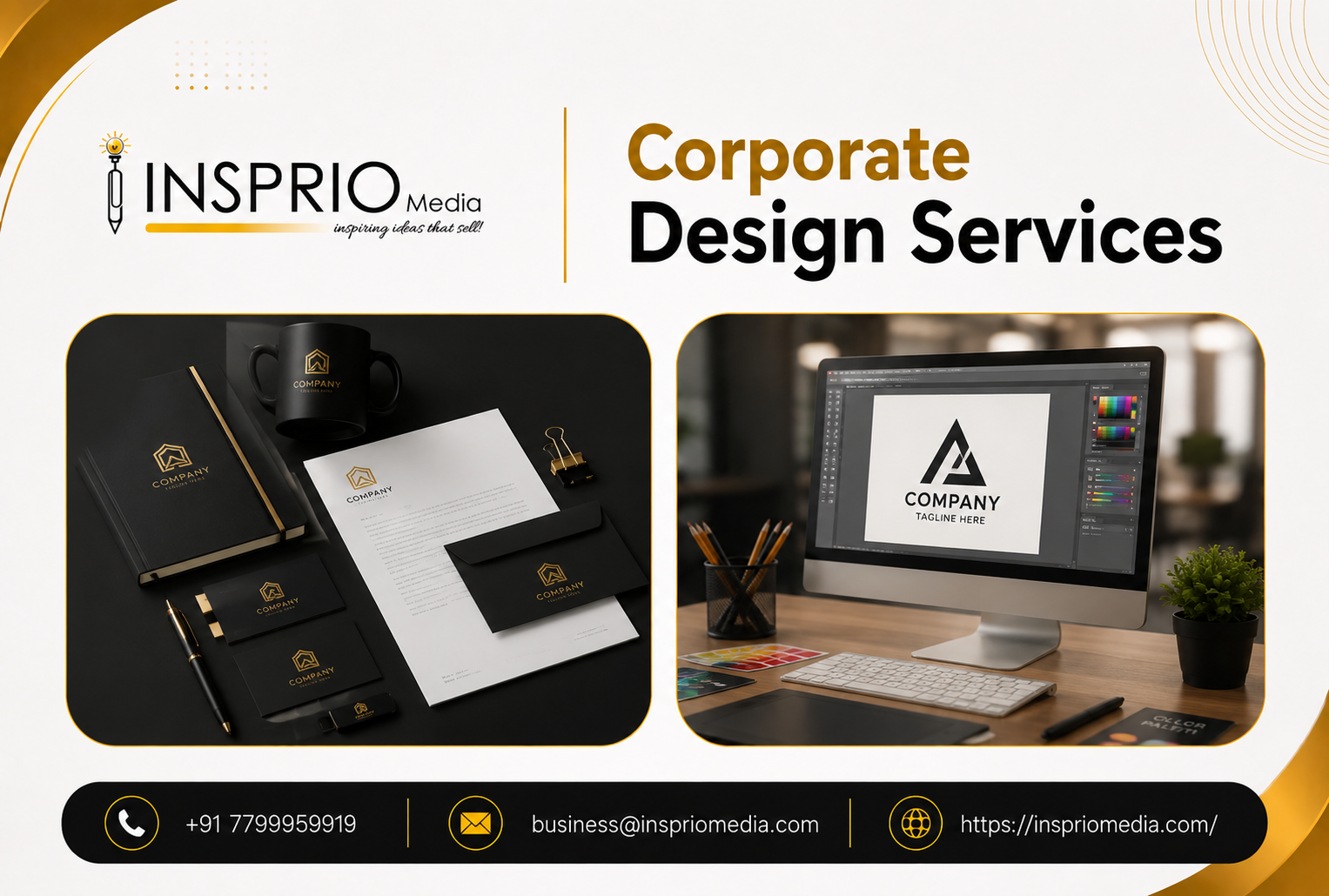
In competitive markets, businesses often have only a few seconds to create the right impression. A poorly formatted company profile, inconsistent presentation, outdated logo application or unprofessional marketing document can make even a capable organisation appear unreliable. A strong corporate design system prevents this problem by establishing clear visual standards across every communication channel.
The purpose of corporate design is not simply to make business materials look attractive. It creates a recognisable visual language that supports marketing, sales, recruitment, internal communication and long-term brand development. When customers see the same design quality across a website, proposal, advertisement and printed brochure, the brand becomes easier to remember and trust.
What Is Corporate Design?
Corporate design is the structured visual representation of a company. It includes the logo, colour palette, typography, graphic elements, imagery, layouts, templates and guidelines used throughout the organisation. While branding defines the broader personality and market position of a company, corporate design translates that strategy into practical visual applications.
Professional Corporate Design Services ensure that these elements work together instead of being created separately for every campaign. The result is a unified identity that can be applied consistently across digital platforms, printed materials, advertisements, presentations, office environments and customer-facing documents.
A complete corporate design system may include:
- Logo development and logo usage guidelines
- Primary and secondary brand colour palettes
- Corporate typography and font hierarchy
- Business cards and stationery design
- Letterheads, envelopes and email signatures
- Company profiles and corporate brochures
- Sales proposals and presentation templates
- Reports, manuals and document layouts
- Social media and digital advertising templates
- Signage, office graphics and event branding
- Brand guideline documents
Why Corporate Design Matters for Modern Businesses
Customers interact with companies through many different touchpoints. They may discover a brand through social media, visit its website, download a brochure, receive a quotation and later attend a business presentation. If each touchpoint uses different colours, fonts or visual styles, the customer experience becomes disconnected.
Strategic Corporate Design Services create visual continuity throughout this journey. They help ensure that every piece of communication feels like it comes from the same organisation, regardless of the platform, department or campaign responsible for creating it.
Creates a Strong First Impression
Professionally designed communication immediately signals that a business is organised, established and attentive to detail. This is especially important when approaching new clients, investors, partners or corporate buyers.
Improves Brand Recognition
Consistent use of colours, typography and layouts allows customers to recognise a business more quickly. Repeated visual exposure builds familiarity, making the company easier to remember.
Strengthens Business Credibility
A professional identity makes proposals, reports, presentations and marketing materials appear more trustworthy. It can influence how customers evaluate the quality and reliability of the organisation.
Supports Marketing Consistency
Standardised templates help marketing teams produce campaigns faster while maintaining visual quality across advertisements, social media posts, brochures and landing pages.
Helps Sales Teams Communicate Better
Well-designed proposals, pitch decks and product documents make complex information easier to understand. Clear visual hierarchy guides potential clients through key benefits and calls to action.
Creates Internal Alignment
Brand guidelines give employees and external partners a shared reference for using logos, colours, fonts and templates correctly, reducing inconsistent design decisions.
Essential Elements of an Effective Corporate Identity
1. Logo and Logo Application
A logo is the most recognisable element of a company’s identity, but its effectiveness depends on how consistently it is used. A professional system defines approved versions, minimum sizes, spacing requirements, background usage and restricted applications.
These standards prevent common problems such as stretched logos, incorrect colours, poor placement or unreadable applications. The logo should remain clear and recognisable whether it appears on a website header, business card, billboard, uniform or mobile screen.
2. Corporate Colour Palette
Colour plays an important role in brand recognition and emotional communication. A corporate colour system generally includes primary colours, supporting colours and neutral shades. Exact values should be documented for web, print and digital production.
Consistent colour specifications help designers, printers, developers and marketing teams reproduce the identity accurately across different media.
3. Typography
Typography influences readability, tone and visual hierarchy. A company may use one typeface for headings, another for body content and a compatible system font for digital documents. Clear rules should define font sizes, weights, spacing and usage.
The selected typography should work across websites, presentations, reports, mobile interfaces and printed materials without compromising readability.
4. Graphic Language
A brand’s graphic language can include patterns, icons, illustrations, shapes, borders, gradients, photography styles and data visualisation standards. These elements help the company create distinctive communication without relying on the logo in every layout.
5. Photography and Imagery
Images should reflect the company’s personality, audience and industry. A technology company may use modern, clean and innovation-focused imagery, while a hospitality brand may prefer warm lifestyle photography. Image guidelines can define lighting, composition, colour treatment and subject selection.
6. Layout and Visual Hierarchy
Consistent layout rules help audiences understand information quickly. Good hierarchy separates headlines, supporting information, statistics and calls to action. It also creates sufficient spacing so that corporate materials feel organised rather than crowded.
Major Corporate Design Deliverables
| Deliverable | Primary Purpose | Typical Use |
|---|---|---|
| Brand Guidelines | Document visual identity standards | Internal teams, agencies and vendors |
| Company Profile | Present the organisation professionally | Sales meetings, tenders and partnerships |
| Corporate Brochure | Explain services and capabilities | Marketing, exhibitions and lead generation |
| Business Stationery | Create consistent formal communication | Letters, invoices, quotations and meetings |
| Presentation Template | Standardise business presentations | Sales pitches, reports and investor meetings |
| Proposal Template | Improve sales document quality | Client quotations and project proposals |
| Social Media Templates | Maintain digital brand consistency | Instagram, Facebook, LinkedIn and campaigns |
| Annual Report Design | Present performance and business information | Stakeholders, investors and management |
| Event Branding | Create a unified event identity | Exhibitions, conferences and launches |
Corporate Design for Digital and Printed Communication
Corporate communication now exists across both physical and digital platforms. A modern identity therefore needs to be flexible enough to work in multiple formats without losing consistency.
Digital applications may include websites, landing pages, email templates, social media creatives, digital advertisements, online presentations and downloadable documents. Printed applications may include business cards, letterheads, folders, brochures, catalogues, signage, packaging and exhibition materials.
Experienced Corporate Design Services consider technical requirements from the beginning. Designs are prepared with appropriate dimensions, colour modes, file formats, margins and resolution so that the final output remains professional on screens and in print.
How Corporate Design Supports Marketing and Business Growth
Corporate design and marketing are closely connected. Marketing attracts attention, while visual identity helps audiences recognise, understand and remember the business. Strong design can make campaigns easier to process and encourage potential customers to engage with the next step.
A consistent design system also improves campaign efficiency. Instead of creating every advertisement or document from the beginning, teams can use approved templates and design components. This saves time, maintains quality and reduces unnecessary revisions.
Businesses combining design with targeted marketing can create a more complete customer experience. Learn how measurable advertising strategies support business growth in Insprio Media’s guide to performance marketing and ROI.
Social platforms also require recognisable visual communication. Consistent templates, image treatments and branded layouts help companies maintain a professional presence across frequent content updates. Explore why social media management is essential for business growth.
Corporate Design and Brand Strategy
Corporate design should not begin with decoration. It should begin with an understanding of the company, its audience, competitors, goals, personality and market position. These insights guide visual decisions and prevent the identity from becoming generic.
For example, a premium consulting firm may require refined typography, structured layouts and understated colours. A fast-growing technology company may benefit from a more energetic visual system with flexible digital components. A construction business may prioritise strength, clarity and practical communication.
The most effective Corporate Design Services connect visual decisions with a clear brand strategy. Every colour, typeface and layout should support the way the company wants to be understood by customers.
For a deeper understanding of creating a distinctive company identity, read Insprio Media’s resource on branding services that build powerful business identities.
The Relationship Between Corporate Design and Graphic Design
Graphic design is the broader practice of communicating through visual content. Corporate design is a focused area within that practice that establishes and applies a company’s visual identity.
A graphic designer may create an individual poster, advertisement or social media image. A corporate design specialist considers how that item fits into the complete identity system. This includes its relationship with the logo, brand colours, typography, imagery and other communication materials.
Businesses can learn more about the wider role of visual communication through this guide to graphic design services for building a powerful brand identity.
Corporate Design for Websites and Online Visibility
A website is often the most visible expression of a corporate identity. Its colours, typography, buttons, icons, imagery and page layouts should reflect the same standards used in brochures, presentations and other marketing materials.
However, visual quality alone is not enough. A corporate website should also be fast, responsive, secure, easy to navigate and structured for search engines. Design and development teams must collaborate to ensure that the final website performs well while preserving the brand identity.
Read more about creating professional online platforms through fast, secure and SEO-friendly web development services.
Companies that want better organic visibility can also explore website SEO services for sustainable business growth.
Local businesses can strengthen their presence in location-based search results through Google Business Profile and local SEO services.
Advanced Visual Experiences and 3D Design
Some brands require more than traditional two-dimensional communication. Product companies, property developers, event organisers and technology businesses may benefit from 3D visualisation, product rendering, environmental graphics and immersive digital content.
These techniques can help audiences understand products, spaces and ideas before they are physically produced. They are particularly useful for presentations, exhibitions, product launches, architectural communication and digital campaigns.
Discover how businesses can convert concepts into compelling visuals with professional 3D design services.
Corporate Design for Offline Marketing
Although digital marketing is essential, printed and physical brand experiences remain valuable. Brochures, outdoor advertisements, event booths, retail displays, vehicle graphics, signage and promotional materials can create strong visibility in local and industry-specific markets.
The challenge is maintaining consistency between online and offline communication. Customers should experience the same identity whether they see a social media advertisement, visit the website or encounter the company at an exhibition.
Learn how physical communication can support local recognition through offline marketing services for stronger brand visibility.
Combining Design with an Integrated Digital Strategy
Design becomes more valuable when it supports a complete marketing strategy. Consistent visual assets can be used across content marketing, paid advertising, search campaigns, email communication, social media and conversion-focused landing pages.
This integrated approach helps customers move through a more coherent journey. They see the same visual identity in an advertisement, recognise it on the website and encounter it again in a sales proposal or email.
Businesses planning a wider online strategy can explore digital marketing services for growing a business online.
Explore More Business Growth Resources
Continue building a stronger brand with these useful Insprio Media resources:
- Performance Marketing and Maximising ROI
- Social Media Management for Business Growth
- GMB SEO and Google Maps Visibility
- Website SEO for Higher Google Rankings
- 3D Design and Visual Experiences
- Graphic Design and Brand Identity
- Offline Marketing and Local Visibility
- Branding Services for Powerful Business Identities
- Professional Web Development Services
- Complete Digital Marketing Services
A Professional Corporate Design Process
A structured design process helps ensure that the final identity is strategically relevant, visually consistent and practical for daily business use.
Step 1: Business Discovery
The process begins by understanding the company’s services, audience, competitors, history, goals and current communication challenges.
Step 2: Brand and Design Audit
Existing logos, websites, brochures, presentations and marketing materials are reviewed to identify inconsistencies, outdated elements and opportunities for improvement.
Step 3: Visual Direction
Designers establish an appropriate creative direction using references, mood boards, typography options, colour systems and layout concepts.
Step 4: Identity System Development
The selected direction is developed into a complete visual system covering logo use, colours, typography, imagery and graphic elements.
Step 5: Corporate Applications
The identity is applied to practical materials such as stationery, brochures, company profiles, proposals, presentations and digital templates.
Step 6: Review and Refinement
Designs are reviewed for clarity, consistency, technical accuracy and alignment with the company’s objectives before finalisation.
Step 7: Guidelines and Final Files
Final files and usage instructions are organised so internal teams, developers, printers and marketing partners can apply the identity correctly.
Common Corporate Design Mistakes to Avoid
- Using multiple unapproved logo versions
- Changing brand colours between digital and printed materials
- Using too many unrelated fonts
- Creating crowded layouts without sufficient white space
- Using low-resolution images or graphics
- Producing individual designs without a consistent visual system
- Ignoring mobile and responsive design requirements
- Failing to document identity standards
- Following short-term design trends without considering brand relevance
- Using templates that look identical to competing businesses
Professional Corporate Design Services help companies avoid these issues by creating a practical system instead of a collection of unrelated creative materials.
When Should a Business Update Its Corporate Design?
A company does not need to redesign its identity every year. However, an update may be necessary when the current design no longer represents the organisation or cannot support its communication needs.
Common reasons for a corporate design update include:
- The company has expanded into new services or markets.
- The visual identity appears outdated compared with competitors.
- Business materials are inconsistent across departments.
- The existing logo does not work well on digital platforms.
- The company is preparing for investment, expansion or franchising.
- A merger, acquisition or organisational change has occurred.
- The brand needs to appeal to a different target audience.
- Marketing teams lack usable templates and guidelines.
An update does not always require replacing everything. Sometimes refining typography, introducing a better colour system, improving templates and developing formal guidelines can significantly strengthen the identity while preserving existing recognition.
How to Choose the Right Corporate Design Partner
Selecting a design partner should involve more than comparing prices or reviewing attractive portfolio images. The agency should understand both strategic branding and the practical requirements of business communication.
When evaluating providers of Corporate Design Services, consider the following:
- Strategic understanding: The agency should ask about business goals, customers, competitors and market positioning before beginning design.
- Relevant portfolio: Review whether the agency has created professional identities, brochures, presentations or business documents.
- Consistent quality: Look for consistency across complete projects, not only individual logo concepts.
- Practical deliverables: Confirm which files, templates and guidelines will be provided.
- Digital and print knowledge: The team should understand websites, social platforms, printing requirements and production standards.
- Clear communication: The process, timelines, revisions and project responsibilities should be explained clearly.
- Long-term flexibility: The design system should support future campaigns, services and business expansion.
Why Choose Insprio Media?
Insprio Media combines strategic thinking, creative design and marketing knowledge to develop professional business communication. Instead of treating every item as a separate design task, the team focuses on creating a connected visual experience across digital and physical touchpoints.
Through professional Corporate Design Services, businesses can receive a visual system designed around their market, audience and long-term communication needs. This may include corporate profiles, brand guidelines, presentations, marketing materials, digital templates and other customised brand applications.
Insprio Media also supports businesses through branding, digital marketing, SEO, social media, performance marketing, graphic design, web development, offline marketing and 3D visualisation. This range of expertise helps maintain consistency when corporate design is extended into wider promotional campaigns.
Visit Insprio Media to explore professional creative, branding and marketing solutions for your business.
Authoritative Design and Branding Resources
The following recognised organisations provide useful guidance on branding, accessibility, digital experiences and intellectual property:
Frequently Asked Questions
1. What are Corporate Design Services?
They involve creating and managing the visual identity of a company across logos, colours, typography, stationery, brochures, presentations, digital templates and other communication materials.
2. What is the difference between corporate design and branding?
Branding defines the company’s overall identity, positioning, personality and customer perception. Corporate design translates that strategy into visible elements such as logos, colours, fonts, layouts and templates.
3. Which businesses need a corporate design system?
Startups, small businesses, professional firms, manufacturers, educational institutions, healthcare providers, real estate companies, technology firms and established enterprises can all benefit from a consistent corporate identity.
4. What materials can be included in a corporate design project?
Deliverables may include brand guidelines, business cards, stationery, company profiles, brochures, proposals, presentations, email signatures, social media templates, reports, signage and event materials.
5. Why are brand guidelines important?
Brand guidelines explain how logos, colours, fonts, images and layouts should be used. They help employees, agencies, printers and vendors maintain consistency across all communication.
6. Can an existing corporate identity be improved without changing the logo?
Yes. A company can retain its existing logo while improving typography, colours, templates, layouts, imagery and usage rules. This approach can modernise communication while preserving brand recognition.
7. How long does a corporate design project take?
The timeline depends on the number of required materials, the condition of the existing identity and the review process. A limited template project may take less time than a complete identity and brand guideline system.
8. Are final design files provided for future use?
A professional project should include appropriate final files and agreed templates for digital and printed use. The exact file package should be confirmed before the project begins.
Conclusion
A professional corporate identity creates consistency, improves recognition and helps businesses communicate with greater confidence. It ensures that every proposal, brochure, website page, presentation and advertisement supports the same brand message.
Investing in Corporate Design Services is therefore more than a visual upgrade. It is a practical business decision that can strengthen credibility, improve marketing efficiency, support sales communication and prepare the organisation for long-term growth.
Whether your company is building a new identity, modernising an existing system or standardising materials across different departments, Insprio Media can create a customised design solution aligned with your business goals.
Contact Us :
Phone: +91 7799959919
Email: business@inspriomedia.com
Website: https://inspriomedia.com
Request a Corporate Design Consultation