Ecommerce Website Development That Converts Visitors into Loyal Customers
Build a fast, secure and visually engaging online store that simplifies product discovery, improves customer trust and supports the long-term growth of your business.
Online shopping has changed how customers compare products, evaluate brands and make purchasing decisions. A business is no longer competing only with nearby retailers. It is competing with every online store that can offer a faster, easier and more trustworthy buying experience. Professional Ecommerce Website Development gives your business the digital foundation required to meet these expectations and sell products without geographical limitations.
An ecommerce store must do far more than display attractive product images. It must help visitors find relevant products, understand their value, select suitable options, complete secure payments and receive clear order updates. Every page, button and interaction should guide the customer towards a confident purchase.
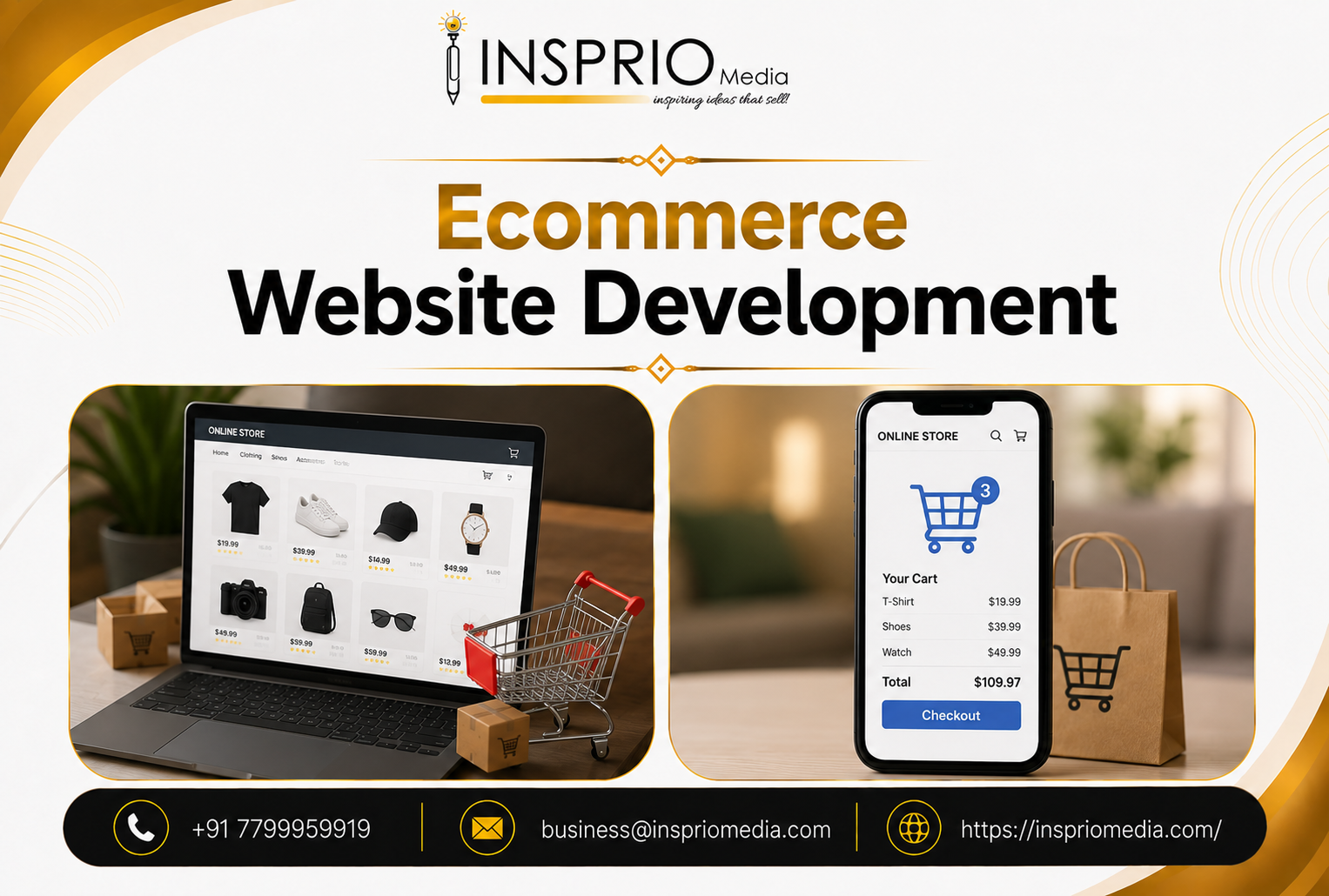
Why Your Business Needs a Professional Online Store
Social media pages and third-party marketplaces can help a company reach buyers, but they offer limited control over branding, customer information and the buying journey. A dedicated online store gives your business complete control over product presentation, promotions, customer communication, analytics and future expansion.
Effective Ecommerce Website Development connects design, technology, search visibility and sales strategy. Instead of treating the website as a digital catalogue, it creates a measurable business platform capable of generating enquiries, collecting orders and supporting repeat purchases.
A successful ecommerce website should make three things easy: finding the right product, trusting the seller and completing the transaction.
Essential Features of a High-Performing Ecommerce Website
Responsive Store Design
Every category, product page, image, form and checkout element should adapt smoothly to smartphones, tablets, laptops and desktop screens.
Clear Product Navigation
Well-planned menus, filters, collections and search functions help customers locate suitable products without unnecessary clicks.
Secure Payment Integration
Reliable payment processing, SSL protection and transparent order summaries improve confidence during the most important stage of the customer journey.
Inventory and Order Management
A practical administration panel should simplify product updates, stock monitoring, order processing, customer records and sales reporting.
SEO-Friendly Architecture
Search-friendly URLs, structured content, product metadata, internal linking and technical optimisation help search engines understand the store.
Conversion-Focused Checkout
A simple checkout with clear pricing, guest purchase options and minimal form fields can reduce friction before payment.
The right Ecommerce Website Development approach balances customer convenience with business management. Customers receive a simple storefront while administrators get the tools needed to update products, monitor orders and manage daily operations efficiently.
Designing a Customer Journey That Encourages Sales
Attractive design creates a strong first impression, but usability determines whether visitors continue shopping. Customers should immediately understand what the business sells, why its products are valuable and how to explore relevant categories.
Homepage Experience
The homepage should communicate the brand proposition while highlighting important categories, popular products, new arrivals, customer benefits and active offers. Too many banners or competing messages can make the page confusing, so every section should have a clear purpose.
Category and Search Experience
Categories should reflect how customers naturally search for products. Filters for size, price, colour, brand or other relevant attributes help buyers narrow large catalogues. The search function should understand common product terms and return useful results.
Product Page Experience
Product pages need clear photographs, accurate descriptions, visible pricing, variation options, delivery information and a prominent purchase button. Reviews, FAQs and related products can answer objections while keeping customers engaged.
Checkout Experience
Customers should know the total cost before reaching the final payment step. Unexpected fees, compulsory registration and lengthy forms can interrupt the purchase. Stripe’s ecommerce checkout guidance recommends practices such as guest checkout, mobile optimisation, progress indicators and early visibility of applicable costs.
Mobile-First Shopping Is No Longer Optional
Many customers discover products through mobile searches, advertisements and social platforms. They expect to move from a promotional post to the relevant product page without losing speed or clarity. Mobile-first Ecommerce Website Development prioritises readable content, touch-friendly controls, compressed images, simple navigation and convenient checkout forms.
Responsive design is only the starting point. Developers must test menus, product galleries, filters, address forms, discount fields and payment options on different screen sizes. A store that looks attractive on a desktop but feels difficult on a phone can lose valuable transactions.
Website Speed and Technical Performance
Product catalogues often contain large images, scripts, filters and third-party applications. Without proper optimisation, these elements can slow down important pages. Performance work may include modern image formats, lazy loading, caching, code optimisation, suitable hosting and careful management of external scripts.
Google’s Core Web Vitals resources explain user-experience metrics related to loading performance, responsiveness and visual stability. Businesses can also evaluate individual pages through Google PageSpeed Insights .
Performance should be considered throughout Ecommerce Website Development, rather than treated as a one-time improvement after the store is launched. New plugins, tracking tools and large product images should be reviewed regularly to protect speed.
Search Engine Optimisation for Ecommerce Stores
A well-designed store cannot generate consistent organic traffic if search engines cannot crawl, understand or index its pages correctly. Ecommerce SEO requires a logical website structure, original product information, descriptive page titles, internal links, structured data and technically accessible pages.
Google provides dedicated ecommerce search best practices for developers and store owners. Its SEO Starter Guide also explains foundational improvements for helping search engines and users understand website content.
Insprio Media combines website planning with website SEO services to support sustainable search visibility. Businesses serving specific cities or regions can also connect their store strategy with Google Business Profile and local SEO services .
Ecommerce Security and Customer Trust
Online stores process customer names, addresses, contact details and transaction information. Security must therefore influence hosting, coding, access management, payment integration, backups and maintenance.
The OWASP Top Ten identifies widely recognised categories of web application security risk. Following secure development practices, limiting administrative access, updating software and testing important workflows can reduce avoidable exposure.
Trust is also communicated through visible business information, clear return policies, secure checkout indicators, genuine reviews and consistent branding. Professional Ecommerce Website Development considers both technical protection and the signals customers use to judge whether a store appears credible.
Accessibility and Inclusive Online Shopping
Accessible websites make products and purchasing functions easier to use for a wider audience. Common considerations include meaningful alternative text, keyboard navigation, sufficient contrast, descriptive labels, clear heading structures and understandable error messages.
The W3C Web Content Accessibility Guidelines organise accessibility around the principles of perceivable, operable, understandable and robust content. Considering these principles during planning is generally more efficient than attempting to correct every issue after launch.
Choosing the Right Ecommerce Platform
| Platform Type | Suitable For | Main Advantages | Important Considerations |
|---|---|---|---|
| WooCommerce | Content-rich stores and businesses using WordPress | Flexible customisation, plugin ecosystem and content control | Requires reliable hosting, updates and technical maintenance |
| Shopify | Businesses wanting a managed commerce platform | Streamlined administration, built-in commerce tools and scalability | App subscriptions and platform-specific customisation limitations |
| Custom Development | Businesses with specialised operations or integrations | Tailored features, workflows and system connections | Higher planning, development and long-term maintenance requirements |
| Marketplace Integration | Brands selling through a website and external marketplaces | Expanded reach and centralised product or order workflows | Integration rules, commissions and inventory synchronisation |
Platform selection should be based on catalogue size, expected traffic, payment requirements, delivery workflows, integrations, budget and future expansion. Shopify’s official online-store setup documentation provides an overview of store configuration, themes, product organisation and navigation.
Our Ecommerce Development Process
Business and Requirement Analysis
We examine your products, target customers, competitors, order processes, payment needs, delivery model and long-term business objectives.
Website Architecture and Planning
Categories, navigation, product attributes, filters, user journeys and administrative workflows are planned before visual development begins.
UI and Brand Design
The interface is designed around your brand identity while maintaining readability, product focus, responsive behaviour and clear calls to action.
Development and Integration
The store is developed with product management, cart, checkout, payment, shipping and other required business integrations.
Testing and Quality Review
Important pages and transactions are reviewed across devices, browsers, payment scenarios and customer account workflows.
Launch and Growth Support
After launch, performance, content, campaigns and customer behaviour can be evaluated to identify new optimisation opportunities.
Our Ecommerce Website Development process is structured to reduce uncertainty and create a store aligned with actual business operations. This avoids building attractive features that do not support customer needs or internal workflows.
Connecting Your Store with a Complete Growth Strategy
Website launch is the beginning of ecommerce growth, not the final step. An online store needs qualified traffic, consistent branding, persuasive content and measurable promotional campaigns. Insprio Media supports this through integrated creative and marketing services.
Businesses can use performance marketing to run measurable acquisition campaigns and social media management to build consistent audience engagement. A broader digital marketing strategy can connect SEO, advertising, social content and conversion optimisation.
Visual consistency can be strengthened through professional graphic design , strategic branding services and 3D design services .
Companies that serve local markets can complement online promotions with offline marketing services . For businesses needing a wider corporate website solution, explore our guide to fast, secure and SEO-friendly web development .
You can also visit the Insprio Media website to explore our complete range of web, branding, design and digital marketing solutions.
Why Choose Insprio Media?
At Insprio Media, we focus on creating digital platforms that are attractive, practical and commercially relevant. Our team considers your brand identity, target audience, product structure, internal operations and marketing plans before recommending a solution.
- Responsive and customer-focused store design
- Platform recommendations based on actual business requirements
- SEO-ready website structure and content planning
- Secure payment and essential third-party integrations
- Easy-to-manage product, inventory and order workflows
- Testing across important screens and customer journeys
- Integrated branding, advertising and digital growth support
Our goal is to make Ecommerce Website Development a strategic investment rather than a simple design expense. The completed store should help your business present products professionally, simplify transactions and build stronger customer relationships.
Frequently Asked Questions
1. What is an ecommerce website?
An ecommerce website is an online platform through which customers can browse products, add items to a cart, complete payments and receive order confirmation or delivery updates.
2. How long does it take to create an online store?
The timeline depends on the number of products, design complexity, platform, integrations, content readiness and approval process. A detailed scope is prepared after reviewing the business requirements.
3. Will my ecommerce website work on mobile phones?
Yes. A professionally developed store should be responsive and tested across common mobile, tablet and desktop screen sizes.
4. Can you integrate online payment gateways?
Yes. Payment gateway integration can be planned according to the selected platform, business location, preferred payment methods and provider requirements.
5. Can I update products myself?
Yes. The administration area can allow authorised users to add products, update prices, manage descriptions, upload images, review stock and process orders.
6. Is SEO included in the website structure?
The store can be built with search-friendly URLs, editable metadata, logical navigation, responsive layouts and technical foundations. Ongoing SEO campaigns may be required to compete for important commercial searches.
7. Can you redesign an existing online store?
Yes. Existing stores can be reviewed for design, navigation, mobile usability, loading speed, content structure, checkout friction and administrative limitations before redevelopment.
8. Which ecommerce platform should I select?
The best option depends on catalogue size, customisation requirements, internal resources, integrations, budget and scalability. We assess these factors before suggesting a platform.
Build an Online Store Ready for Sustainable Growth
A successful online store brings together strong branding, intuitive navigation, useful product content, fast performance, secure payments and a simple checkout. When these elements work together, customers can shop confidently and the business can manage orders more efficiently.
Insprio Media provides Ecommerce Website Development solutions for businesses that want a professional digital storefront supported by branding, SEO, advertising and performance-focused marketing. Speak with our team to discuss your products, functionality and growth objectives.