Landing Page Optimization Tips to Generate More Leads
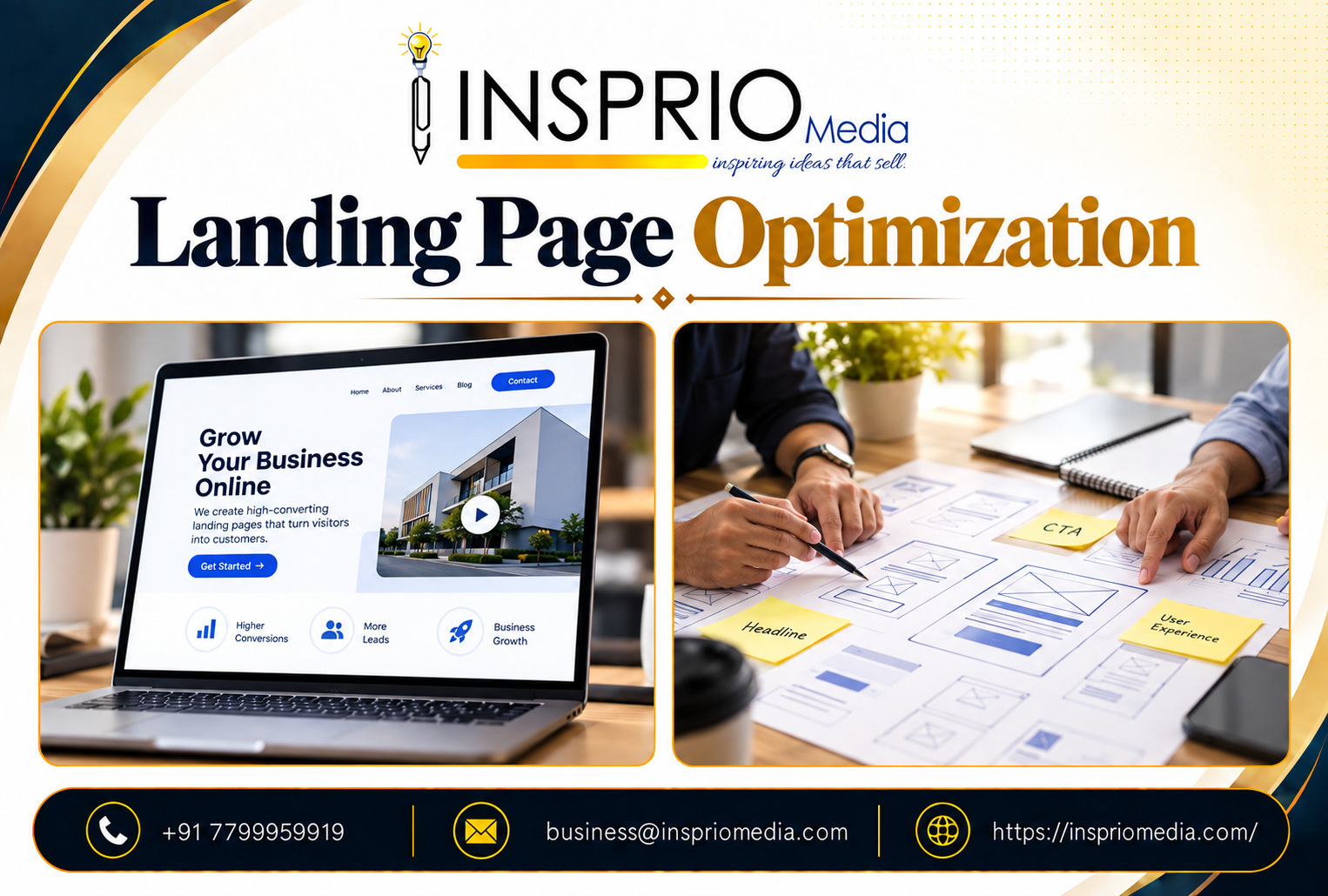
A landing page can receive hundreds or even thousands of visitors and still generate disappointing results if the page does not clearly communicate its value, build trust, and guide visitors toward one meaningful action. This is why Landing Page Optimization has become an important part of modern digital marketing and lead-generation strategies.
Landing Page Optimization is not simply about changing button colors or making a page look attractive. It involves understanding visitor intent, improving messaging, simplifying forms, strengthening calls to action, reducing friction, increasing page speed, testing different elements, and measuring the actions that matter to the business.
When approached strategically, Landing Page Optimization can help businesses make better use of paid advertising, organic traffic, social media campaigns, email marketing, and other acquisition channels. The goal is simple: turn more relevant visitors into qualified leads without unnecessarily increasing advertising spend.
What Is Landing Page Optimization?
Landing Page Optimization is the process of improving a landing page so that a greater percentage of relevant visitors complete the intended conversion action. That action might be submitting a contact form, requesting a quotation, booking a consultation, downloading a resource, registering for an event, requesting a callback, or making a purchase.
Effective Landing Page Optimization starts with the visitor rather than the business. Instead of asking only what the company wants visitors to do, marketers should ask what the visitor needs to understand before feeling comfortable taking that action.
Good Landing Page Optimization connects traffic source, audience intent, page messaging, offer, design, trust signals, and conversion mechanism. When these elements are aligned, the visitor does not have to work hard to understand the proposition.
Strong Landing Page Optimization also requires continuous improvement. A landing page should not be considered finished simply because it has been published. Visitor behavior, campaign performance, search intent, device usage, and business objectives can change over time.
The most useful way to think about Landing Page Optimization is as a cycle: research, create, measure, test, learn, improve, and repeat.
Why Landing Pages Matter for Lead Generation
Landing Page Optimization matters because every marketing campaign ultimately needs a destination. You can have excellent advertising creative, strong SEO visibility, engaging social content, or an impressive email campaign, but the destination page still has to convince the visitor to continue.
Effective Landing Page Optimization helps businesses make the destination relevant to the promise made before the click. If an advertisement promises a free consultation but the visitor arrives at a generic homepage, the experience can become confusing.
Good Landing Page Optimization creates continuity between the message that attracts the visitor and the information they see after arriving.
With Landing Page Optimization, businesses can create different pages for different campaigns, audiences, products, services, locations, and offers rather than sending every visitor to the same generic page.
Strategic Landing Page Optimization can therefore support paid search, social advertising, remarketing, email marketing, content marketing, SEO, and performance marketing campaigns.
1. Start With One Clear Conversion Goal
One of the most important principles of Landing Page Optimization is clarity. A landing page should have a primary purpose. If the visitor is expected to request a quotation, download an ebook, book a call, subscribe to a newsletter, and browse ten other pages at the same time, the page can become unnecessarily complicated.
Landing Page Optimization becomes easier when the primary conversion is clearly defined before the design process begins.
During Landing Page Optimization, ask one basic question: “What is the most valuable next step for this visitor and for the business?”
A strong Landing Page Optimization strategy gives secondary information enough space to answer objections without allowing secondary actions to compete with the main CTA.
Effective Landing Page Optimization often means removing elements rather than adding more elements. A simpler page can make the desired action easier to recognize.
Before publishing a page, write its primary conversion goal in one sentence. If your team cannot agree on that sentence, the page probably needs clearer positioning.
2. Understand Search and Visitor Intent
Landing Page Optimization should begin with understanding why people are arriving on the page.
A visitor searching for “digital marketing agency for small business” has a different intent from someone searching for “digital marketing pricing.” Effective Landing Page Optimization recognizes that difference.
The stronger the alignment between intent and content, the less effort visitors need to spend determining whether the page is relevant. This is one of the foundations of Landing Page Optimization.
During Landing Page Optimization, review search queries, advertising keywords, campaign messages, social posts, customer questions, sales calls, and website analytics.
Strong Landing Page Optimization uses those insights to create messaging that reflects the language and concerns of the intended audience.
3. Write a Benefit-Focused Headline
Your headline is one of the first elements visitors notice, which makes headline writing a major part of Landing Page Optimization.
Good Landing Page Optimization does not require clever headlines that leave visitors guessing. The headline should quickly communicate what is being offered and why it matters.
A strong Landing Page Optimization headline can communicate a specific outcome, solve a recognizable problem, identify the audience, or explain the value of an offer.
During Landing Page Optimization, avoid vague statements such as “Transform Your Business Today” unless the supporting copy immediately explains how that transformation happens.
Better Landing Page Optimization usually comes from specificity. For example, “Generate More Qualified Leads With Data-Driven Digital Campaigns” gives the visitor more information than a generic statement about growth.
4. Make the Value Proposition Immediately Visible
Landing Page Optimization is not about forcing visitors to scroll through a long explanation before they understand the offer.
Effective Landing Page Optimization places essential value information near the top of the page.
Visitors should quickly understand what you provide, who it is for, what problem it addresses, and what action they can take. This is central to Landing Page Optimization.
Good Landing Page Optimization uses supporting copy to explain the offer rather than filling the first screen with unnecessary brand statements.
When reviewing Landing Page Optimization, imagine that a first-time visitor has only ten seconds to decide whether the page is relevant. Your core value proposition should still be understandable.
5. Match the Landing Page With the Ad
One of the most practical Landing Page Optimization techniques is message matching.
Message matching means that the wording and promise on the landing page should closely relate to the advertisement, email, search result, or social media content that brought the visitor there.
Landing Page Optimization becomes particularly important for paid advertising because visitors have already formed expectations before clicking.
Effective Landing Page Optimization maintains continuity between the campaign keyword, advertisement headline, landing page headline, offer, and CTA.
Strong Landing Page Optimization reduces the psychological gap between “what I clicked” and “what I received.”
Google Ads documentation explains that landing page experience considers factors including relevance and usefulness of information, navigation, links, and whether the page meets expectations created by the ad. This reinforces why message alignment should be treated as a conversion issue, not merely a design preference.
6. Create a Strong Call to Action
The CTA is central to Landing Page Optimization because it tells visitors what to do next.
Effective Landing Page Optimization uses CTA wording that communicates an action and, where possible, a benefit.
During Landing Page Optimization, compare generic CTA wording such as “Submit” with more descriptive wording such as “Request My Free Consultation.”
Good Landing Page Optimization also considers CTA placement. The primary CTA should be easy to find without forcing visitors to search for it.
Consistent Landing Page Optimization keeps the CTA visually distinct while ensuring it still fits the brand.
7. Simplify Your Lead Generation Form
Form design is one of the most important areas of Landing Page Optimization.
Every additional field can create another decision for the visitor. Landing Page Optimization therefore requires businesses to distinguish between information that is genuinely needed and information that would merely be convenient for the sales team.
Effective Landing Page Optimization may involve reducing a form from ten fields to five, depending on the purpose of the campaign.
The right approach to Landing Page Optimization is not always “use the shortest possible form.” Instead, ask what information is necessary to qualify and follow up with a lead.
Good Landing Page Optimization also means making labels clear, keeping related fields together, and ensuring the form works properly on mobile devices.
Nielsen Norman Group's research on form design emphasizes reducing hesitation and making field relationships clear, reinforcing the importance of straightforward form structure.
8. Build Trust Before Asking for Information
Trust is a major component of Landing Page Optimization.
Visitors may hesitate to submit their information if they do not know who is behind the page or what will happen after submission. Good Landing Page Optimization addresses these concerns before the visitor reaches the form.
Useful Landing Page Optimization trust signals can include customer testimonials, recognizable client logos where permitted, certifications, awards, case studies, ratings, privacy information, clear contact details, and transparent service descriptions.
During Landing Page Optimization, every trust signal should be relevant and credible.
Strong Landing Page Optimization avoids filling the page with unsupported claims such as “number one” or “guaranteed results” when evidence is unavailable.
9. Use Social Proof Strategically
Social proof can strengthen Landing Page Optimization because people often look for evidence that others have successfully worked with a company.
Effective Landing Page Optimization uses testimonials that describe a real problem, service experience, and outcome.
Good Landing Page Optimization places relevant testimonials close to the decision point.
During Landing Page Optimization, avoid placing dozens of testimonials on a page when three specific and credible examples could communicate the same idea.
The best Landing Page Optimization approach is to select proof that directly relates to the visitor's concerns.
10. Use High-Quality Visuals
Visual content plays an important role in Landing Page Optimization.
The right image can explain a product, demonstrate a service, show an outcome, or make an abstract concept easier to understand. Effective Landing Page Optimization chooses visuals according to their communication value rather than decoration alone.
During Landing Page Optimization, use relevant images that support the offer and do not distract from the CTA.
Strong Landing Page Optimization also considers image file sizes, dimensions, compression, responsive behavior, and accessibility.
Good Landing Page Optimization uses descriptive alternative text where appropriate so that meaningful images remain understandable to people using assistive technologies.
11. Improve Mobile Experience
Mobile usability is essential to Landing Page Optimization because a significant amount of campaign traffic can come from smartphones.
Effective Landing Page Optimization checks the page on multiple screen sizes rather than assuming that a desktop layout automatically works on mobile.
During Landing Page Optimization, buttons should be easy to tap, forms should be comfortable to complete, text should remain readable, and important information should not become buried.
Strong Landing Page Optimization treats mobile visitors as a primary audience rather than a secondary consideration.
Google's guidance on page experience emphasizes mobile usability, secure pages, Core Web Vitals, and avoiding intrusive experiences as parts of creating a better experience for users.
12. Improve Page Loading Speed
Speed is another important component of Landing Page Optimization.
Visitors may leave before interacting with a page if it takes too long to become usable. Therefore, Landing Page Optimization should include technical performance improvements.
Good Landing Page Optimization can include compressing images, minimizing unnecessary scripts, using efficient hosting, reducing third-party code, enabling browser caching, and improving page structure.
During Landing Page Optimization, performance should be tested using real devices and appropriate performance tools rather than relying only on a developer's desktop computer.
Strong Landing Page Optimization balances visual quality with technical efficiency.
13. Keep Navigation Focused
Navigation requires careful consideration during Landing Page Optimization.
A normal website may need extensive navigation, but a campaign landing page often has a more focused objective. Landing Page Optimization therefore requires evaluating whether every navigation option helps or distracts from the primary goal.
Good Landing Page Optimization makes it easy for visitors to understand what they should do next.
During Landing Page Optimization, unnecessary links should be evaluated carefully, particularly when the campaign objective is lead generation.
Strategic Landing Page Optimization does not mean hiding useful information. It means organizing information so that the primary conversion path remains obvious.
14. Make Your Copy Easy to Scan
Landing Page Optimization depends heavily on content structure.
Many visitors scan before they read. Effective Landing Page Optimization uses short paragraphs, descriptive headings, bullet points, bold emphasis, visual hierarchy, and concise explanations.
Good Landing Page Optimization avoids large walls of text in critical conversion areas.
During Landing Page Optimization, place the most important information first and use supporting details later for visitors who want deeper information.
Strong Landing Page Optimization allows visitors to understand the offer at multiple reading depths: a quick scan, a normal read, and a detailed evaluation.
15. Address Customer Objections
One of the most overlooked areas of Landing Page Optimization is objection handling.
A visitor may wonder about pricing, quality, delivery time, experience, support, guarantees, implementation, privacy, or what happens after submitting a form. Effective Landing Page Optimization anticipates these questions.
During Landing Page Optimization, review questions asked by your sales team and customer service department.
Good Landing Page Optimization turns common objections into useful sections, FAQs, comparison tables, process explanations, or trust signals.
Strong Landing Page Optimization reduces uncertainty without making exaggerated promises.
16. Explain What Happens After the Form
Visitors often hesitate when they do not know what happens after submitting their details. Landing Page Optimization can reduce this uncertainty with clear post-submission information.
Effective Landing Page Optimization may explain whether someone will call, email, schedule a meeting, send a quotation, or provide access to a resource.
Good Landing Page Optimization can also use a confirmation or thank-you page to provide the next logical step.
During Landing Page Optimization, make sure confirmation messages are clear and that form submissions are actually reaching the intended team.
Strong Landing Page Optimization connects the conversion experience to the follow-up process.
17. Connect Landing Pages With Your CRM and Sales Process
Landing Page Optimization should not stop at the form submission.
A lead has value only when the business can process it appropriately. Good Landing Page Optimization therefore considers lead routing, notifications, CRM records, qualification, attribution, and follow-up.
Effective Landing Page Optimization can help ensure that leads are delivered to the right sales representative or team.
During Landing Page Optimization, review what happens after every form submission.
Strong Landing Page Optimization connects marketing activity with measurable business outcomes rather than focusing only on form counts.
18. Track the Right Metrics
Measurement is essential to Landing Page Optimization.
Traffic alone does not tell you whether a landing page is successful. Effective Landing Page Optimization considers metrics such as sessions, engagement, form starts, form completions, conversion rate, qualified leads, cost per lead, lead-to-customer rate, and revenue where available.
Google Analytics defines a landing page as the first page a visitor sees when arriving at a website and provides landing-page reporting to help businesses understand where visitors initially arrive.
Good Landing Page Optimization connects analytics data with the business's actual conversion goals.
During Landing Page Optimization, avoid celebrating a higher conversion rate if the resulting leads are consistently poor quality.
Strong Landing Page Optimization measures both quantity and quality.
19. Use A/B Testing Properly
A/B testing is one of the most powerful techniques available for Landing Page Optimization.
Instead of guessing whether a new headline, CTA, image, form, or layout will perform better, Landing Page Optimization can use controlled experiments to compare versions.
Effective Landing Page Optimization testing starts with a clear hypothesis.
For example, during Landing Page Optimization, a business might hypothesize that a shorter form will increase completed submissions because visitors will perceive less effort.
Good Landing Page Optimization testing changes meaningful variables and evaluates results using an appropriate amount of data.
20. Test One Important Variable at a Time
Controlled testing improves Landing Page Optimization because it helps marketers understand why results changed.
If a company changes the headline, form, CTA, images, pricing, testimonials, and layout simultaneously, Landing Page Optimization analysis becomes more difficult.
Better Landing Page Optimization testing isolates important variables when possible.
During Landing Page Optimization, prioritize tests according to potential business impact rather than testing random cosmetic changes.
The best Landing Page Optimization programs create a learning system where every test informs the next improvement.
21. Personalize the Experience When It Makes Sense
Personalization can add another dimension to Landing Page Optimization.
Different audiences may respond to different messaging, offers, examples, and calls to action. Effective Landing Page Optimization can create relevant variations for specific campaigns or audience segments.
For example, Landing Page Optimization for a healthcare service may use different messaging from Landing Page Optimization for a B2B software product.
Good Landing Page Optimization personalization should remain useful rather than becoming intrusive.
Modern Landing Page Optimization can use campaign source, audience segment, location, previous interactions, or service interest when appropriate and privacy-compliant.
22. Optimize for SEO Without Keyword Stuffing
SEO can support Landing Page Optimization by helping relevant visitors discover the page organically.
Effective Landing Page Optimization considers search intent, page title, URL, headings, content quality, internal links, image optimization, and technical performance.
However, good Landing Page Optimization should never turn into excessive keyword repetition.
During Landing Page Optimization, write for the audience first and use keywords naturally where they help describe the topic.
Strong Landing Page Optimization combines search visibility with conversion-focused content.
23. Use Internal Linking Strategically
Internal links can support Landing Page Optimization by helping visitors access supporting information.
For businesses looking to connect conversion strategy with wider digital marketing activity, this guide on performance marketing and maximizing ROI can provide additional context.
This type of internal connection can support Landing Page Optimization when the linked content answers a question that could otherwise prevent conversion.
Effective Landing Page Optimization uses internal links selectively so visitors have access to useful information without losing sight of the primary conversion.
Good Landing Page Optimization considers the complete website journey rather than treating every page as an isolated asset.
Related Digital Marketing Resources From Insprio Media
Landing Page Optimization works particularly well when it is connected with broader digital marketing activities. The following resources can help businesses understand the wider marketing ecosystem:
- Performance Marketing: Driving Business Growth and Maximizing ROI
- Why Social Media Management Is Essential for Business Growth in 2026
- GMB SEO Services: Ranking Higher on Google Maps and Local Search
- Website SEO Services: Higher Google Rankings and Sustainable Business Growth
- 3D Design Services: Transform Ideas Into Stunning Visual Experiences
- Graphic Design Services: Build a Powerful Brand Identity
- Offline Marketing Services: Build Strong Local Brand Visibility
- Branding Services That Build Powerful Business Identities
- Web Development Services: Build Fast, Secure and SEO-Friendly Websites
- Digital Marketing Services: Growing Your Business Online
24. Use Authoritative External Resources
Good Landing Page Optimization should be based on practical testing as well as reliable industry guidance.
For technical SEO and page experience considerations, businesses can review Google's Page Experience documentation .
For analytics measurement, the Google Analytics landing page documentation explains how landing pages are identified and reported.
For paid campaigns, Google's Google Ads landing page guidance explains the role of relevance and landing page experience.
Businesses can also review web.dev for practical guidance on modern web performance and user experience.
For usability and form design research, the Nielsen Norman Group form-design research provides useful principles for reducing confusion during form completion.
HubSpot also publishes practical guidance on landing page design and optimization .
25. Create Different Landing Pages for Different Campaigns
A single generic landing page may not be appropriate for every campaign. Landing Page Optimization becomes more effective when the page is designed around the traffic source and audience.
For example, Landing Page Optimization for a Google Ads campaign can focus on the exact commercial intent behind the keyword.
Social campaign Landing Page Optimization may focus more heavily on visual storytelling, proof, and mobile-first communication.
Email campaign Landing Page Optimization can continue the narrative established in the email.
B2B Landing Page Optimization may require more detailed information about process, expertise, implementation, and business value.
26. Create Location-Specific Landing Pages Carefully
Local businesses can use Landing Page Optimization to create pages for relevant service areas.
However, local Landing Page Optimization should provide genuinely useful local information rather than simply changing a city name.
Strong Landing Page Optimization for local campaigns can include service availability, local customer examples, operating areas, contact information, directions, and relevant FAQs.
During Landing Page Optimization, avoid publishing hundreds of nearly identical location pages with little unique value.
Useful Landing Page Optimization should make the page genuinely relevant to the location and service.
27. Make Pricing Information Clear Where Appropriate
Pricing can influence Landing Page Optimization because visitors may need to know whether a service fits their expectations before submitting their information.
Not every business should publish fixed prices, but effective Landing Page Optimization can explain starting prices, packages, factors that affect cost, or what is included.
Good Landing Page Optimization reduces uncertainty without creating misleading pricing expectations.
During Landing Page Optimization, explain why pricing may vary when a service is customized.
Transparent Landing Page Optimization can improve the quality of conversations generated from forms.
28. Use FAQs to Remove Conversion Friction
FAQs are useful in Landing Page Optimization when they answer genuine customer questions.
Effective Landing Page Optimization uses FAQs to address concerns about timelines, process, eligibility, service coverage, pricing, support, deliverables, and next steps.
During Landing Page Optimization, collect FAQ ideas from actual sales conversations rather than creating questions that nobody asks.
Good Landing Page Optimization places the most important questions where they can help visitors make a decision.
Strong Landing Page Optimization treats FAQs as conversion-support content rather than an opportunity to stuff keywords.
29. Optimize the Thank-You Page
Conversion does not have to be the end of Landing Page Optimization.
The thank-you page can continue the customer journey and is therefore part of complete Landing Page Optimization.
Good Landing Page Optimization can use the thank-you page to explain next steps, provide a resource, suggest a useful article, offer a calendar booking, or introduce relevant social channels.
During Landing Page Optimization, make sure the visitor receives confirmation that their submission worked.
Strategic Landing Page Optimization can turn the post-conversion experience into another opportunity to build trust.
30. Review Lead Quality, Not Just Conversion Rate
A high conversion rate does not automatically mean a successful campaign. Landing Page Optimization should consider whether the leads generated are relevant and valuable.
Effective Landing Page Optimization connects marketing metrics with sales outcomes.
For example, a page might produce 100 leads, while another page produces 50. If the second page generates more qualified opportunities, its business value may be significantly different. This is why Landing Page Optimization should look beyond volume.
During Landing Page Optimization, compare lead-to-opportunity and lead-to-customer performance where data is available.
Mature Landing Page Optimization focuses on revenue impact rather than vanity metrics alone.
31. Avoid Common Landing Page Mistakes
Effective Landing Page Optimization also requires identifying what should be removed.
Common problems include unclear headlines, too many CTAs, long forms, weak proof, irrelevant images, slow loading, poor mobile layouts, vague offers, broken forms, missing tracking, and confusing navigation.
Landing Page Optimization helps identify which of these problems are actually affecting your audience.
Good Landing Page Optimization does not blindly follow design trends. It focuses on usability, relevance, evidence, and measurable outcomes.
Consistent Landing Page Optimization turns these observations into a prioritized improvement plan.
32. A Practical Landing Page Optimization Checklist
- Define one primary conversion goal.
- Identify the target audience.
- Understand the visitor's search or campaign intent.
- Write a clear benefit-focused headline.
- Explain the value proposition above the fold.
- Match the page message with the traffic source.
- Use a clear and relevant CTA.
- Reduce unnecessary form fields.
- Add credible trust signals.
- Use relevant testimonials or case studies.
- Optimize images and multimedia.
- Test the page on smartphones.
- Improve loading performance.
- Review navigation and unnecessary links.
- Make the copy easy to scan.
- Answer common customer objections.
- Explain what happens after submission.
- Connect the form with your CRM.
- Track meaningful conversions.
- Run structured A/B tests.
- Review lead quality.
- Improve the thank-you experience.
- Continue testing after launch.
33. How Insprio Media Can Help With Landing Page Optimization
Businesses often struggle with Landing Page Optimization because conversion improvement requires several disciplines to work together. Copywriting, UI/UX design, web development, SEO, analytics, paid advertising, branding, and sales strategy can all influence the final result.
Insprio Media can approach Landing Page Optimization as part of a broader digital marketing strategy rather than treating a landing page as an isolated design project.
Effective Landing Page Optimization can begin with an audit of the current page, traffic sources, audience intent, conversion data, page structure, messaging, forms, CTAs, technical performance, and user experience.
The next stage of Landing Page Optimization can involve restructuring the content hierarchy and improving the visual journey.
Ongoing Landing Page Optimization can then use analytics and testing to identify further opportunities.
For companies investing in digital advertising, SEO, social media, or performance marketing, Landing Page Optimization can help ensure that the traffic generated by those channels has a focused destination.
34. Landing Page Optimization and Performance Marketing
Performance marketing and Landing Page Optimization are closely connected.
Paid traffic can become expensive when visitors arrive on pages that are poorly aligned with their intent. Strategic Landing Page Optimization helps businesses improve the experience after the click.
Effective Landing Page Optimization can support campaign efficiency by aligning the advertisement, audience, offer, page, and conversion event.
During Landing Page Optimization, marketers should review campaign-level performance instead of assuming every audience segment behaves identically.
Strong Landing Page Optimization makes the landing page part of the performance marketing strategy rather than treating it as a separate website task.
35. Landing Page Optimization and SEO
SEO and Landing Page Optimization can work together when a page serves relevant organic search intent.
Effective Landing Page Optimization for organic traffic focuses on helpful information, clear structure, relevant terminology, strong page experience, internal linking, and a logical conversion path.
Good Landing Page Optimization does not mean creating pages solely to rank for keywords.
During Landing Page Optimization, marketers should ask whether the page genuinely satisfies the visitor's reason for searching.
Strong Landing Page Optimization combines search visibility with useful content and a clear next step.
36. Landing Page Optimization and Social Media
Social media traffic can behave differently from search traffic, which makes audience-specific Landing Page Optimization valuable.
Effective Landing Page Optimization for social campaigns can emphasize visual communication, concise messaging, social proof, and mobile usability.
Good Landing Page Optimization maintains consistency between the social advertisement and the landing page.
During Landing Page Optimization, review which social audiences generate engaged visitors and qualified leads.
Strategic Landing Page Optimization helps transform social media attention into measurable business actions.
37. Landing Page Optimization and Branding
A landing page should still feel like part of the company's brand. Landing Page Optimization should therefore balance conversion principles with brand consistency.
Effective Landing Page Optimization uses appropriate colors, typography, imagery, tone, logo treatment, and brand messaging.
Good Landing Page Optimization avoids turning every page into a generic conversion template.
During Landing Page Optimization, branding should support trust and recognition without overwhelming the primary conversion goal.
Strong Landing Page Optimization creates a page that feels both focused and credible.
38. Landing Page Optimization Is a Continuous Process
A landing page should not be considered permanently finished. Landing Page Optimization is an ongoing process because customer behavior, campaigns, competition, devices, offers, and business priorities change.
Effective Landing Page Optimization establishes a regular review cycle.
Monthly or campaign-based Landing Page Optimization reviews can examine traffic sources, conversion rates, lead quality, device performance, form completion, page speed, and user behavior.
Good Landing Page Optimization prioritizes changes based on evidence.
Over time, Landing Page Optimization becomes a structured growth process rather than a one-time website redesign.
39. Frequently Asked Questions About Landing Page Optimization
What is Landing Page Optimization?
Landing Page Optimization is the process of improving a landing page so that more relevant visitors complete a desired action. It can involve improving messaging, design, CTA placement, forms, page speed, trust signals, mobile usability, tracking, and testing.
Why is Landing Page Optimization important for lead generation?
Landing Page Optimization helps businesses make better use of existing traffic by improving the visitor experience and making the conversion path clearer. Instead of simply trying to increase traffic, businesses can also work on converting a greater proportion of relevant visitors.
How can I improve my landing page conversion rate?
Start with clear messaging, a focused CTA, relevant benefits, strong proof, a simple form, mobile-friendly design, fast loading performance, and proper tracking. Then use testing to identify which changes actually improve results.
How many fields should a lead form have?
There is no universal number. The form should request the information needed to process or qualify the lead. Removing unnecessary fields can reduce friction, but some businesses need additional information to provide a useful response.
Should I remove navigation from a landing page?
It depends on the campaign and business objective. A focused campaign may benefit from fewer distractions, while a complex purchase decision may require access to supporting information. The important point is to keep the primary conversion path clear.
Should a landing page have testimonials?
Relevant and credible testimonials can help address trust concerns. The most useful testimonials are specific, authentic, and connected to the problem or outcome that matters to the target audience.
Does page speed affect lead generation?
Page speed can influence the user experience. Slow pages may create frustration before visitors can understand the offer or complete a form. Performance should therefore be considered alongside messaging, design, and conversion testing.
Should landing pages be optimized for mobile?
Yes. A landing page should be tested on smartphones because visitors may arrive through mobile search, social media, advertisements, email, or messaging platforms. Forms, buttons, images, headings, and page spacing should all remain usable on smaller screens.
What should I test first on a landing page?
Start with elements that can have meaningful impact, such as the headline, offer, CTA, form structure, value proposition, and trust signals. Prioritize tests based on visitor behavior and business impact rather than cosmetic preferences.
How do I measure landing page success?
Track the metrics that connect to your business goal. These may include conversion rate, qualified leads, cost per lead, form completion rate, appointment bookings, sales opportunities, customer acquisition cost, and revenue.
Can SEO and landing page optimization work together?
Yes. A landing page can be structured around relevant search intent while also providing a clear conversion path. The page should remain useful to visitors and avoid excessive keyword repetition.
How often should I optimize my landing page?
There is no fixed schedule for every business. Review performance regularly and make changes when meaningful data, campaign changes, customer feedback, or business priorities identify an opportunity. Major campaigns may require more frequent reviews.
Final Thoughts
Landing Page Optimization is ultimately about making the path from visitor to lead clearer, easier, and more relevant. A successful page does not depend on one magical headline, button color, or design trick. It depends on the combined effect of relevance, value, trust, usability, speed, clarity, and measurement.
The strongest Landing Page Optimization strategy begins by understanding the visitor. What brought them to the page? What problem are they trying to solve? What information do they need? What could stop them from taking action? What proof would make them feel comfortable? What should happen after they submit the form?
Once these questions are answered, Landing Page Optimization becomes a practical process rather than a guessing game.
Businesses should remember that Landing Page Optimization is not only about increasing the number of leads. The goal is to generate relevant, qualified opportunities that can contribute to sustainable business growth.
With a clear offer, focused messaging, strong CTA, simple forms, credible proof, mobile-friendly design, fast performance, accurate tracking, and continuous testing, Landing Page Optimization can become an important part of a complete digital marketing strategy.
If your current landing pages receive traffic but generate fewer enquiries than expected, a structured audit can help identify where visitors are dropping off and which improvements deserve priority. That is where professional Landing Page Optimization can turn an existing marketing asset into a more effective lead-generation channel.
Need Better Landing Pages That Generate More Leads?
Insprio Media can help businesses improve landing page messaging, design, conversion paths, forms, tracking, SEO, performance, and digital marketing integration.
Speak with the team to discuss your landing page and lead-generation requirements.
Call +91 7799959919