SEO vs PPC: Which Strategy Gives Better ROI?
Businesses often reach the same crossroads when planning digital growth: should they invest in search engine optimization for long-term visibility, or spend on paid advertising for immediate traffic? The debate around SEO vs PPC is not about choosing one universal winner. It is about understanding cost, speed, customer intent, competition, conversion value, and how each channel contributes to return on investment.
For some businesses, SEO vs PPC is a question of patience. SEO usually takes more time to build momentum, while PPC can place your offer in front of potential customers almost immediately. Yet speed is only one part of ROI. Sustainable acquisition cost, lead quality, conversion rates, and the lifetime value of customers matter just as much.
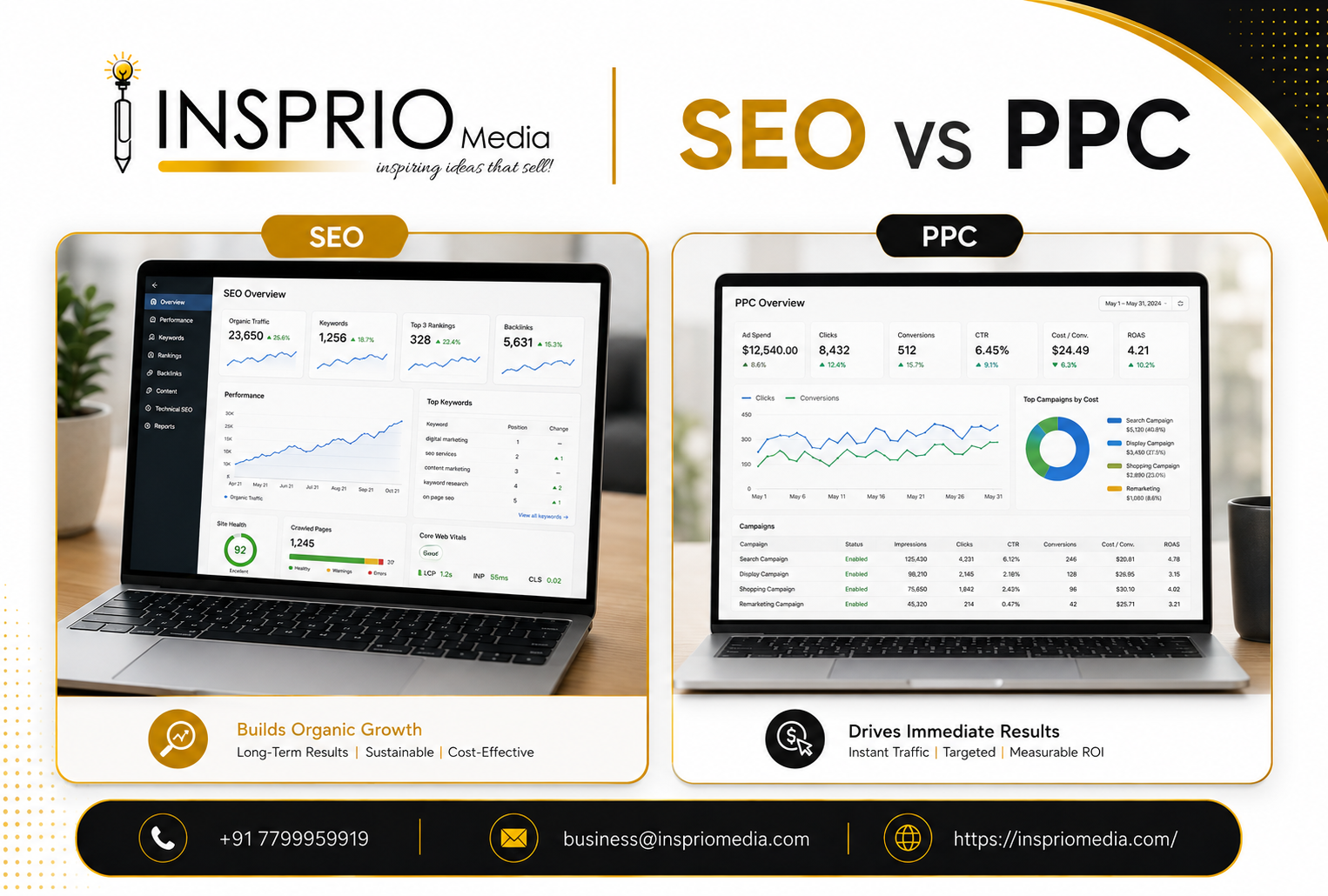
Quick answer: SEO vs PPC delivers different types of ROI. SEO can become more cost-efficient over time because organic visibility continues without paying for every click, while PPC offers faster testing, precise targeting, and immediate campaign data.
Understanding SEO and PPC
SEO focuses on improving your website so it can rank higher in organic search results. This includes technical optimization, content quality, internal linking, page experience, authority building, and local search improvements. When evaluating SEO vs PPC, SEO is often considered a long-term asset because strong pages may continue attracting visitors after the initial optimization work is completed.
PPC, or pay-per-click advertising, allows businesses to bid for visibility in search engines and other digital platforms. Advertisers generally pay when a user clicks the advertisement. In the SEO vs PPC comparison, PPC stands out because campaigns can be launched quickly, adjusted in real time, and targeted by keyword, audience, location, device, and many other signals.
SEO vs PPC: ROI Comparison
| Factor | SEO | PPC |
|---|---|---|
| Speed | Usually gradual | Immediate once campaigns are live |
| Cost Model | Investment in strategy, content, technical work and authority | Advertising spend plus campaign management |
| Traffic Longevity | Can continue after rankings improve | Usually stops when advertising spend stops |
| Testing | Slower feedback cycles | Fast testing of keywords, offers and landing pages |
| Best Use | Long-term organic growth | Fast lead generation and demand capture |
The best way to evaluate SEO vs PPC is to calculate the return generated by each channel rather than looking only at traffic. A campaign with fewer visitors but higher conversion value can outperform a campaign with much larger traffic numbers.
When SEO Can Deliver Better ROI
SEO can deliver strong ROI when a business operates in a market where customers repeatedly search for the same services, questions, products, and locations. Over time, a well-optimized website can rank for multiple relevant search terms. In this situation, SEO vs PPC often favors SEO for cost efficiency because the business is not paying for every organic click.
SEO can also support brand authority. Users may discover a company through informational searches before they are ready to buy. Helpful content, service pages, location pages, and strong technical performance can keep the brand visible throughout the buying journey. This is why SEO vs PPC should also be measured by assisted conversions, not only final-click conversions.
For businesses focused on sustainable search visibility, explore Insprio Media's guide to website SEO services for higher Google rankings and its resource on GMB SEO services for Google Maps visibility .
When PPC Can Deliver Better ROI
PPC is often more attractive when speed matters. A new company, seasonal promotion, limited-time offer, or competitive service launch may not have months to wait for organic rankings. In these cases, SEO vs PPC can favor PPC because campaigns can begin generating measurable visits and leads quickly.
PPC is also powerful for controlled experimentation. Businesses can test ad copy, landing pages, geographic areas, devices, and keyword intent. That makes SEO vs PPC especially useful as a combined strategy: paid search can reveal which messages and keywords convert before a company commits significant resources to long-term organic content.
To understand how measurable campaigns can be structured around outcomes, read Insprio Media's article on performance marketing and ROI . You can also explore digital marketing services for business growth .
The Hidden Cost Difference
A common mistake in the SEO vs PPC discussion is to assume SEO is free because organic clicks do not have a direct cost. Effective SEO still requires research, technical improvements, content, design, outreach, analytics, and ongoing updates. PPC also requires more than ad spend; profitable campaigns need strong targeting, compelling creative, landing page optimization, conversion tracking, and regular bid management.
For this reason, SEO vs PPC ROI should be calculated using total investment. For SEO, include content production, SEO tools, technical implementation, and professional services. For PPC, include media spend, management cost, landing page work, creative production, and tracking infrastructure.
Why Landing Pages Matter for Both
Whether traffic comes from organic rankings or paid ads, poor landing pages can reduce ROI. A slow website, unclear offer, weak trust signals, or confusing contact flow can waste traffic from either channel. Therefore, SEO vs PPC performance is strongly connected to website quality and conversion optimization.
Insprio Media also covers fast, secure and SEO-friendly web development , branding services for stronger business identity , and graphic design services for brand growth . These supporting elements can improve conversion performance across both channels.
How to Measure SEO vs PPC ROI Correctly
To compare SEO vs PPC accurately, track more than clicks. Measure qualified leads, conversion rate, cost per lead, revenue, average order value, sales cycle, customer lifetime value, and assisted conversions. For service businesses, call tracking and CRM attribution can be especially valuable because many conversions happen offline after a web inquiry.
Google provides useful guidance through Google Search Central documentation and Google Ads Help. Businesses can also study measurement and marketing insights from Think with Google, advertising standards from the Interactive Advertising Bureau, web performance guidance from web.dev, and analytics documentation from Google Analytics Help.
Should You Use Both SEO and PPC?
For many businesses, the strongest answer to SEO vs PPC is not either-or. PPC can generate data and leads while SEO builds authority and long-term rankings. Paid campaigns can test commercial keywords, and the best-performing topics can later support organic content strategies.
A combined SEO vs PPC approach can also increase search visibility. A brand may appear in both paid and organic positions for important queries, which can strengthen familiarity and give users more opportunities to click. The right balance depends on budget, competition, goals, and how quickly results are needed.
Businesses interested in expanding beyond search can also review Insprio Media's insights on social media management , offline marketing services , and 3D design services .
Which Strategy Gives Better ROI?
If your main goal is immediate traffic and fast campaign testing, SEO vs PPC may lean toward PPC in the short term. If your goal is sustainable visibility and lower dependence on ongoing media spend, SEO vs PPC may lean toward SEO over a longer period.
The highest ROI often comes from understanding how SEO vs PPC can support each other. PPC can capture urgent demand, while SEO can strengthen organic visibility, trust, and future acquisition efficiency. A business should allocate budget according to measurable results rather than following a fixed channel preference.
Frequently Asked Questions
1. Is SEO cheaper than PPC?
In the SEO vs PPC comparison, SEO can become more cost-efficient over time, but it still requires investment in content, technical work, and optimization.
2. Does PPC give faster results than SEO?
Yes. In most SEO vs PPC situations, PPC can generate traffic almost immediately after campaigns are approved and activated.
3. Which is better for a new website?
A new website may benefit from both. SEO vs PPC can be balanced by using PPC for immediate visibility while building organic rankings through SEO.
4. Can SEO replace PPC completely?
Not always. The right SEO vs PPC mix depends on competition, campaign urgency, customer intent, and business goals.
5. Can PPC improve SEO rankings?
PPC does not directly increase organic rankings, but SEO vs PPC data can work together. Paid campaigns can reveal useful keywords, offers, and conversion insights.
6. Which strategy is better for local businesses?
Local businesses often benefit from both. In a local SEO vs PPC strategy, Google Business Profile optimization can support organic visibility while paid ads target high-intent customers quickly.
7. How long does SEO take compared with PPC?
There is no fixed timeline, but SEO vs PPC differs significantly in speed. PPC can be immediate, while SEO normally needs ongoing work before strong organic growth appears.
Conclusion
The choice between organic SEO and paid search does not have one answer for every business. PPC can provide speed, targeting, and measurable testing, while SEO can build long-term visibility and reduce dependence on continuous advertising spend. The most profitable strategy is the one connected to real business outcomes, accurate tracking, strong landing pages, and ongoing optimization.
If you want a strategy tailored to your goals, explore Insprio Media for integrated digital marketing, SEO, paid advertising, design, branding, and web solutions. A properly planned SEO vs PPC strategy can help you balance immediate lead generation with sustainable long-term growth.
Contact Us :
Phone: +91 7799959919
Email: business@inspriomedia.com
Website: https://inspriomedia.com/