Digital Marketing Strategy: A Practical Roadmap for Sustainable Business Growth
Learn how to connect brand positioning, audience research, content, SEO, paid campaigns, social media, website experience and analytics into one coordinated growth system.
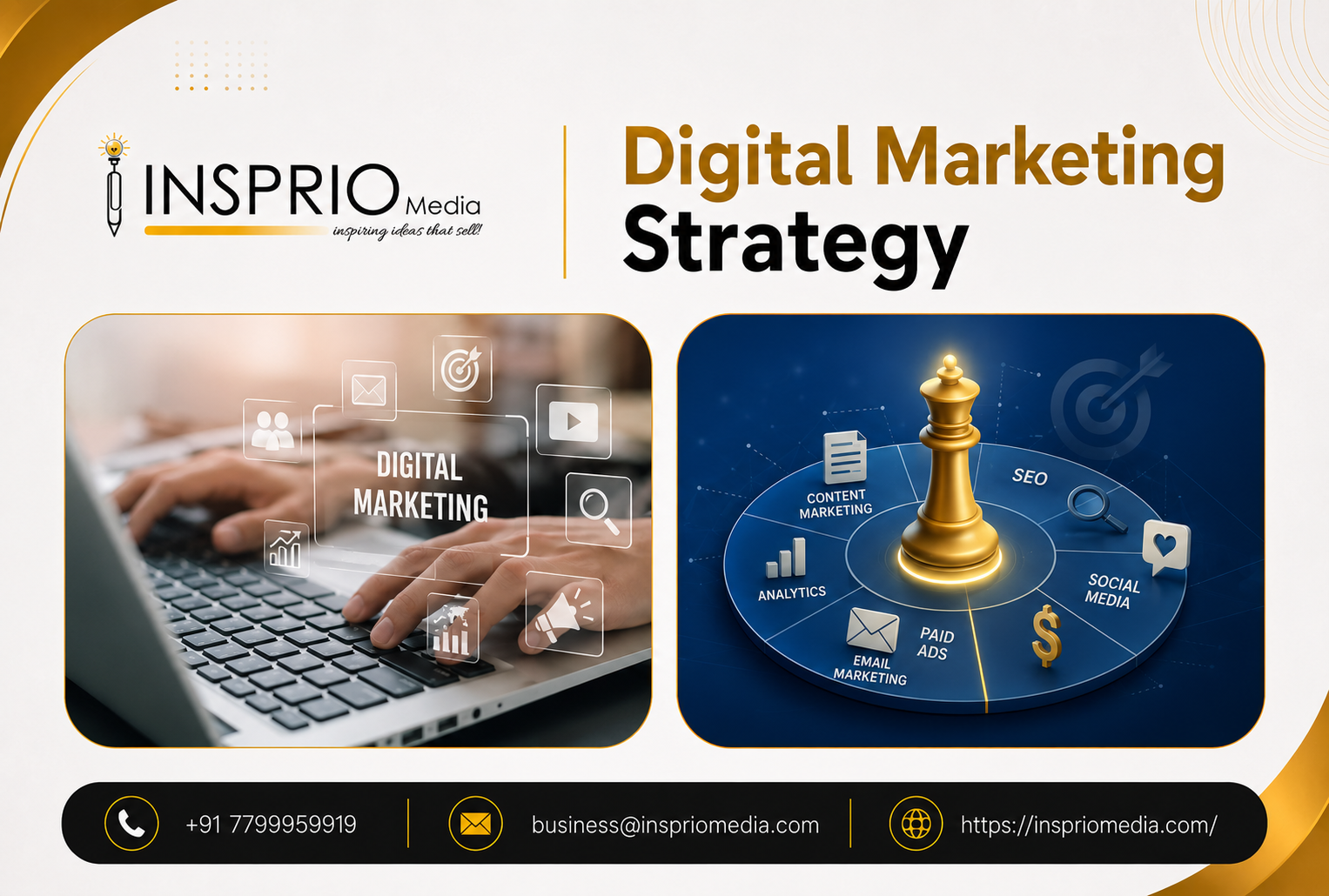
Businesses rarely struggle because they have no marketing options. They struggle because they have too many disconnected options. A company may publish social posts, run advertisements, redesign its website and write occasional blogs, yet still fail to generate predictable enquiries. The missing element is usually coordination: every channel must support a clear audience, message, offer and commercial objective.
A strong Digital Marketing Strategy turns separate marketing activities into a measurable system. It defines whom the business wants to reach, what problem it solves, why customers should trust it, which platforms deserve investment and how performance will be measured. Rather than chasing every trend, the business makes deliberate decisions based on its market, resources and growth stage.
This guide explains how to build that system step by step. It is designed for local businesses, service providers, startups, established companies and brands that want better visibility, stronger lead quality and more accountable marketing investment.
What Does a Modern Marketing Strategy Actually Include?
A modern Digital Marketing Strategy is more than a posting calendar or an advertising budget. It is a written plan that connects business goals to customer behaviour. It explains the route from initial awareness to enquiry, sale, repeat purchase and recommendation.
Business Direction
Marketing goals should support revenue, profitability, market expansion, product launches, appointments, store visits or another defined business outcome.
Audience Understanding
The plan should document customer needs, objections, search behaviour, preferred platforms, buying triggers and the information required before a decision.
Positioning and Messaging
Your brand needs a recognisable point of difference, a compelling value proposition and consistent language across every customer touchpoint.
Channel Selection
SEO, Google Business Profile, paid search, social media, email, content and offline activity should be selected according to audience intent—not popularity alone.
Conversion Experience
Landing pages, website speed, calls to action, enquiry forms, WhatsApp journeys, trust signals and sales follow-up all influence results.
Measurement and Improvement
Clear metrics help teams understand which activities create qualified leads, sales opportunities and long-term customer value.
Step 1: Start With Clear and Measurable Business Goals
“Increase online presence” is not a sufficiently precise objective. A useful goal includes an outcome, time period, audience and measurement method. For example, a local service company might aim to generate 60 qualified enquiries per month from selected Hyderabad locations within six months. An ecommerce brand may focus on increasing repeat purchases, while a B2B company may prioritise demo bookings from decision-makers in specific industries.
When defining goals, separate leading indicators from business outcomes. Website sessions, impressions, video views and engagement can indicate momentum, but leads, sales, acquisition cost and customer value reveal commercial performance.
Useful Goal Categories
- Awareness: Improve branded searches, reach, direct traffic or share of voice.
- Demand generation: Increase qualified enquiries, calls, form submissions or consultations.
- Sales: Improve conversion rate, revenue, average order value or sales-qualified opportunities.
- Retention: Increase repeat purchases, renewals, referrals or customer lifetime value.
- Efficiency: Reduce cost per acquisition or improve return on marketing investment.
Every major campaign should support one primary objective. Secondary metrics can still be monitored, but they should not distract the team from the result that matters most.
Step 2: Research the Audience Beyond Basic Demographics
Age, location and income can help with targeting, but they do not fully explain why a customer chooses one brand over another. Effective audience research explores customer situations, frustrations, priorities and perceived risks.
Interview customers, review sales conversations, analyse frequently asked questions, study search queries and identify recurring objections. Find out what happens immediately before a person starts looking for your service.
A homeowner may search for an interior company after receiving possession of a flat. A business owner may look for an SEO agency after website enquiries decline. These trigger moments create better campaign messages than generic descriptions.
Questions Your Research Should Answer
- What urgent problem is the customer trying to solve?
- What outcome would make the investment feel successful?
- Which concerns delay the buying decision?
- Whom does the customer consult before purchasing?
- Which searches, platforms and content formats are used during evaluation?
- What proof is required—reviews, case studies, certifications, demonstrations or pricing clarity?
Use these insights to create a practical customer profile. The goal is not to invent a fictional persona; it is to document real patterns that can guide targeting, content and sales communication.
Step 3: Build a Strong Positioning and Messaging Foundation
Your audience should quickly understand what you offer, who it is for and why your approach is valuable. Weak positioning leads to interchangeable marketing. Strong positioning makes advertising, SEO content and sales conversations more persuasive because every message reinforces a recognisable promise.
A useful positioning statement combines the target customer, important problem, solution category, primary benefit and credible differentiator. It should then be translated into customer-friendly website headlines, ad copy, social content and campaign offers.
Your Digital Marketing Strategy should also create a message hierarchy:
- Primary promise: The main result customers can expect.
- Supporting benefits: Speed, convenience, quality, expertise, customisation or cost efficiency.
- Reasons to believe: Experience, process, portfolio, reviews, certifications, guarantees or measurable outcomes.
- Objection responses: Clear explanations concerning price, timelines, complexity, risk or after-sales support.
- Action: A specific next step such as requesting an audit, booking a consultation or calling the team.
Step 4: Create a Website That Supports Conversion
Your website is often the central destination for search, advertising, social and referral traffic. A visually attractive website can still underperform when users cannot find relevant information, pages load slowly, service descriptions are unclear or enquiry actions are difficult.
Each important service should have a dedicated page that explains the customer problem, process, benefits, proof, frequently asked questions and next step. Location-based businesses may also benefit from useful local pages when they genuinely serve those areas and can provide original, relevant information.
Conversion Elements to Review
- A clear headline that communicates value immediately.
- Visible phone, WhatsApp and enquiry options on mobile devices.
- Real examples, testimonials, case studies or portfolio work.
- Service-specific calls to action rather than a generic “submit” button.
- Fast-loading pages and a responsive mobile experience.
- Transparent information about the process, scope and expected next steps.
- Analytics and conversion tracking configured before campaigns begin.
For a deeper look at building a high-performing online foundation, read Insprio Media’s guide to fast, secure and SEO-friendly web development services.
Step 5: Use SEO to Capture Existing Demand
Search engine optimisation helps a business become visible when potential customers are actively researching a problem, service or provider. A sustainable SEO programme combines technical improvements, useful content, page relevance, local visibility, internal linking and reputation signals.
Begin with keywords that closely match commercial intent. Then map each important topic to the most relevant page instead of forcing every phrase onto the homepage. Helpful articles can answer research-stage questions, while service pages should focus on users who are closer to taking action.
Google’s official SEO Starter Guide and Search Essentials provide useful principles for building accessible, understandable and search-friendly content.
Explore Insprio Media’s detailed resource on website SEO services for sustainable business growth. Local companies can also learn how Google Business Profile SEO supports Maps and local search visibility.
Step 6: Develop Content for Every Stage of the Buying Journey
Content should do more than keep a website active. It should help prospects understand a problem, compare approaches, evaluate trust and make a confident decision. This means creating different content for awareness, consideration and conversion stages.
| Journey Stage | Customer Need | Useful Content | Primary Action |
|---|---|---|---|
| Awareness | Understand a problem or opportunity | Guides, educational videos, checklists and explainers | Read, watch or follow |
| Consideration | Compare solutions and providers | Case studies, comparisons, webinars and process pages | Download, enquire or request details |
| Decision | Reduce risk and select a provider | Testimonials, demonstrations, proposals and FAQs | Book, call or purchase |
| Retention | Gain more value after purchase | Onboarding, tutorials, newsletters and support content | Return, renew or refer |
Content quality depends on relevance, clarity and credibility. Use practical examples, original insights and accurate information. Avoid producing large volumes of repetitive material simply to target keywords. Each page should have a clear audience and purpose within the wider Digital Marketing Strategy.
Step 7: Build a Consistent Social Media Presence
Social media is valuable for visibility, trust, conversation and remarketing, but success rarely comes from publishing random promotional graphics. A useful content system balances education, proof, brand personality, customer stories, offers and community interaction.
Select platforms according to customer behaviour and the type of content your team can sustain. A B2B consultancy may prioritise LinkedIn, while a visual consumer brand may focus on Instagram. A local service provider can use a combination of Instagram, Facebook, YouTube Shorts and Google Business Profile updates.
A Practical Monthly Content Mix
- Educational tips that solve common customer problems.
- Before-and-after results, portfolio examples or case studies.
- Behind-the-scenes content showing people and process.
- Customer reviews and frequently asked questions.
- Short videos that demonstrate expertise.
- Direct-response offers linked to a relevant landing page.
Read more about why structured social media management supports business growth. Meta’s official Ads Guide can also help teams understand creative specifications for different advertising placements.
Step 8: Use Paid Campaigns to Accelerate Learning and Growth
Paid advertising can create immediate visibility, but it should not be treated as a shortcut for weak positioning or a poor landing page. Campaign performance depends on the alignment between audience, offer, creative, message, page experience and follow-up.
A well-designed Digital Marketing Strategy uses paid media for specific jobs: capturing high-intent searches, introducing a brand to relevant audiences, remarketing to previous visitors, promoting a launch or testing offers quickly.
Before Increasing Advertising Spend
- Confirm that conversion tracking is reliable.
- Define what counts as a qualified lead or valuable sale.
- Create dedicated landing pages for major campaign themes.
- Prepare several creative and messaging variations.
- Establish a fast lead-response and follow-up process.
- Review performance by campaign, audience, keyword and landing page.
For a results-focused approach, explore Insprio Media’s guide to performance marketing, business growth and return on investment. Google’s marketing publication, Think with Google, offers additional consumer insights that can support campaign planning.
Step 9: Strengthen the Brand Across Every Customer Touchpoint
Branding is not limited to a logo. It includes visual consistency, tone of voice, customer experience, perceived expertise and the feelings associated with your business. When website pages, social posts, proposals and advertisements appear unrelated, trust can weaken.
A coordinated brand system should define logo usage, typography, colours, image style, design templates, key messages and communication standards. This makes content production faster while helping customers recognise the business.
Insprio Media’s resources on branding services and business identity and graphic design for stronger brand communication explain how strategic design supports growth.
Businesses presenting products, architecture or complex concepts can also explore 3D design services for powerful visual experiences.
Step 10: Connect Online and Offline Marketing
Customers do not experience a brand in separate online and offline compartments. They may see signage, search the brand name, read reviews, visit Instagram, speak with a salesperson and return to the website before deciding. Each interaction should reinforce the same positioning and offer.
Offline materials can use QR codes, campaign-specific landing pages, memorable calls to action and trackable phone numbers where appropriate. Online campaigns can support exhibitions, local events, print promotions and store visits. This connected approach improves continuity and makes traditional activity easier to measure.
Learn how offline marketing services can strengthen local brand visibility.
For a broader overview of integrated growth channels, visit Insprio Media’s article on digital marketing services for growing a business online.
How to Measure Marketing Performance Properly
Reporting should help leaders decide what to improve, continue, pause or scale. Large dashboards are not automatically useful. The most effective reports connect channel activity to business outcomes and explain why performance changed.
Choose metrics according to the objective:
- SEO: Relevant organic traffic, rankings for priority topics, enquiries and assisted conversions.
- Paid media: Qualified conversions, cost per qualified lead, revenue and acquisition cost.
- Social media: Relevant reach, engagement quality, website actions, enquiries and remarketing audience growth.
- Website: Conversion rate, landing-page performance, call clicks, form completions and user drop-off points.
- Sales alignment: Lead quality, response time, opportunity rate, close rate and reasons for lost deals.
A mature Digital Marketing Strategy combines quantitative data with qualitative feedback. Analytics may show where users leave, while sales conversations can explain why. Both forms of evidence are needed to make sensible decisions.
A 90-Day Marketing Implementation Roadmap
Days 1–30: Research and Foundation
- Define commercial goals, target audiences and priority services.
- Audit the website, analytics, SEO, local presence, social media and paid advertising accounts.
- Document positioning, value proposition, proof points and customer objections.
- Fix major tracking, mobile usability and conversion issues.
Days 31–60: Build and Launch
- Improve priority service pages and landing pages.
- Create an SEO topic map and publish high-value content.
- Develop a monthly social media content system.
- Launch tightly focused paid campaigns with clear offers.
- Set up lead-routing and response standards.
Days 61–90: Optimise and Scale
- Review lead quality, conversion rate and channel costs.
- Test campaign messages, creative formats and page elements.
- Strengthen internal linking and update underperforming content.
- Shift budget toward activities producing qualified opportunities.
- Create the next quarterly plan based on available evidence.
This roadmap should be adjusted for your resources, sales cycle and market. The purpose is to create disciplined momentum, not to launch every possible activity at once.
Common Mistakes That Reduce Marketing Results
- Choosing channels before understanding the audience: Platform selection should follow customer research.
- Measuring only visibility: Reach and traffic matter, but they must connect to commercial outcomes.
- Using one generic message everywhere: Different stages require different information and calls to action.
- Sending paid traffic to weak pages: Advertising cannot permanently compensate for a confusing offer or poor website experience.
- Publishing without distribution: Valuable content needs internal links, social promotion, email support and search optimisation.
- Ignoring sales follow-up: Slow responses can waste otherwise successful lead-generation campaigns.
- Changing direction too frequently: Teams need enough time and data to distinguish a weak idea from an unfinished test.
A documented Digital Marketing Strategy reduces these mistakes by giving the team shared priorities, responsibilities and measurement standards.
Recommended Authoritative Marketing Resources
The following external resources provide useful guidance for marketers and website owners. These are standard do-follow links and open in a new tab.
Frequently Asked Questions
1. What is the main purpose of a Digital Marketing Strategy?
Its purpose is to connect marketing activity with clear business goals. It helps a company select the right audience, message, channels, content, budget and measurements instead of running disconnected campaigns.
2. How long does it take to see marketing results?
Timelines depend on the channel and starting position. Paid campaigns can create early data quickly, while SEO, content and brand development usually require consistent work over a longer period. The best plan combines immediate testing with long-term asset building.
3. Which digital channel should a small business start with?
Start with the channel that best matches customer intent. A local service business may prioritise Google Business Profile, local SEO and high-intent search advertising. A visual brand may place more emphasis on Instagram, video and creator content.
4. How much should a business invest in online marketing?
There is no universal figure. The budget should reflect goals, margins, competition, customer value, sales capacity and the cost of producing quality campaigns. Begin with a controlled test budget, measure qualified outcomes and scale responsibly.
5. Is social media enough for business growth?
Social media can build attention and trust, but relying on it alone creates limitations. Stronger systems usually combine social media with a conversion-focused website, search visibility, content, remarketing and a reliable follow-up process.
6. Why are website conversions low despite good traffic?
Common causes include unclear messaging, slow mobile pages, weak calls to action, poor audience targeting, limited proof, complicated forms or a mismatch between the traffic source and page content. Review the complete visitor journey rather than traffic volume alone.
7. How often should marketing performance be reviewed?
Operational metrics can be reviewed weekly, while strategic decisions are often better made monthly or quarterly. Avoid making major changes based on small samples or normal daily fluctuations.
8. Can SEO and paid advertising work together?
Yes. Paid campaigns can test keywords, offers and landing pages quickly, while SEO builds lasting organic visibility. Insights from each channel can improve the other when data and messaging are shared.
9. What makes marketing content trustworthy?
Trustworthy content is accurate, useful, specific and supported by real expertise. Examples, case studies, transparent explanations, author credentials and original insights are more persuasive than generic promotional claims.
10. Should a business hire an agency or build an internal team?
The right choice depends on budget, required skills, campaign complexity and management capacity. Many businesses use a hybrid model in which internal teams provide industry knowledge while an agency supplies specialised strategy, creative, media and technical support.
Conclusion
Successful marketing is not created by using the largest number of platforms. It comes from making a series of connected decisions: understanding the audience, communicating a meaningful promise, building a strong website, publishing useful content, capturing search demand, using paid media carefully and measuring real business outcomes.
The best Digital Marketing Strategy is clear enough for the entire team to follow and flexible enough to improve as evidence becomes available. When channels work together, businesses can build stronger brand recognition, attract more suitable prospects and make marketing investment more accountable.
Visit the Insprio Media homepage to explore integrated marketing, branding, design and web solutions for your business.