Google Ads Agency: How Expert Campaign Management Drives Leads, Sales and Sustainable Growth
Businesses do not need more clicks; they need profitable customer actions. A strategic Google Ads Agency connects audience intent, compelling ad creative, accurate conversion tracking and focused landing pages to turn advertising spend into measurable growth.
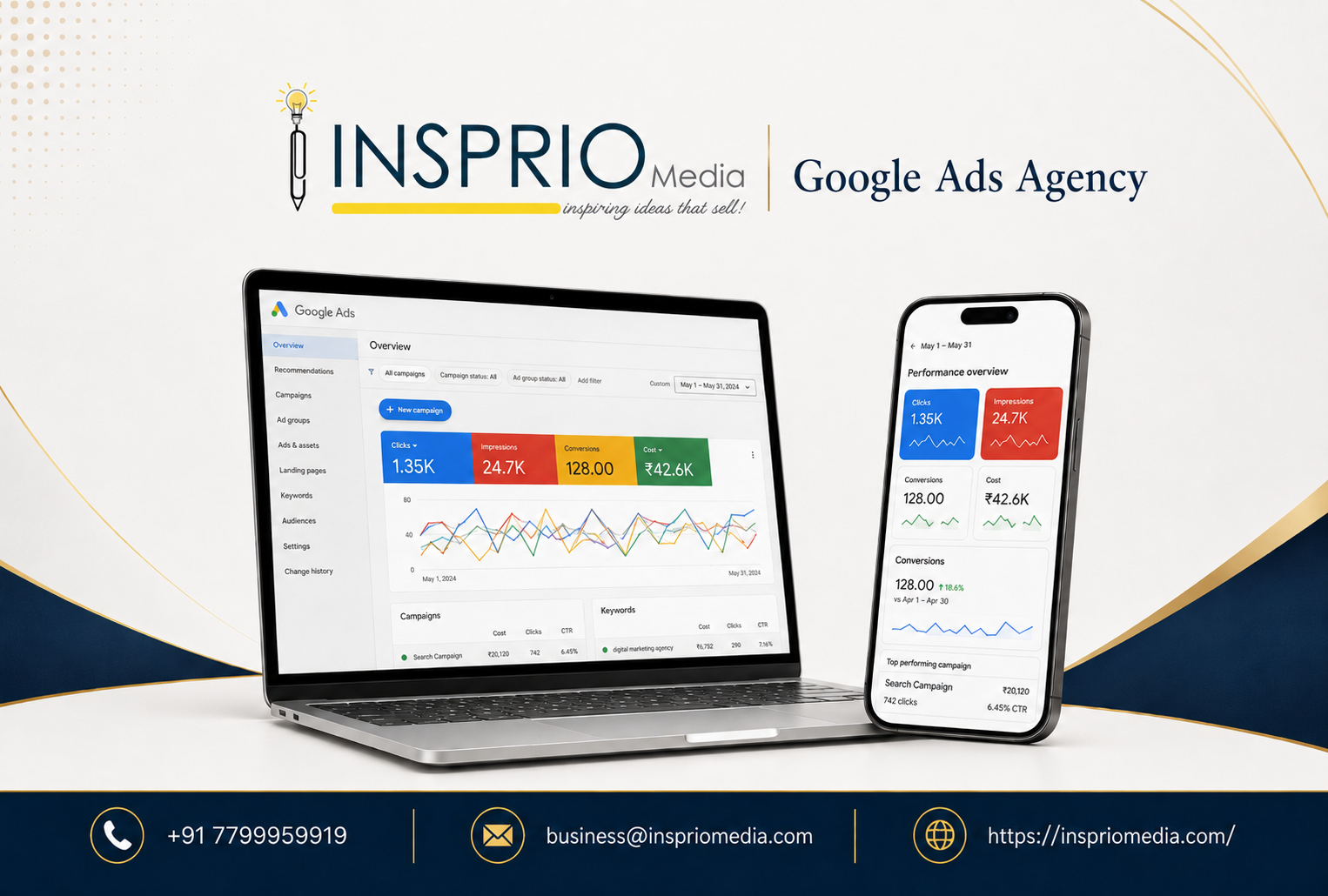
Google Ads can place a business in front of people at the exact moment they are searching for a product, service or solution. That opportunity is powerful, but it is not automatic. Poor account structure, weak keywords, broad targeting, inaccurate tracking and an unfocused landing page can quickly consume a budget without producing meaningful revenue.
A professional Google Ads Agency approaches paid advertising as a complete performance system. Campaigns are built around commercial goals rather than vanity metrics. Every keyword, audience, advertisement, landing page and bidding strategy must support a defined result, such as a qualified phone call, online purchase, appointment, quotation request, store visit or high-value lead.
Why Google Ads Remains Important for Business Growth
Organic visibility, social media and branding create long-term demand, while paid search helps capture existing demand. Someone searching for “emergency AC repair,” “corporate gift supplier,” “interior designer near me” or “best digital marketing company” is already expressing intent. A relevant advertisement can connect that person with a suitable business immediately.
Google Ads can also support several stages of the customer journey. Search campaigns reach active buyers, Performance Max can extend visibility across multiple Google properties, remarketing re-engages previous visitors, video campaigns develop consideration, and location-focused advertising can support enquiries or visits for local businesses.
Paid advertising should not operate separately from the rest of a company’s marketing. Stronger results frequently come from coordinating paid campaigns with website SEO services , social media management and a wider digital marketing strategy .
What Professional Google Ads Management Includes
Effective campaign management is much more than choosing a few keywords and setting a daily budget. It combines commercial research, technical configuration, creative development, data analysis and continuous testing.
Business and Market Research
The process begins with understanding the offer, ideal customer, locations served, profit margins, average order value, sales cycle, competitors and conversion capacity. This prevents campaigns from being built around traffic that appears attractive but has limited commercial value.
Account and Campaign Architecture
Campaigns can be divided by service, product, geography, audience or customer-journey stage so budgets and performance can be controlled clearly. A clean structure also makes search-term analysis and optimization more reliable.
Conversion Measurement
Tracking may include forms, phone calls, purchases, WhatsApp clicks, booked consultations, qualified enquiries and offline sales. The aim is to understand which campaigns produce valuable outcomes rather than recording only website visits.
Ongoing Campaign Optimization
Search terms, advertisement assets, locations, devices, audience signals, conversion quality and budget allocation must be reviewed regularly. Decisions should be based on meaningful time periods and sufficient data.
1. Setting Clear Advertising Objectives
Every campaign needs one primary business objective. A lead-generation company may prioritize qualified enquiries, while an ecommerce business may optimize for purchase value and return on advertising spend. A local clinic may track booked consultations, calls and direction requests.
When too many unrelated actions are treated as equal conversions, automated bidding may optimize toward the easiest action instead of the most valuable one. For example, a page view or button click should not necessarily receive the same importance as a completed purchase or verified sales enquiry.
A capable Google Ads Agency therefore separates primary and secondary conversions. Primary conversions guide campaign optimization, while secondary actions provide useful diagnostic information. Realistic conversion values should also be assigned wherever possible, especially when different products or services generate different levels of revenue.
2. Keyword Research Based on Search Intent
Effective keyword research is not based only on search volume. It must examine what the searcher wants to accomplish, how close that person is to making a decision and whether the query is commercially relevant to the business.
Informational searches may be useful for awareness and remarketing, but commercial and transactional searches normally deserve a larger share of a lead-generation budget.
| Search Intent | Example Search | Recommended Approach |
|---|---|---|
| Informational | How does Google advertising work? | Use educational content, remarketing or carefully controlled awareness campaigns. |
| Commercial Investigation | Best paid advertising company in Hyderabad | Use a persuasive service page with proof, comparisons and clear qualification. |
| Transactional | Hire PPC management company | Prioritize with focused advertisements, direct calls to action and lead-ready landing pages. |
| Local | Advertising company near me | Use accurate location targeting, local assets and area-specific messaging. |
| Brand | Insprio Media advertising services | Protect brand visibility and guide visitors to the most relevant company page. |
Negative keywords are equally important. They prevent advertisements from appearing for irrelevant searches related to jobs, free resources, tutorials, definitions, unrelated locations or services the company does not provide.
Search-term reviews should continue throughout the campaign. Real customer queries frequently reveal both wasted spend and new opportunities that were not identified during the original keyword research.
3. Writing Advertisements That Match Customer Needs
Strong advertisements are specific. They clarify the service, location, customer benefit, business differentiator and next step. Generic claims such as “best service” are less convincing than meaningful details such as fast response, transparent quotations, custom solutions, measurable reporting or experience within a particular industry.
Responsive search advertisements allow multiple headlines and descriptions to be tested in different combinations. The asset group should address the main keyword theme, customer pain point, business benefit, trust signal and call to action.
Additional assets can include telephone numbers, physical locations, sitelinks, service categories, prices, promotional details and structured information. These assets give searchers more reasons to interact with the advertisement.
Advertising creative should also remain consistent with the company’s wider identity. Businesses building a stronger brand presence can combine campaign work with professional graphic design services , branding services and engaging 3D design services .
4. Creating Landing Pages That Generate Conversions
An advertisement can attract the right visitor, but the landing page must complete the conversion. Sending every campaign to the website homepage is rarely the strongest option. A focused page should match the search intent and advertisement message, explain the offer quickly and make the next action easy.
Essential elements of a strong landing page
- A clear headline that immediately confirms the promoted service or product.
- A concise explanation of the customer’s problem and the proposed solution.
- Visible calls to action for forms, telephone calls, purchases or WhatsApp enquiries.
- Trust signals such as testimonials, completed projects, credentials, reviews or guarantees.
- Fast mobile loading and a simple form containing only necessary fields.
- Accurate website analytics, advertising tags and conversion tracking.
- Transparent company information, policies and contact details.
Technical quality matters because slow pages, broken enquiry forms and poor mobile layouts directly reduce lead volume. Insprio Media’s web development services can support fast, secure and campaign-ready landing pages, while SEO-focused improvements can build organic visibility alongside paid customer acquisition.
5. Selecting the Right Campaign Type
The best campaign format depends on the objective, available creative, conversion history, customer journey and advertising budget. A Google Ads Agency should not recommend every available campaign type simply because it exists. The channel mix must match the business and its customers.
Search campaigns
Search campaigns are designed to capture explicit demand. They are often the starting point for service businesses because keywords reveal what potential customers are actively looking for. Careful match-type selection, negative keywords, relevant landing pages and search-term analysis remain essential.
Performance Max campaigns
Performance Max is a goal-based campaign type that can access advertising inventory across Google properties such as Search, YouTube, Display, Discover, Gmail and Maps. It uses automation across bidding, budgets, audiences and creative combinations.
Performance Max performs best when conversion tracking, product or business data, creative assets and audience signals are accurate. It should be monitored against real commercial goals rather than treated as a campaign that never requires oversight.
Display and remarketing campaigns
Display campaigns can create awareness or re-engage previous website visitors. Remarketing audiences should be segmented thoughtfully. For example, someone who viewed a service page should not necessarily receive the same message as a customer who has already completed a purchase.
Video and Demand Gen campaigns
Video and visually led campaigns can introduce a company, demonstrate a product, explain a service or build demand among relevant audiences. They require strong creative and should be evaluated using appropriate customer-journey goals rather than only immediate last-click leads.
Shopping campaigns
Ecommerce businesses can use product feeds to display relevant items, prices, images and merchant information. Product titles, categories, images, pricing, availability, feed accuracy and conversion values can all affect performance.
6. Accurate Conversion Tracking and Attribution
Without reliable conversion tracking, campaign optimization becomes guesswork. The account should record meaningful events and avoid counting the same action multiple times. Phone-call duration, enquiry quality, purchase values and offline sales information can help distinguish valuable customers from low-intent activity.
For lead-generation businesses, one of the biggest improvements is connecting marketing data with the sales process. A campaign might produce ten enquiries, but perhaps only two are qualified. If the advertising system receives information about qualified leads and completed sales, future optimization can focus more effectively on genuine business outcomes.
Measurement should also be interpreted carefully. Customers may interact with several advertisements, organic search results, social media pages or offline promotions before converting. Advertising reports should therefore be reviewed alongside CRM information, website analytics and actual revenue.
7. Smart Bidding, Data Quality and Budget Control
Automated bidding can optimize campaigns for conversions or conversion value during each advertising auction. However, automation depends on the objectives and data supplied to it. A poorly configured account can automatically pursue the wrong objective very efficiently.
A responsible Google Ads Agency chooses a bidding approach according to conversion volume, value data, available budget, campaign maturity and the company’s sales cycle. New campaigns may require a controlled learning period, while mature campaigns can use acquisition-cost or return-on-ad-spend targets when the underlying data is reliable.
Advertising budgets should reflect commercial priorities. High-margin services, profitable locations, popular products and strong-performing customer segments may deserve more investment.
Budget changes should be deliberate rather than reactive. Performance should not be judged from one isolated day when conversion delays and normal auction fluctuations may influence the results.
8. Continuous Testing and Campaign Optimization
Campaign improvement comes from structured testing rather than constant random changes. A useful testing plan examines one important variable at a time, such as the landing-page headline, offer, audience signal, creative theme, keyword match type or bidding target.
- Review search terms and add relevant negative keywords.
- Compare lead quality by campaign, keyword, location, audience and device.
- Refresh weak advertisement assets while protecting proven messages.
- Identify landing pages receiving strong traffic but producing few conversions.
- Reallocate budgets toward profitable services, products and locations.
- Check conversion tracking after website, form or checkout changes.
- Document completed tests so future decisions are based on accumulated learning.
Campaign outcomes can improve further when paid advertising is integrated with broader performance marketing . This approach connects customer acquisition cost with lead quality, customer value, sales and revenue rather than optimizing media in isolation.
Common Google Ads Mistakes That Waste Advertising Budgets
- Using overly broad targeting: advertisements reach people outside the service area or users with weak purchasing intent.
- Tracking every interaction as a conversion: automated bidding learns from low-value actions.
- Ignoring negative keywords: irrelevant searches continue consuming the advertising budget.
- Sending visitors to an unrelated page: message mismatch reduces relevance, trust and conversion rates.
- Making major changes every day: the campaign never gathers stable information for evaluation.
- Focusing only on cost per click: inexpensive traffic may still produce expensive or low-quality customers.
- Neglecting enquiry quality: reports show lead totals without identifying whether those leads generated revenue.
- Providing a weak mobile experience: slow pages and complicated forms lose high-intent visitors.
- Failing to test creative: the same message continues to run even when customer response declines.
- Separating advertising from sales: marketing never learns which enquiries become customers.
How Paid Advertising Supports Local Businesses
Local businesses require precise geographic targeting, accurate business information and clear location relevance. Campaigns can focus on cities, service areas or suitable radius segments, but real service capability and physical presence should guide the setup.
Local visibility becomes stronger when advertising is coordinated with Google Business Profile optimization. Insprio Media’s guide to GMB SEO services explains how accurate business information, local relevance and Maps visibility support customer discovery.
Paid advertising and organic local optimization can operate together while serving different purposes. Paid campaigns capture immediate demand, while local SEO develops sustainable visibility and trust over time.
Combining Online and Offline Marketing
Not every customer journey is completed entirely online. A person might see a local advertisement, search for the company later, visit the business and complete a purchase offline. A service-business prospect may telephone the company after seeing an advertisement but close the deal following an in-person meeting.
Integrated reporting is therefore important. Campaign-specific phone numbers, QR codes, CRM source fields and offline conversion information can provide a clearer understanding of how marketing contributes to revenue.
Businesses serving local audiences can also strengthen brand familiarity through offline marketing services while paid digital campaigns capture active customer demand.
How to Evaluate a Paid Advertising Agency
Choosing a campaign-management partner should not be based only on promises of instant results, guaranteed leads or the lowest monthly management fee. Ask how the agency measures customer quality, communicates performance and connects advertising activity to genuine business outcomes.
- Does the team begin by understanding business goals, margins and customer value?
- Will the business retain ownership and administrator access to its advertising account?
- How will telephone calls, forms, purchases and offline outcomes be tracked?
- How frequently are search terms, budgets and conversion quality reviewed?
- Will reports explain sales-related outcomes rather than only clicks and impressions?
- How are landing-page or website problems identified and resolved?
- Does the team follow advertising policies and avoid misleading promises?
- What information will be required from the sales team to improve campaign optimization?
The right Google Ads Agency acts as a transparent growth partner. It should clearly explain testing, learning periods, risks and limitations. No responsible advertising provider can guarantee a fixed number of sales without understanding the company’s market, offer, website, budget, competition and sales process.
Why Businesses Choose Insprio Media
Insprio Media combines paid advertising strategy with graphic design, website development, branding, SEO, local visibility and performance measurement. This integrated approach helps reduce the gaps that often exist between an advertisement, its landing page and the final customer experience.
As a Google Ads Agency, the focus is placed on relevant customer traffic, accurate conversion actions, persuasive creative, practical budget control and reporting that connects campaigns with business objectives.
The purpose is not merely to spend the available monthly budget. The goal is to create a measurable and repeatable customer-acquisition system that can be tested, refined and expanded over time.
Businesses can also explore Insprio Media’s complete range of digital marketing, branding and creative services for an integrated approach to online and offline business growth.
Frequently Asked Questions
1. What does a Google Ads management company do?
It plans, launches, measures and optimizes paid advertising campaigns. Typical responsibilities include market research, account structure, keyword selection, advertisement writing, conversion tracking, bidding, negative keywords, landing-page recommendations, budget allocation and performance reporting.
2. How much should a business spend on Google Ads?
The appropriate budget depends on the industry, location, competition, average click cost, conversion rate, customer value, sales capacity and acceptable acquisition cost. The starting budget should be sufficient to gather useful data without creating an unacceptable financial risk.
3. How long does it take to see campaign results?
Search campaigns can begin generating traffic shortly after approval, but reliable optimization requires sufficient search-term and conversion data. Early results may appear within days, while stable performance commonly requires several weeks of testing, tracking validation and refinement.
4. Is Google Ads suitable for small businesses?
Yes, provided the targeting is focused and the business economics are realistic. A smaller company can prioritize high-intent services, selected locations, profitable products and specific operating hours instead of competing broadly across every possible market.
5. What is the difference between SEO and Google Ads?
SEO works to earn organic search visibility over time, while Google Ads pays for eligible advertising placements and can capture existing customer demand immediately. Many businesses use paid campaigns for speed and testing while developing SEO for sustainable long-term visibility.
6. Can paid advertising guarantee sales?
No ethical provider should guarantee sales. Advertising can produce relevant customer opportunities, but final sales also depend on pricing, offer quality, competition, website experience, availability, reputation and the company’s sales follow-up process.
7. Why is a campaign receiving clicks but no enquiries?
Possible causes include irrelevant search terms, weak customer intent, slow landing pages, advertisement-to-page message mismatch, complicated forms, poor mobile usability, insufficient trust signals, inaccurate conversion tracking or an uncompetitive offer.
8. Should a campaign use automated bidding?
Automated bidding can be effective when the conversion setup and campaign objectives are accurate. The strategy must match the available data, advertising budget and commercial goals. Automation still requires human supervision, diagnosis and business judgment.
9. What information should a campaign report include?
Reporting should include advertising spend, conversions, conversion value, cost per acquisition, return on advertising spend where applicable, lead quality, search terms, location performance, budget changes, completed tests and upcoming optimization priorities.
10. Why hire Insprio Media for paid campaign management?
Insprio Media can coordinate paid advertising with graphic design, landing pages, website development, branding, local optimization, SEO and performance strategy. This creates a more consistent customer experience from the initial search to the final enquiry or purchase.
Conclusion
Successful paid advertising is not created by one keyword, one automated recommendation or one attractive advertisement. It is built through clear commercial goals, accurate data, relevant targeting, persuasive creative, conversion-focused landing pages and disciplined optimization.
A results-driven Google Ads Agency helps a business understand where customer demand exists, what each valuable customer costs and which campaign decisions create sustainable returns. With transparent reporting and continuous improvement, paid search can become a dependable part of a wider business growth strategy.