
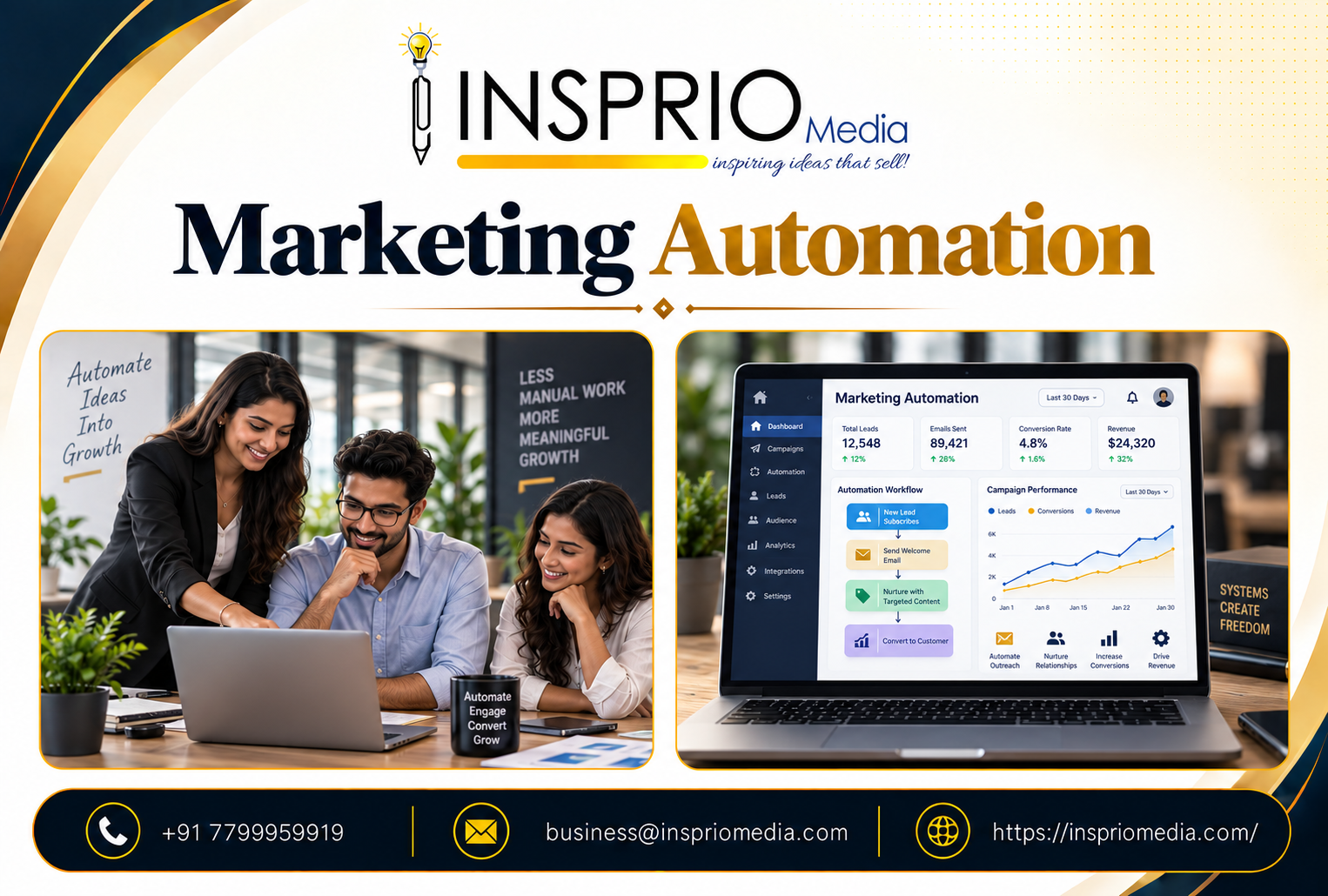
Marketing automation is software that handles repeatable marketing and follow up tasks for you: capturing enquiries, sending the right message at the right time, routing leads to a salesperson, and tracking what each person does. Its main value is not sending more messages. It is making sure no lead is forgotten and every lead gets a fast, relevant response.
Done well, it helps a small team behave like a larger one. Done badly, it just automates a weak process and annoys people faster. This article explains what to automate, what to leave to people, and what to check before you buy any tool.
What does marketing automation actually do?
At its simplest, it follows a rule: when something happens, do something. A person fills in a form, so they receive a confirmation and the sales team is alerted. A visitor opens three emails but does not reply, so they get a different follow up. A customer buys, so a care message goes out a few days later and a reorder reminder after a few weeks.
The building blocks are common to most tools:
- Capture: website forms, landing pages, ad lead forms, WhatsApp enquiries and calls recorded in one place.
- Segmentation: grouping people by interest, source, location or behaviour so messages fit.
- Follow up sequences: timed emails, WhatsApp messages or SMS triggered by actions.
- Lead routing and alerts: the right salesperson is told immediately.
- Scoring: a simple way to rank leads by fit and interest.
- Reporting: which sources and messages lead to real customers.
Why does speed of follow up matter so much?
Most leads are comparing several providers at the same time. The business that replies first with something useful often gets the conversation. A real estate buyer who fills a form after seeing an ad, or a parent who enquires about school admission, may contact three others within the hour.
Many companies lose leads not because their ads are poor but because the enquiry sits unanswered for a day. Automation closes this gap by sending an instant acknowledgement, alerting a person and keeping the lead warm until someone speaks to them. Our article on lead generation forms covers what to ask at the point of capture so follow up is easier.
Which marketing tasks are worth automating?
Start with tasks that are repetitive, time sensitive and low risk.
- Instant acknowledgement: a confirmation that tells the person what happens next.
- Lead alerts and assignment: sales is notified by email, app or WhatsApp.
- Reminders: appointment, demo and payment reminders reduce no shows.
- Nurture sequences: a short series of useful messages for leads who are not ready to buy.
- Post purchase messages: thank you, how to use, review requests and reorder prompts.
- Reactivation: a respectful message to people who went quiet.
Notice that each item improves service. If an automation does not make life better for the customer or the team, it probably should not exist.
What should stay human?
Keep people involved wherever judgement, empathy or a complex sale is involved. Pricing negotiations, complaints, custom quotations and sensitive questions need a real conversation. A good rule is that automation should hand over to a person as soon as a lead replies with a specific question or shows buying intent.
Also avoid pretending that an automated message is personal. Customers accept automation when it is useful and honest, and resent it when it feels like a trick.
How does marketing automation connect with a CRM?
A CRM is where each lead and customer record lives: who they are, where they came from, what was discussed and what happens next. Automation without a CRM tends to produce activity you cannot connect to revenue. With one, you can see which campaigns create real customers, not just form fills.
For many Indian businesses the setup is practical rather than elaborate: leads from website forms, Meta lead ads and WhatsApp land in one CRM, the team is alerted, follow ups are tracked, and stages are updated as the deal progresses. Our CRM automation work follows this logic.
How does it work with WhatsApp and email?
Email remains useful for guides, receipts, longer updates and B2B communication. WhatsApp is often faster in India for confirmations, reminders, catalogues and quick questions. The right channel depends on your audience and the kind of message.
Whichever you use, collect permission, make it easy to opt out, follow the platform's rules for business messaging and avoid sending the same message to everyone. See our overview of WhatsApp automation for typical use cases.
An example: a coaching institute
Imagine a coaching institute that runs ads for a new batch. Without automation, enquiries arrive by form, call and WhatsApp, and a counsellor tries to remember who to ring back. With a simple setup, every enquiry lands in one list, the counsellor is alerted at once, the parent gets a message with batch timings and a link to book a demo class, and a reminder goes out before the class. Parents who attend but do not enrol get a follow up two days later, and a counsellor calls those who showed interest. None of this is complicated, yet it removes the most common leaks in the process.
How do you measure whether automation is working?
Look at outcomes, not just sends and opens.
- How quickly do new leads receive a first response?
- What share of leads become conversations, then customers?
- Which source and message produce the best customers?
- How many leads go cold without any follow up?
- How much staff time has been saved, and what has it been used for?
If these numbers do not improve after a reasonable period, the problem may be the offer, the audience or the sales process, not the tool. Our guide on the digital customer journey helps you spot where people drop off.
What mistakes make marketing automation fail?
- Buying the tool first: a tool cannot fix an unclear process or weak offer.
- Too many messages: frequency should match the customer's stage and interest.
- Dirty data: duplicate and outdated contacts create wrong messages and wasted effort.
- No owner: sequences go stale if nobody reviews them.
- Ignoring consent: messaging people who did not agree harms reputation and may break rules.
- Overcomplicated flows: start with a few clear workflows and add more only when they prove useful.
How should a small business start?
Map what currently happens to an enquiry from the first click to the sale. Find the points where leads wait, get lost or depend on someone remembering. Automate the biggest gap first, usually instant response and lead routing. Run it for a few weeks, check results with your sales team, and then add one more workflow.
This staged approach keeps cost low, builds confidence and avoids the shelfware problem, where an expensive platform is bought but barely used. It also fits well with a wider plan such as the one in our lead generation strategies guide.
Review your automations every quarter. Offers change, staff change and customers behave differently over time. Read the messages as a customer would, check that links and phone numbers still work, and retire any sequence that no longer earns its place.
How Insprio Media can help
We help businesses connect their website, ads, WhatsApp and CRM so leads are captured, assigned and followed up without manual chasing. If your enquiries are slipping through the gaps, see our business process automation service or contact us.


















