
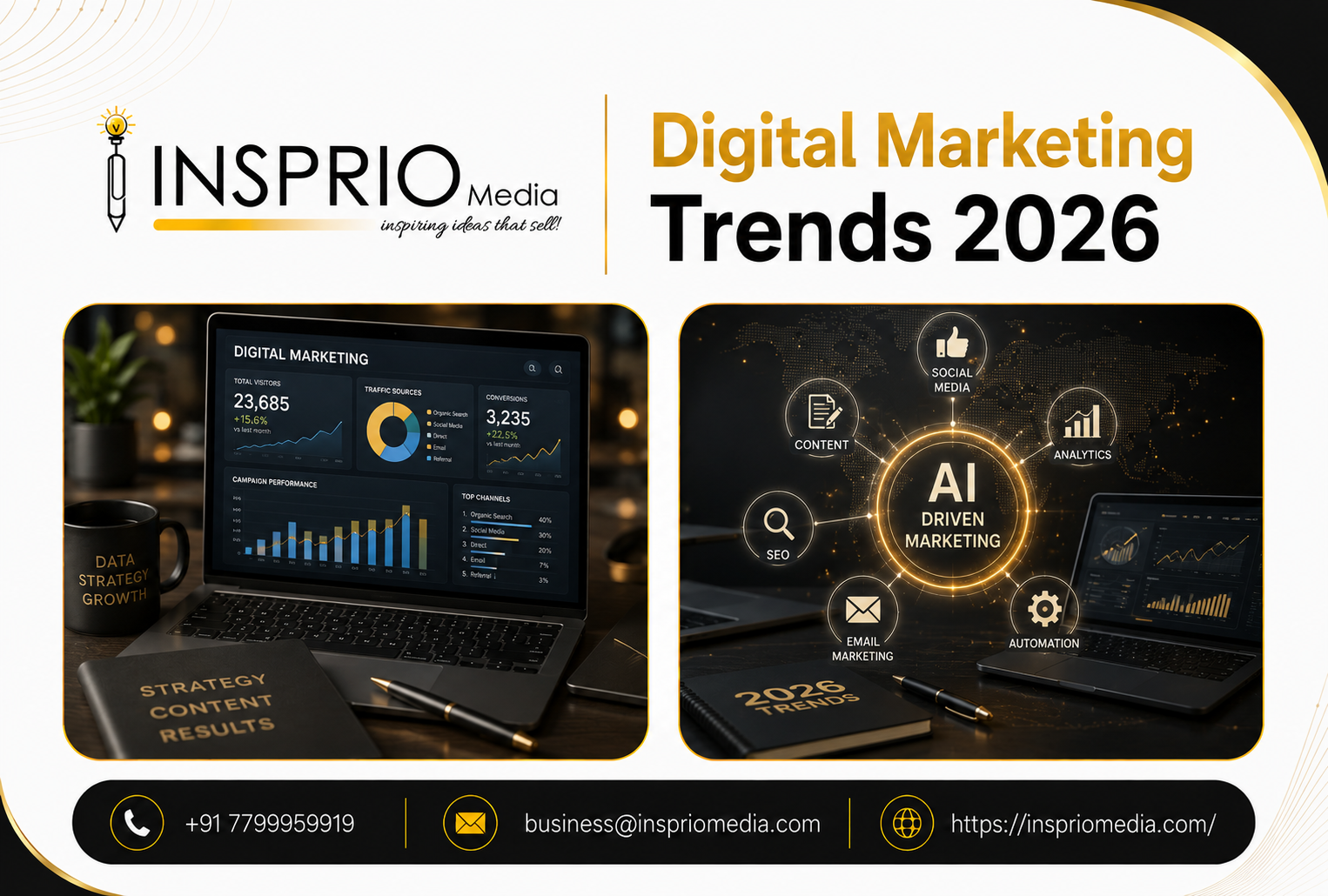
The digital marketing trends that matter most in 2026 are AI shaping how people search and how ads are run, short video as a default way to research products, first-party customer data replacing dependence on tracking, messaging apps like WhatsApp as a sales channel, and growing pressure on trust, privacy and genuine content. None of these replaces the basics: a clear offer, a good website and fast follow up.
Trends are only useful if they change a decision. For each one below, we say what is happening, why it matters to a business owner, and what to do about it without chasing every new tool.
How is AI changing search and visibility?
Search results are no longer just ten blue links. Google now shows AI generated summaries for many queries, and people also ask questions directly to AI assistants. Fewer searches end in a click, and the businesses that get named or cited in answers gain attention.
What this means in practice:
- Clear, factual pages that answer a question directly in the first few lines are easier for search engines and AI tools to understand and quote.
- Your Google Business Profile, reviews and consistent business details matter more, because they are trusted sources for local questions.
- Thin, repetitive articles written only to catch keywords lose value. Pages with real experience, examples and specifics hold up better.
Traditional SEO has not died; it has become less forgiving of generic content. Our guide on search intent is a good foundation, since matching what the searcher actually wants matters more than ever.
Will AI take over advertising?
Partly, and it already has in some places. Google and Meta have moved toward automated campaign types where the platform chooses placements, audiences and sometimes creative variations. Performance Max is a clear example on Google.
The consequence for advertisers is that the inputs now matter more than manual tweaks. Those inputs are conversion tracking that records real business outcomes, good creative assets, sensible budgets and clean customer data. If you feed an automated system poor signals, such as counting every click or low quality form fill as a success, it optimises for the wrong thing efficiently.
Human work shifts toward strategy, creative testing, quality control and checking that the automation is serving your commercial goal. Our article on AI in digital marketing goes further on where AI helps and where it needs supervision.
Why is short video becoming the default?
For many buyers, a short video is now the first look at a brand. Reels, YouTube Shorts and similar formats are how people see a restaurant, a salon, a home project or a product being used before they contact anyone.
This does not require a film crew. A clinic can show a doctor explaining a common question, a manufacturer can show a machine running, and a D2C brand can show real unboxing and use. What works is clarity, a real person or product, and a reason to keep watching, not trend chasing for its own sake. See our video marketing guide for what to plan.
Why does first-party data matter more now?
Privacy rules, browser changes and platform restrictions have made it harder to follow people around the web. India's data protection law also places more responsibility on businesses that collect personal data. The safer foundation is data customers give you directly: enquiries, purchases, newsletter sign ups, WhatsApp opt ins and loyalty records.
Practical steps are modest. Ask for consent clearly, collect only what you need, store it in one organised place such as a CRM, and use it to follow up and personalise offers. Clean first-party data also improves the signals you send to ad platforms. Many businesses can improve results simply by tracking which leads become customers and feeding that back, a topic covered in our guide to conversion tracking.
Is WhatsApp becoming a core marketing channel?
In India, yes. Customers already use WhatsApp to ask questions, request quotes, confirm bookings and reorder. Businesses that respond quickly and clearly there convert more of the interest they already have. Click to WhatsApp ads, catalogues, appointment reminders and order updates are all common uses.
The risk is spamming. Message only people who agreed to hear from you, follow the platform rules, and keep messages useful. WhatsApp automation can handle routine replies, but a human should take over once the conversation becomes personal or complex.
What about trust, reviews and authentic content?
As AI makes content cheap to produce, buyers rely more on signals that are hard to fake: genuine reviews, named experts, real photos, customer stories and clear contact details. Businesses that look anonymous or generic are at a disadvantage.
Ask satisfied customers for reviews, reply to every review, show your team and your work, and put real proof on key pages. Avoid publishing mass produced AI articles with nothing original to say. They rarely help rankings and they weaken credibility.
How does this apply to different kinds of business?
The same trend lands differently depending on what you sell. A restaurant or clinic in Hyderabad gains most from local visibility, reviews, short video of the place and people, and quick WhatsApp replies. A D2C brand feels the ad automation and first-party data shifts most, because its growth depends on feeding ad platforms good purchase signals and bringing buyers back by email and messaging. A B2B manufacturer is affected mainly by search changes: buyers research suppliers through AI summaries and search before they ever call, so clear product pages, specifications and proof matter.
For service businesses, the trend with the quickest payoff is usually the least glamorous: answer enquiries faster. Many leads are lost not to competitors but to slow replies. Tools and automation help here, but the discipline has to come first.
A simple way to prioritise
Rank each trend by two questions: does it affect how my customers find or choose me, and can I act on it with what I have? Do the high impact, low effort items first, such as fixing tracking, collecting reviews and tidying your Google Business Profile. Schedule bigger experiments, like a video series or a new automation, after the basics are stable.
Which trends should you ignore?
Be cautious about any trend that requires a big spend before you have the basics. If your website is slow, your tracking is incomplete or enquiries are not followed up, a new platform or gadget will not fix it. Skip tools that promise guaranteed rankings or instant virality, and delay experiments until a core channel is producing stable results.
A simple test: if you cannot say which business metric the trend should improve, do not adopt it yet.
If you only do three things this year, make them these: confirm your tracking records real enquiries and sales, keep your Google Business Profile and key pages accurate and rich with real proof, and shorten the time it takes to reply to a lead. These improve results whichever trend turns out to matter most.
How Insprio Media can help
We track how search, paid media and AI tools are changing, and apply them only where they help a client's numbers. If you want a practical review of your current marketing against these shifts, start with our SEO services or contact us for a conversation.


















