
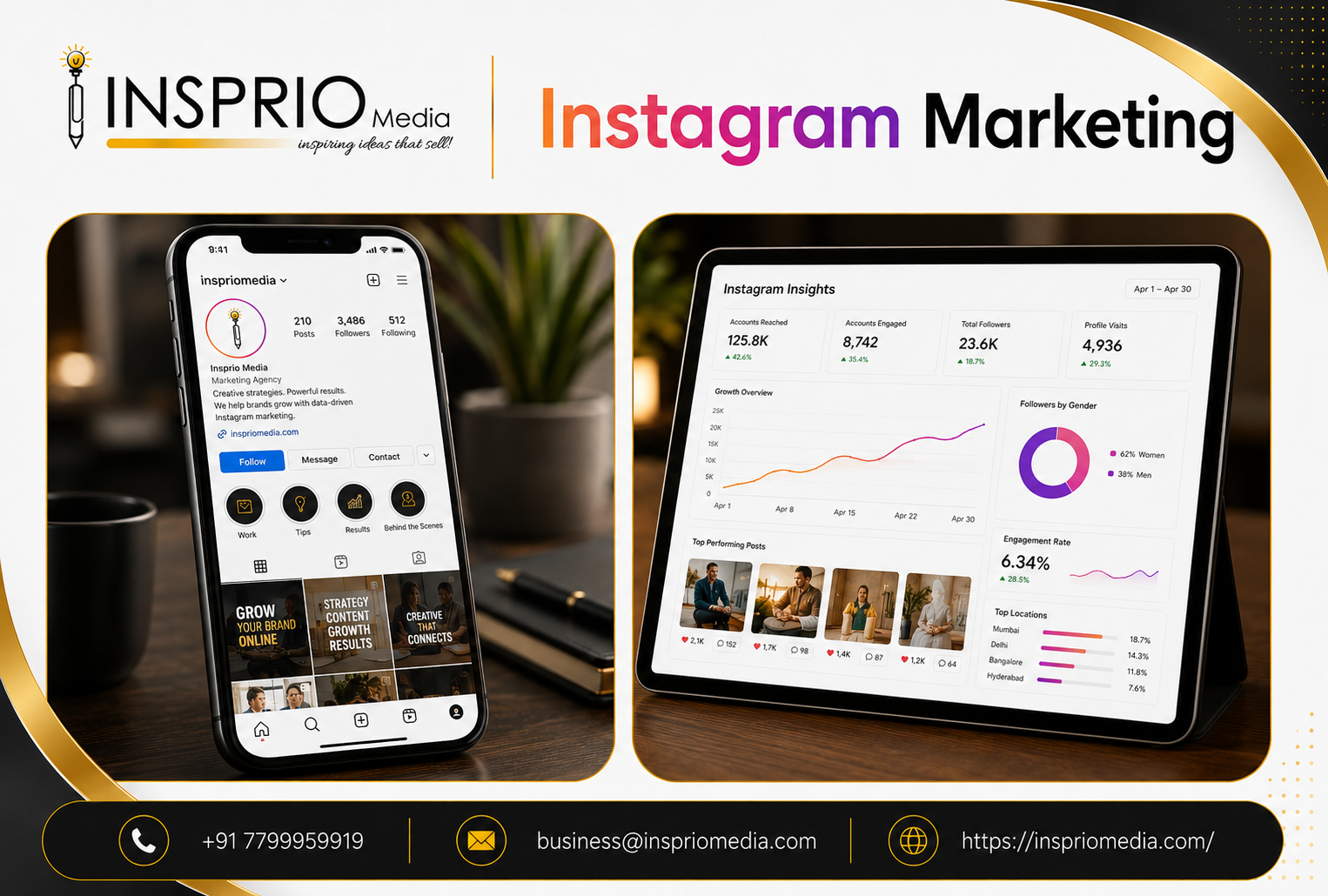
An effective Instagram marketing strategy has five parts: a clear business goal, a defined audience, a content mix built around Reels, carousels and Stories, a sensible use of paid ads, and measurement tied to enquiries or sales. Skip any of them and Instagram becomes a place you post, not a channel that grows the business.
The platform rewards businesses that show their products, people and process in a way customers find useful or interesting. Here is how to approach it without wasting months on posts that nobody acts on.
Start with one goal and one audience
Decide what Instagram is for. Typical goals are brand awareness, traffic to a website, enquiries through messages or calls, store visits, or online orders. Choose one primary goal at a time, because it shapes everything that follows: the content you make, the call to action on each post and the numbers you check.
Then be specific about who you are talking to. A restaurant in Jubilee Hills, a jewellery D2C brand shipping across India and a coaching institute each have different audiences, buying cycles and tone. If your audience is vague, your content will be too.
Set up your profile so it converts
Your profile is your landing page. Many people will check it before they message or buy. Make it work hard:
- A clear name and bio that say what you do and for whom.
- A recognisable profile image, usually the logo.
- One link that goes to the most useful page, such as a landing page or WhatsApp.
- Contact buttons and location switched on if you serve a local area.
- Highlights that answer common questions: pricing approach, process, reviews, delivery.
- A pinned set of posts that show your best work first.
If you send visitors to a website, make sure it loads quickly on mobile and matches the promise made in the post. Our landing page design work covers this connection between social and site.
What content works on Instagram?
There is no magic format, but each one has a job.
Reels: reach new people
Short video is the main way accounts get shown to people who do not follow them. Strong Reels open with something clear in the first moment, deliver one idea and feel native to the platform rather than like a polished TV ad. A dentist explaining one common myth, a bakery showing a cake being decorated, a real estate agent walking through a flat honestly: simple and specific wins.
Carousels: educate and earn saves
Multi-slide posts suit explanations, comparisons, checklists and before and after stories. They are good for being saved and shared, which signals value. Keep each slide readable on a phone.
Stories: stay close to followers
Stories suit behind-the-scenes moments, polls, quick offers, reminders and answers to questions. They keep your existing audience warm and give people an easy way to reply, which starts conversations.
Single images and Lives
Strong product photography, announcements and testimonials still have a place. Lives can work for Q&As and launches if you have an audience to attend. Good visuals matter across all formats, which is why we recommend investing in product photography and consistent creative.
Build a content mix, not a random feed
A useful way to think about it is a handful of content pillars, each with a purpose: educate, show your work, build trust through proof, and sell. A clinic might alternate patient education, doctor introductions, treatment explanations and appointment reminders. A B2B manufacturer might mix process videos, product explainers and client stories.
Keep promotional posts to a share your audience will tolerate, and make sure every post has one clear next step. Planning ahead with a content calendar helps you keep the mix balanced and stops last-minute posting.
How often should you post?
Consistency beats volume. Choose a rhythm you can sustain for months, not a burst that you abandon in three weeks. Quality drops quickly when a team is stretched. Our guide on social media posting frequency helps you pick a pace.
Use Instagram ads to scale what works
Organic reach is uneven, especially for newer accounts. Paid campaigns through Meta Ads Manager let you reach defined audiences by location, interests and behaviour, retarget people who engaged with you and drive specific actions like messages, leads or purchases.
A sensible approach is to test organic content first, see which posts earn saves, shares and enquiries, then put budget behind the winners. Common mistakes include boosting posts with no clear goal, targeting too broadly, sending everyone to the home page, and judging success by likes. Ads should lead somewhere built for the action you want. Our Facebook and Instagram ads team plans creative, targeting and landing pages together.
Work with creators and your community
People trust other people more than brand posts. Creator partnerships, customer reviews, tagged photos and user stories all give you social proof. Choose creators whose audience matches your customers, agree clear deliverables and make sure disclosure of paid partnerships follows Indian advertising rules. Replying promptly in comments and messages is just as important, since many sales conversations begin there.
What should you measure?
Look beyond likes. Track reach and video views for awareness, saves and shares for content quality, profile visits and link taps for interest, and messages, calls, form fills and sales for results. For paid campaigns, monitor cost per lead or purchase and return on ad spend. Review monthly and let the numbers change what you make. See our guide on social media KPIs for how to choose a short, useful set.
Mistakes that quietly hold Instagram back
- Posting without a goal or call to action.
- Inconsistent look, so nobody recognises the brand.
- Ignoring comments and direct messages.
- Copying trends that do not suit the business.
- Buying followers, which damages engagement and trust.
- Giving up before enough content has been tested.
A simple way to plan your first three months
If you are starting or restarting, avoid trying to do everything. A staged approach is easier to sustain and gives you real data to learn from.
- Month one: foundation. Clean up the profile, settle on content pillars, produce a first batch of posts and Reels, and set baseline numbers.
- Month two: learn. Post consistently, note which content earns saves, shares and messages, and start answering every enquiry quickly. Try a small ad test with one clear offer.
- Month three: focus. Double down on the formats and topics that worked, drop the ones that did not, and scale the ads that produce enquiries at an acceptable cost.
This is a pattern, not a formula. A real estate developer, a clinic and a D2C brand will adjust it differently, but the logic of foundation, learning and focus holds across most businesses.
Instagram for different business types
- Clinics and wellness. Education builds trust. Explain common concerns, introduce the team, and keep claims careful and compliant with medical advertising rules.
- Real estate. Show the property honestly: walkthroughs, location context, progress updates. Use messages and calls to qualify serious buyers.
- Restaurants and cafes. Food, ambience and people. Local creators and consistent visuals matter more than frequent promotions.
- D2C and retail. Use product demos, customer reviews and styling content, with a quick route from post to purchase.
- B2B. Instagram is rarely the main channel, but showing your people, facility and projects can support credibility alongside LinkedIn.
How Insprio Media can help
We plan Instagram strategy, create the content and run the ads for businesses across Hyderabad and beyond, with reporting tied to enquiries and sales. If you want a clear plan for your account, see our Instagram marketing service or get in touch.


















