
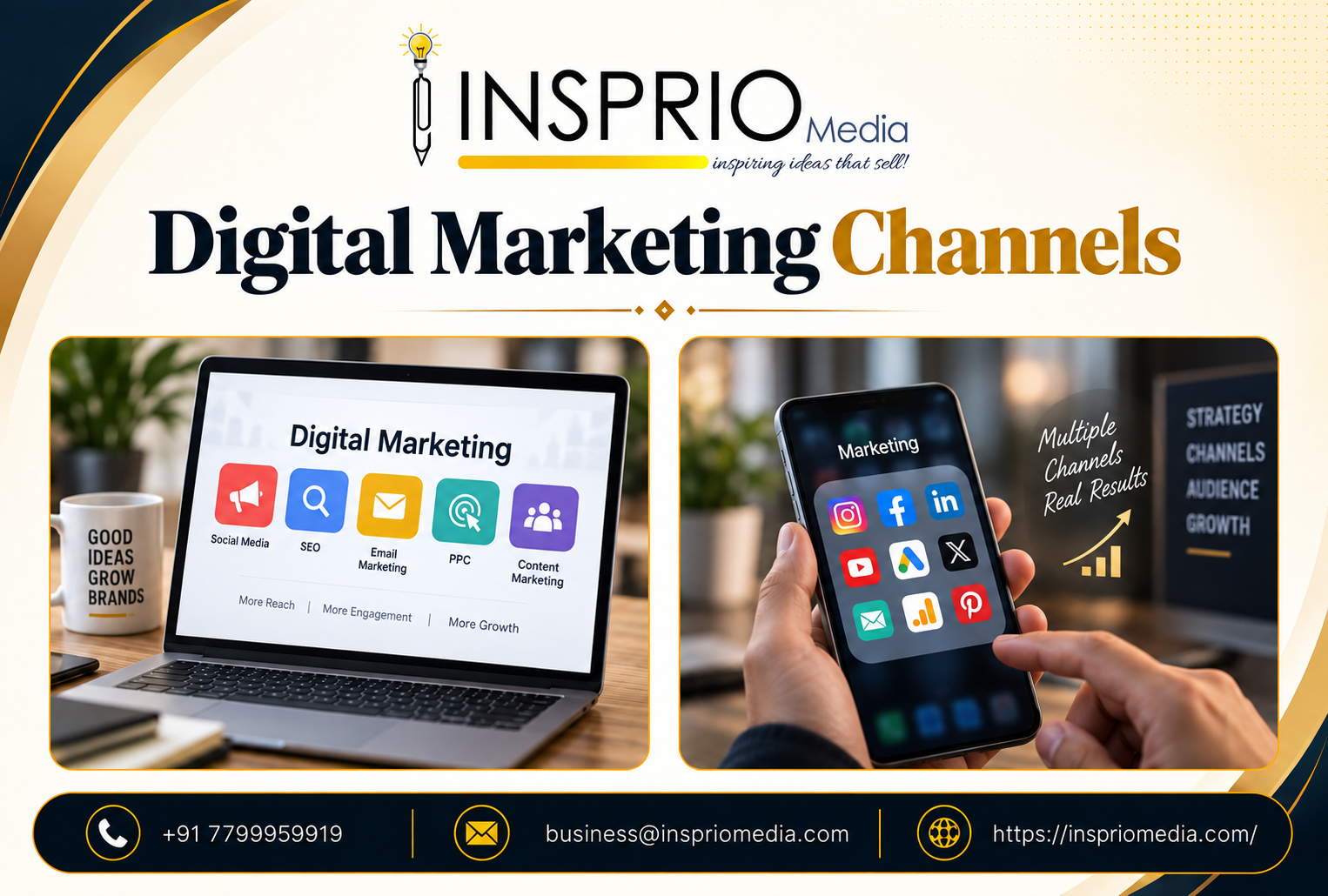
The main digital marketing channels are search (SEO and paid search), social media, paid display and video, email and WhatsApp, local listings, content, and your own website. No channel is best for everyone. The right one depends on where your customers look when they are ready to buy, how long they take to decide, and how much time and money you have.
The mistake is to ask which channel is popular and start there. A better question is which channel is closest to a purchase for your specific customer, and can you run it well enough to measure it?
What does each digital marketing channel do best?
Each channel plays a different role in a customer's decision. Treating them as interchangeable is why many mixes underperform.
Search: SEO and Google Ads
Search reaches people who are actively looking. Someone typing "dermatologist near me" or "CNC job work Hyderabad" has a need right now. SEO builds visibility that compounds but takes months. Google Ads can bring enquiries quickly, but you pay for every click, so tracking and landing pages decide whether it is profitable. Our comparison of SEO vs PPC explains how to weigh the two.
Local search
For clinics, restaurants, salons, coaching centres and any business customers visit or that serves a city, your Google Business Profile is often the first impression. Reviews, photos, accurate hours and a working phone number influence the call or visit before your website is ever opened.
Social media
Social platforms build familiarity, show your work and keep you in front of people who are not ready yet. Instagram and YouTube suit visual and consumer brands. LinkedIn suits B2B sellers where decision makers are professionals. Paid social, including Facebook and Instagram ads, helps create demand, but it usually needs stronger creative and follow up than search because people were not looking for you.
Email and WhatsApp
These are owned channels: you reach people who already gave you their details. They are strong for reminders, repeat purchases, appointment follow ups and sharing offers, and they cost little compared with finding new customers. Used carelessly, they irritate people, so permission and relevance matter.
Display, video and programmatic
Banners, YouTube and connected TV build awareness and remind website visitors about you. They work best when you have an existing audience to remarket to or a brand message worth repeating. For larger budgets, programmatic advertising adds precise audience and placement control.
Content and your website
Articles, videos, guides and case material support every other channel. Your website is the place where all channels land. If it is slow or unclear, paying for more traffic wastes money.
How do you choose the right mix?
Use four filters, in this order.
- Customer intent: are customers searching for the solution, or do you need to create awareness first?
- Sales cycle: a restaurant needs a booking today. A machinery supplier may need months and several meetings.
- Margin and order value: a higher value sale can justify costlier clicks and longer nurturing. A low margin product cannot.
- Capacity: a channel you cannot run consistently is worse than a smaller one you can.
Here are some typical starting points, not rules:
- Local service business: Google Business Profile, local SEO, Google Search ads, reviews, WhatsApp follow up.
- D2C or ecommerce brand: product search and shopping ads, Instagram, email and WhatsApp for repeat purchases. See our guide to ecommerce marketing.
- B2B company: search for buying intent, LinkedIn for reach to decision makers, a strong case and capability page, and sales follow up.
- New brand with little awareness: social and video to build recognition, with search capturing the demand it creates.
How many channels should you run at once?
Fewer than you think. A small budget spread across five channels cannot teach you anything. Two or three channels, well tracked, usually beat six that are barely maintained.
A sensible path is to get one primary channel working, usually the one closest to a purchase. Then add a supporting channel that improves it, such as remarketing to people who visited your site or email to people who enquired. Only after that, add experiments in awareness channels.
How do channels work together?
Customers rarely use one channel. They may see an Instagram reel, search your name later, read reviews, then call after seeing a remarketing ad. Each channel does part of the work, but the last click often gets all the credit in reports.
This is why you should look beyond the channel that closed the sale. A brand search campaign may look cheap only because social media created the interest first. When you judge channels, also watch the overall number of enquiries and sales. The idea is developed further in our article on omnichannel marketing.
How do you know whether a channel is working?
Decide the measure before spending. For lead generation, track qualified leads and the cost to win a customer, not just clicks. For ecommerce, track revenue and profit after ad spend. For brand work, track branded search, direct visits and returning visitors over time.
Common warning signs include clicks without calls, leads that never answer, and traffic with a very high bounce rate. These usually point to targeting, tracking or landing page issues rather than a failing channel. Our guide to Google Ads conversion tracking explains how to set up reliable measurement.
What mistakes do businesses make when choosing channels?
- Following competitors blindly: a competitor with deeper pockets or a different customer may be running a channel for reasons that do not apply to you.
- Judging too early: SEO and brand work need months, while paid campaigns need a learning period. Switching every few weeks guarantees you never learn anything.
- Neglecting owned channels: many businesses pay again and again to reach people they could contact for free through email or WhatsApp, with permission.
- Sending all traffic to the home page: people who clicked on a specific offer should land on a page about that offer.
- No follow up: the channel gets blamed for poor leads when the real problem is that nobody called back for two days.
A short monthly review keeps all of this honest. List each channel, what it cost, how many qualified enquiries it produced, and what you will change next month. If you cannot fill in those numbers, fix the tracking before spending more.
Does the industry change the answer?
Yes, a lot. A real estate developer relies heavily on paid search and social lead forms, followed by fast call back, because the sale is large and leads must be reached quickly. A school depends on local search, reviews, parent referrals and admission season campaigns. A restaurant lives on Google Maps, Instagram and delivery platforms. A B2B manufacturer may get more from a well structured website, search ads aimed at specific products and LinkedIn outreach than from broad social media.
The pattern is the same each time: find the moment of decision, be visible there, make it easy to act, and then use other channels to support that moment.
How Insprio Media can help
We work across SEO, Google Ads, Meta ads, programmatic and social media, so recommendations come from what suits your business, not from one favourite channel. If you are unsure where to put your next rupee of marketing budget, talk to us and we will give you an honest view of the options.


















