
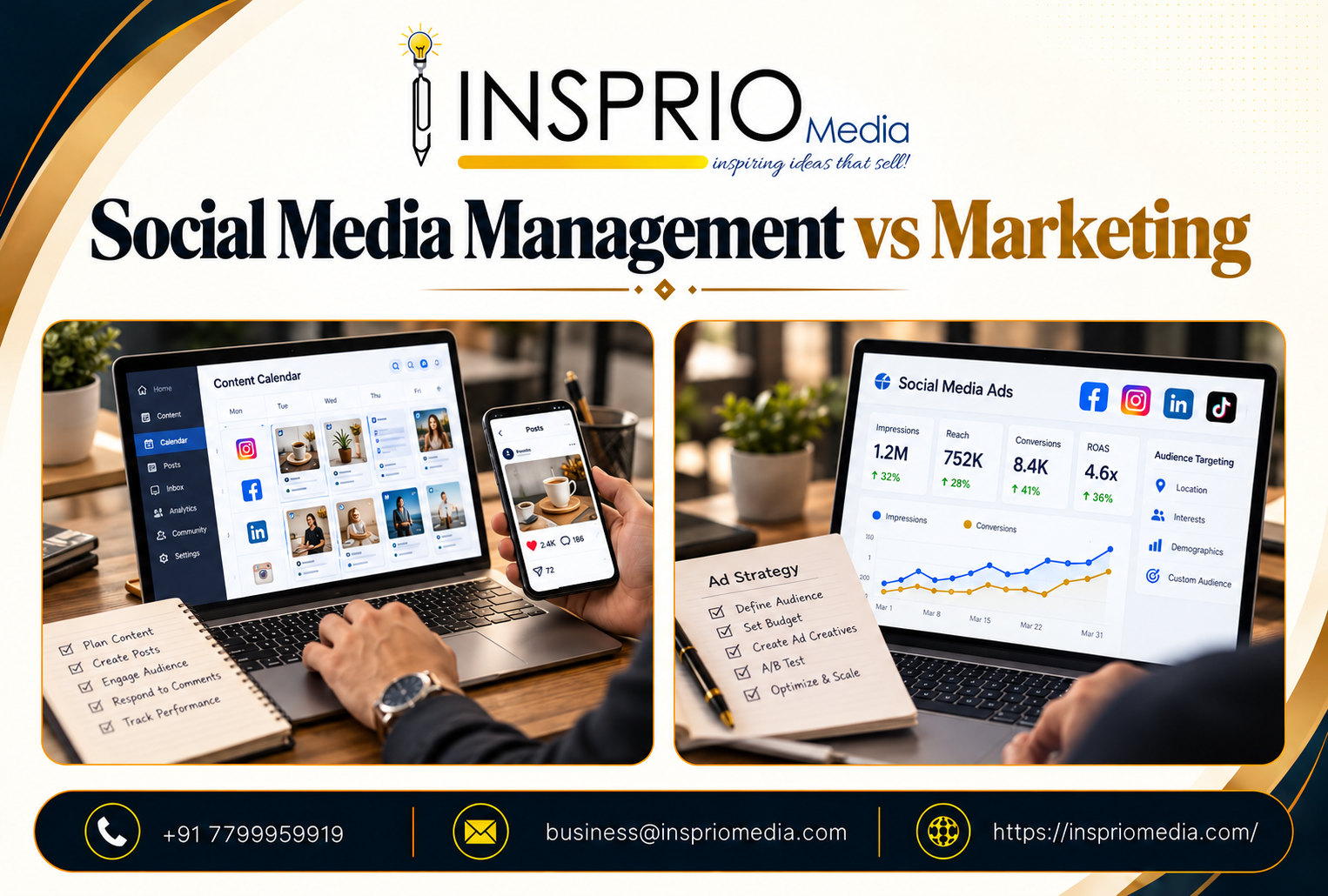
Social media management is the day-to-day running of your accounts: planning, creating and publishing content, replying to people and reporting basic results. Social media marketing is the wider effort to use social platforms to reach business goals, including audience strategy, paid advertising, campaigns, creators and conversion.
Put simply, management keeps the shop open and tidy. Marketing brings in new customers. Most businesses need both, in a different balance depending on their stage.
What does social media management include?
Management is the operational layer. It makes sure your brand shows up consistently and that people who reach out get an answer. Typical work includes:
- Planning a content calendar and posting schedule.
- Designing graphics, writing captions and editing videos.
- Publishing across Instagram, Facebook, LinkedIn, YouTube and other platforms.
- Replying to comments and direct messages, and moderating spam.
- Basic monthly reporting on reach, engagement and follower growth.
If you want to see how this works in detail, our guide to the social media content calendar shows how planning keeps posting steady, and our social media management service covers the full routine.
What does social media marketing include?
Marketing starts with business goals and works backwards. It decides who you want to reach, what offer or message will move them, and which platform and format will do it most efficiently. It typically adds:
- Audience research and positioning for each platform.
- Paid campaigns on Meta, LinkedIn or YouTube, with targeting, creative testing and budgets.
- Lead generation setups such as forms, landing pages and follow-up.
- Influencer and creator partnerships.
- Retargeting of people who engaged but did not enquire.
- Conversion tracking and performance analysis tied to revenue.
Our social media marketing work usually builds on management as a base and adds the growth layer on top.
Management vs marketing side by side
| Area | Social media management | Social media marketing |
|---|---|---|
| Main purpose | Keep accounts active, consistent and responsive | Grow awareness, leads and sales |
| Time horizon | Ongoing, daily and weekly | Campaign and goal based |
| Focus | Content, publishing, replies | Strategy, paid ads, conversion |
| Main measures | Consistency, engagement, response time | Leads, cost per lead, sales, return on ad spend |
| Budget | Mostly time and creative | Time, creative and ad spend |
| Typical owner | Social media manager or executive | Marketing lead or performance team |
Where do they overlap?
The line is blurry in real life. Good management uses marketing thinking: the content calendar should reflect campaigns and offers. Good marketing depends on management: a paid campaign sends traffic to a profile, and if that profile is inactive or messages go unanswered, the ad money is wasted.
This is why a clinic that runs ads but never replies to enquiries sees poor results, and why a bakery that posts beautifully but never promotes anything grows slowly. Each half needs the other.
Which one does your business need?
A rough guide:
You probably need management first if
- Your accounts are inactive, inconsistent or look dated.
- Nobody replies to comments and messages quickly.
- You are a new business building a basic presence.
- Your goal is credibility, so that customers who find you online see a professional brand.
You probably need marketing if
- Your pages are tidy but you are not getting enquiries.
- You want to reach people who do not follow you yet.
- You have a clear offer, such as admissions, a product launch or a new branch.
- You need leads or sales from social with a measurable cost.
A third group needs both at once: a D2C brand launching a new product line, or a real estate developer opening bookings for a new project. Content and community keep the brand credible while ads and creator work drive reach.
How should you budget for each?
Management is mostly a time and creative cost, so it is fairly predictable. Marketing adds media spend, which should be set by what a lead or customer is worth to you. If you are unsure how much to put in, our guide to digital marketing cost in Hyderabad explains what typically drives the numbers.
Do not spend heavily on ads while your profile, offer or website are weak. Paid traffic exposes every gap. Equally, do not expect organic posting alone to deliver a steady stream of leads in a competitive category.
Questions to ask before you hire
- Which of these am I buying: publishing, strategy, ads, or all of them?
- Who writes and designs the content, and how many revisions are included?
- Who owns the accounts, creatives and ad accounts? You should.
- What will you report, and how does it connect to enquiries or sales?
- Is ad spend billed separately from fees, and how is it shown to me?
- How quickly will messages be answered, and by whom?
Beware of any package that promises followers, viral reach or guaranteed leads. Nobody controls the platforms, and honest providers say so. Instead, ask for a clear scope, a reporting format you understand, and a sensible review point after a few months. Our guide to social media KPIs shows what a useful report contains.
How do the two work together over time?
A common path looks like this. In the first months, you build a consistent presence and baseline: look, voice, calendar, community. Then you test paid campaigns on a small scale with a clear goal, learn which messages and audiences work, and put more behind them. Over time, the best organic content feeds your ads, and your ads feed your organic audience through retargeting.
The key is sequencing. Start with a base you would be proud for a new customer to see, then add growth activity in stages instead of buying everything at once.
Examples: what each business might choose
- A new restaurant in Hyderabad. Starts with management: a good profile, regular food content and fast replies to booking messages. Adds a small local ad campaign around the launch and weekend offers.
- An established coaching institute. Already has a decent presence but needs admissions. Marketing takes priority: lead campaigns before admission season, landing pages, and structured follow-up of every enquiry.
- A B2B manufacturer. Needs credibility with a small set of buyers. Management of a LinkedIn page keeps it professional, while marketing adds targeted outreach and sponsored content for specific roles and industries.
- An online jewellery brand. Needs both from day one. Content and community build desire and trust, while paid campaigns and creators drive traffic and sales during festive periods.
Common misunderstandings
Three ideas cause most of the disappointment in this area. The first is that posting regularly is the same as marketing. It is not: a well-run account with no offer, no audience plan and no calls to action may look lovely and still produce nothing. The second is that ads can replace a good presence. They cannot: people who click an ad often check your profile before deciding. The third is that a package price tells you what you will get. Two quotes with the same figure can contain very different amounts of design, video, community work and strategy, so compare scope, not price.
Treat the choice as a business decision, not a creative one. Start from the result you need in the next six months, then buy the amount of management and marketing that gets you there.
How Insprio Media can help
We offer both: ongoing management for businesses that need a reliable, professional presence, and marketing for those ready to chase leads and sales, often combined. If you are unsure which fits, tell us your goal and we will recommend a sensible starting point, even if that is the smaller option.


















