
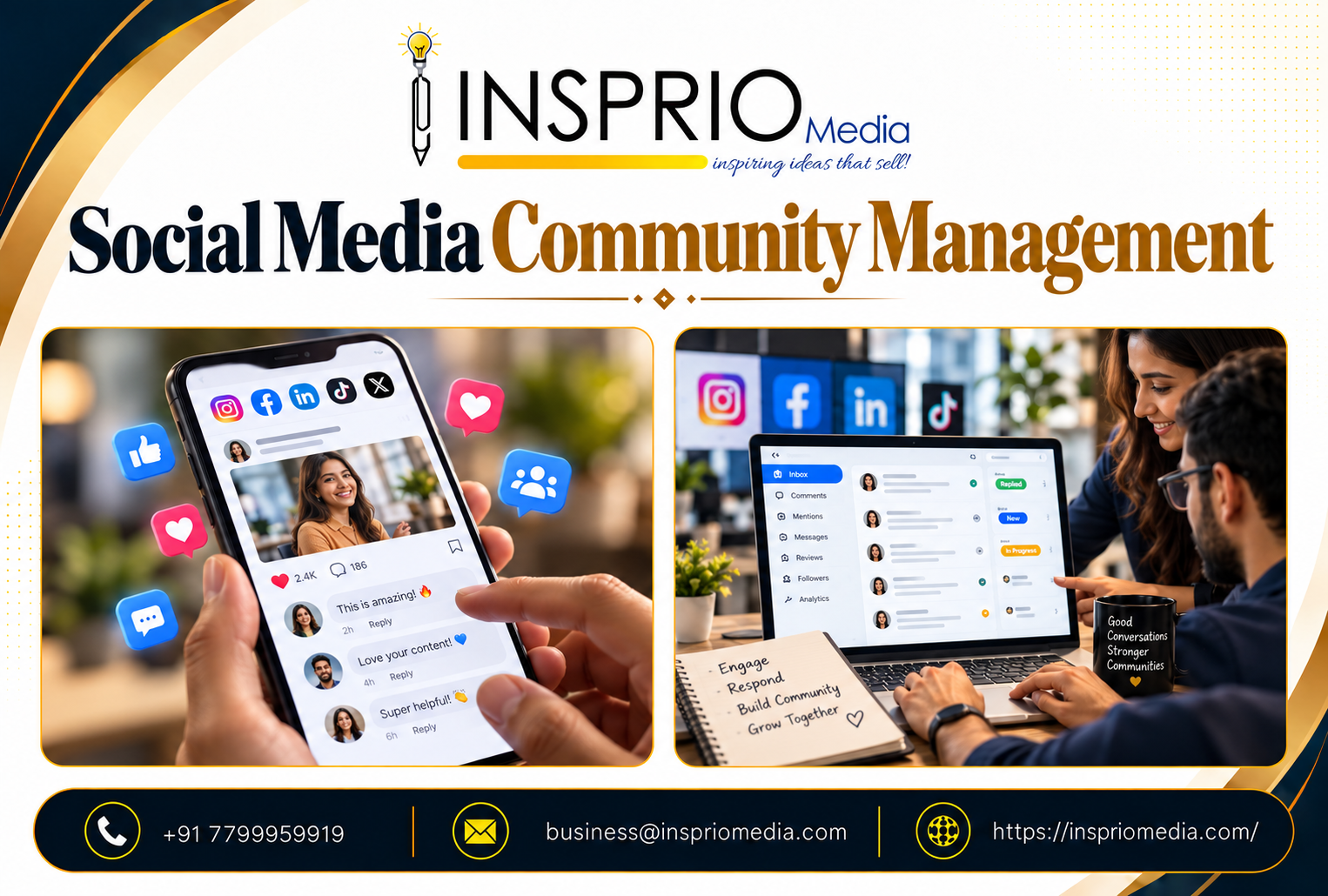
Social media community management is the ongoing work of talking with your audience: replying to comments and messages, handling complaints, moderating discussions and turning followers into loyal customers. Content gets people to notice you. Community management is what makes them trust you.
For many Indian businesses, the community is where the sale actually happens. A potential customer comments asking the price, or sends a direct message at 10 pm, and the speed and quality of your reply decides whether they buy.
What does a community manager actually do?
The role is broader than replying with a thumbs-up. In practice it covers:
- Responding to comments, direct messages, mentions and tags across platforms.
- Handling enquiries and passing serious leads to sales quickly.
- Managing complaints and negative reviews calmly and in public where appropriate.
- Moderating spam, abuse and misleading comments.
- Listening for what customers keep asking, praising or complaining about, and feeding that back into content and the business.
- Encouraging participation through questions, polls, user content and community groups.
It sits alongside content creation and publishing as part of full social media management, and it is often the piece that gets neglected first.
Why does community management matter for business?
Three reasons stand out. First, response is part of the buying journey. A restaurant that answers a table booking message within minutes wins the booking. Second, public replies are visible to everyone who reads the thread, so a good answer to one person reassures many. Third, platforms respond to real conversation, and engaged audiences tend to see content more often.
It also protects your reputation. An unanswered complaint on a clinic's Instagram looks like indifference. The same complaint answered politely, with a clear next step, often builds more trust than silence ever could.
How fast should you reply?
Aim for the same working day for comments and a much shorter window for direct messages, especially from people asking about price, availability or appointments. Exact targets depend on your business, but the principle holds: the longer the gap, the more likely the customer has asked someone else. If you cannot staff late replies, set up clear business hours and an automatic first response so people know when to expect an answer.
For enquiries that arrive on WhatsApp, WhatsApp automation can handle first responses and routing, so humans spend their time on real conversations.
Set a tone of voice and rules before you start
A community manager speaks as the brand. Without guidance, replies become inconsistent, or worse, off-brand. A short document should cover:
- How formal or friendly the brand sounds, and which languages to use. Many Hyderabad brands reply in a mix of English, Hindi, Telugu or Urdu depending on the customer.
- What can be answered directly and what must be escalated, such as pricing exceptions, medical queries or legal complaints.
- How to respond to common objections and frequent questions.
- What gets hidden or removed, and when to take a conversation to a private message.
These rules should match your wider brand guidelines, so the voice customers meet in replies matches the voice in posts.
Handling negative comments and complaints
Negative feedback is not a crisis. Ignoring it is. A reasonable approach:
- Acknowledge the problem quickly and without defensiveness.
- Apologise where something genuinely went wrong.
- Move the detail to a private channel, giving a name and a way to reach you.
- Follow up until it is resolved, and update the public thread if appropriate.
Do not delete criticism simply because it is uncomfortable. Remove spam, abuse and clearly false claims, and respond to the rest. Never argue publicly with a customer. A real example: a coaching institute that replies to a fee complaint with the actual refund policy and a contact person looks transparent. One that deletes the comment looks evasive.
Building a community, not just answering one
Strong communities are built through repeated small interactions:
- Ask questions that are easy to answer and relevant to your customers.
- Reply to comments with more than an emoji, ideally with a follow-up question.
- Feature customer photos and stories, with permission.
- Recognise regular commenters and loyal buyers by name.
- Create a space for your best customers, such as a broadcast channel or a closed group, if it fits your business.
Engagement is two-way. Our guide to increasing social media engagement covers how content and community effort feed each other.
Tools and team: what do you really need?
Most small and mid-sized businesses can start with the native inboxes in Meta Business Suite, LinkedIn and YouTube Studio. As volume grows, a shared inbox or social management tool helps assign conversations, keep a record and avoid two people answering the same message. Whatever you use, feed genuine leads into a CRM so they are not lost in a chat thread. CRM automation can route those enquiries to the right person automatically.
Decide who owns the community. If it is the owner who answers at midnight, that will not last. A trained team member or an agency with clear escalation rules is more reliable.
How do you measure community management?
- Response time and the share of messages answered.
- Sentiment: the balance of positive, neutral and negative conversation.
- Enquiries and leads that start in comments or messages.
- Repeat engagement from the same people.
- Issues resolved without escalation.
Track these alongside your wider social media KPIs, so community work is judged by results, not by how busy it looks.
Community management by business type
- Clinics and hospitals. Never give medical advice in public comments. Reply with a general answer, invite the person to call or message, and keep patient details out of public threads.
- Real estate. Enquiries about price and location arrive constantly and are often vague. A quick reply with a clear next step, such as a site visit slot, separates serious buyers from browsers.
- Restaurants and retail. Reviews, tagged photos and booking questions dominate. Thank people by name, fix issues openly and share good customer content with permission.
- B2B companies. Conversations are fewer but more valuable. A thoughtful reply to a prospect's comment on LinkedIn can open a real discussion, so treat it like a sales conversation.
Common mistakes to avoid
Most community problems come from a handful of habits, and all of them are fixable with a clear owner and a few simple rules.
- Copy-pasted replies that sound like a machine.
- Answering only the positive comments.
- Letting enquiries sit in direct messages with no owner.
- Arguing, or deleting complaints that are fair.
- Having no plan for weekends, festivals or campaign launches, when comment volume spikes.
Who should own the community?
Ownership matters more than tooling. Name one person responsible for the inbox each day, one backup for leave and festivals, and one decision maker for sensitive cases. Give them a short list of approved answers for common questions such as timings, pricing ranges and delivery areas, and review the tricky conversations together every month. That small routine keeps replies consistent, protects the brand voice and means nobody is guessing when a difficult message arrives.
How Insprio Media can help
Our team manages replies, moderation and escalation as part of ongoing social media work, using a tone agreed with you and clear rules for sensitive topics. If your inbox is behind or your comments go unanswered, contact us and we will suggest a workable setup.


















