
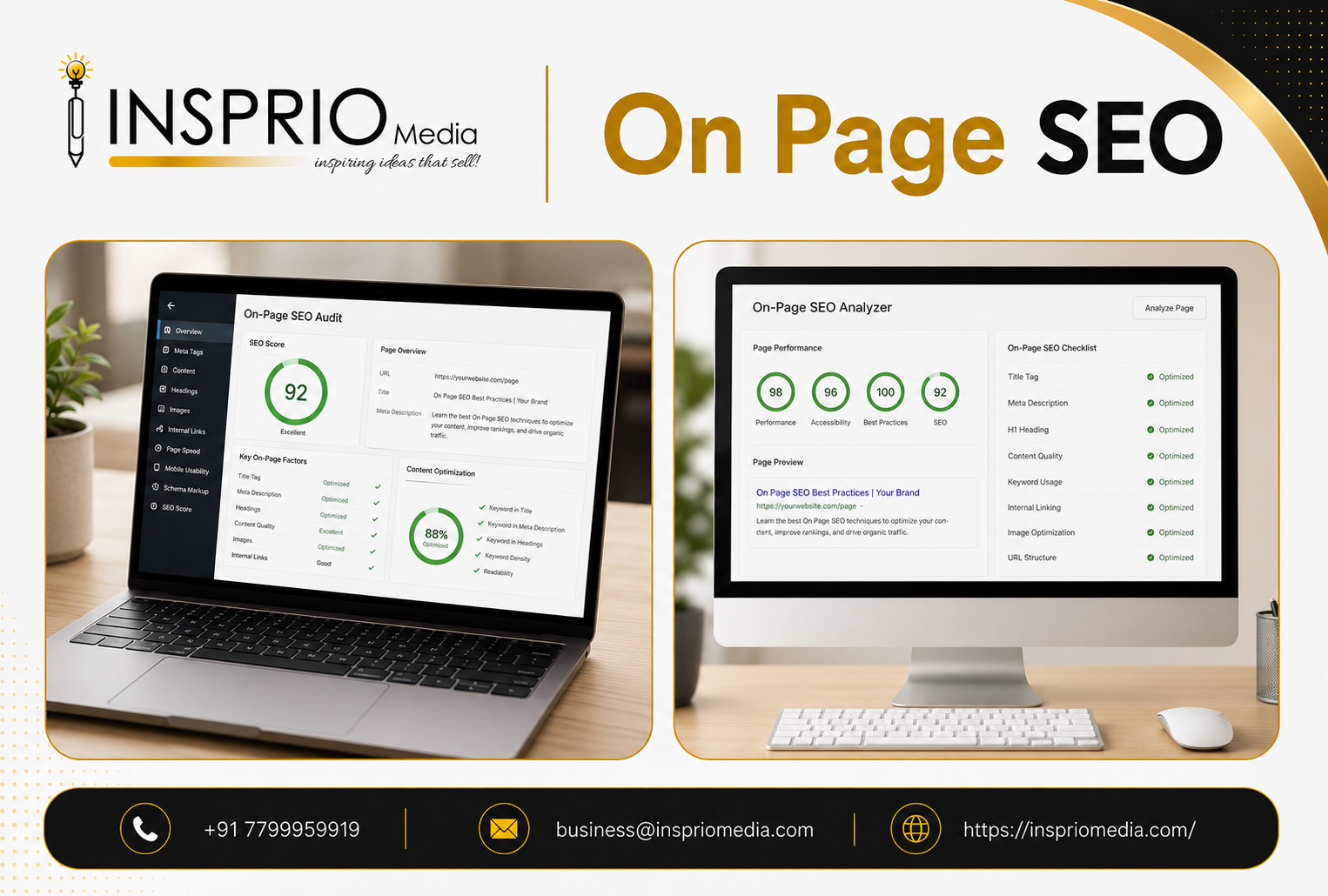
An on page SEO checklist is a short list of things to review on each page so that search engines understand it and visitors find it useful: its purpose, title, headings, content, internal links, images, and the experience of using it. Get these right and a page has a fair chance to compete.
On page SEO does not guarantee a ranking. It removes the avoidable reasons a good page fails. Below is what to review, why each item matters, and the mistakes we see most often on business websites.
Is the page built for one clear purpose?
Every page should do one job for one type of visitor. A service page explains a service. A guide answers a question. A location page serves people in a place. Pages that try to do several jobs rarely do any of them well.
Before anything else, write down the search you want the page to win and what the person searching wants to do next. If you cannot state it in a sentence, the page is not ready. This is covered in more depth in our article on search intent SEO.
Titles, descriptions and headings
Does the title tag say what the page is?
The title tag is the headline shown in search results, and it is one of the strongest on-page signals. A good title is specific, includes the main topic naturally, and gives a reason to click. It should also fit the space available, since long titles get cut off.
- Make each title unique across the site.
- Lead with what the page is about, not your brand name.
- Include the city for local service pages where it is relevant.
- Avoid stuffing several keyword variations into one title.
A weak example is 'Home | Company'. A better one tells you what the company does and where.
Does the meta description earn the click?
The meta description is not a direct ranking factor, but it influences whether people click. Google may rewrite it, though a clear, honest summary usually helps. Write it as a short answer or promise that matches the page, and mention what makes it worth opening: a price range explained, a free consultation, a comparison.
Do the headings give the page a clear outline?
Use one main heading that matches the page topic, then subheadings that break the content into logical sections. Someone skimming the headings alone should understand what the page covers. Headings are for structure, not for repeating keywords. Questions that people really ask make good subheadings, because they also match how people search.
Is the content actually helpful and specific?
This is where most pages stand or fall. Compare your page with those already ranking, and ask honestly whether yours is better for the reader.
- Does it answer the main question early, without a long preamble?
- Does it include details a competitor's page lacks, such as process, timelines, who it is for, how to choose, what can go wrong?
- Does it show experience, with real examples, photos and names of the people involved?
- Is it written for customers, in plain language?
- Is it current, with outdated information removed?
Length is not a target. A clear 600 word service page can beat a padded 2,000 word one. Say what needs to be said, and stop. Our content writing team starts from the same principle.
Are keywords used naturally?
Use the main phrase where it fits, such as the title, the main heading and the opening paragraph, and then write normally. Related terms and synonyms will appear on their own if you cover the topic thoroughly. If a sentence reads as if it was written for a machine, rewrite it. Keyword stuffing does not help and makes the page worse for people.
Links, images and speed
Are internal links in place?
Each page should link to relevant pages, and relevant pages should link to it. Use descriptive link text that tells the reader where the link goes. A blog post that mentions a service should link to that service page, and a service page should link to useful supporting guides. See our guide to internal linking strategy for what to watch for.
Also make sure the link is useful. A link added only for SEO and not for the reader is usually obvious.
Are images and media helping?
- Use real photos of your team, premises, products and work where possible. Stock images add little trust.
- Compress images so they do not slow the page, and use sensible dimensions.
- Give images short, descriptive alt text that explains what is shown. It helps accessibility and image search.
- Use descriptive file names rather than camera defaults.
- Add video where it explains something better than text, such as a product demonstration or a site tour.
Is the page fast and easy on mobile?
Most visitors to Indian business sites arrive on a phone. A page that is slow, cramped or awkward to tap loses visitors before the content matters. Check it on a real phone, on mobile data, not only on a desktop screen. Our guide to website speed optimization explains what usually causes slow pages.
Is there a clear next step and enough trust?
A page that ranks but does not convert is a missed opportunity. Make sure there is a visible call to action, whether it is a call button, a WhatsApp link, a form or a booking link. Add proof that reassures a first-time visitor: reviews, certifications, client logos you are permitted to show, an address, named people, and clear policies. Our article on call to action optimization goes into this.
Is the structured information and URL tidy?
Use a short, readable URL that reflects the topic. Where suitable, add structured data, such as local business, product, article or FAQ markup, so search engines can understand details such as address, price or rating. Only mark up what is actually visible on the page, and test it with Google's Rich Results Test. Incorrect markup is worse than none.
How to use this checklist
Treat the list as a review tool, not a formula. A restaurant, a school and an industrial supplier will all weigh the items differently. A restaurant cares most about location, photos, menu pages and reviews. A school cares about admissions information, trust and clarity for parents. A supplier cares about specification detail and ease of enquiry.
Ask whoever manages your site to show you the review for your five most important pages, in plain language: what is missing, what will be changed, and what result you should expect to see. A good answer is specific. A vague answer such as optimised for SEO tells you nothing.
Do not try to perfect every page at once. Start with the pages that bring or could bring enquiries: your main services, top products and local pages. Review each against the list, fix the biggest gaps first, and note the date so you can compare performance afterwards.
When pages still fail to move, the issue is often off the page: weak links, crawl problems or a mismatch with intent. Our technical SEO checklist covers the site-wide side.
How Insprio Media can help
We review the pages that matter most to your business and tell you plainly what to change and why. If you prefer, we can make the changes for you as part of our SEO services, or you can contact us for a page review.


















